

Why a School Is Paying $60m for Vision Australia Headquarters
Scotch College is weeks away from adding 1.64 hectares of Kooyong to its campus — land a tennis club had already signed for, then abandoned.

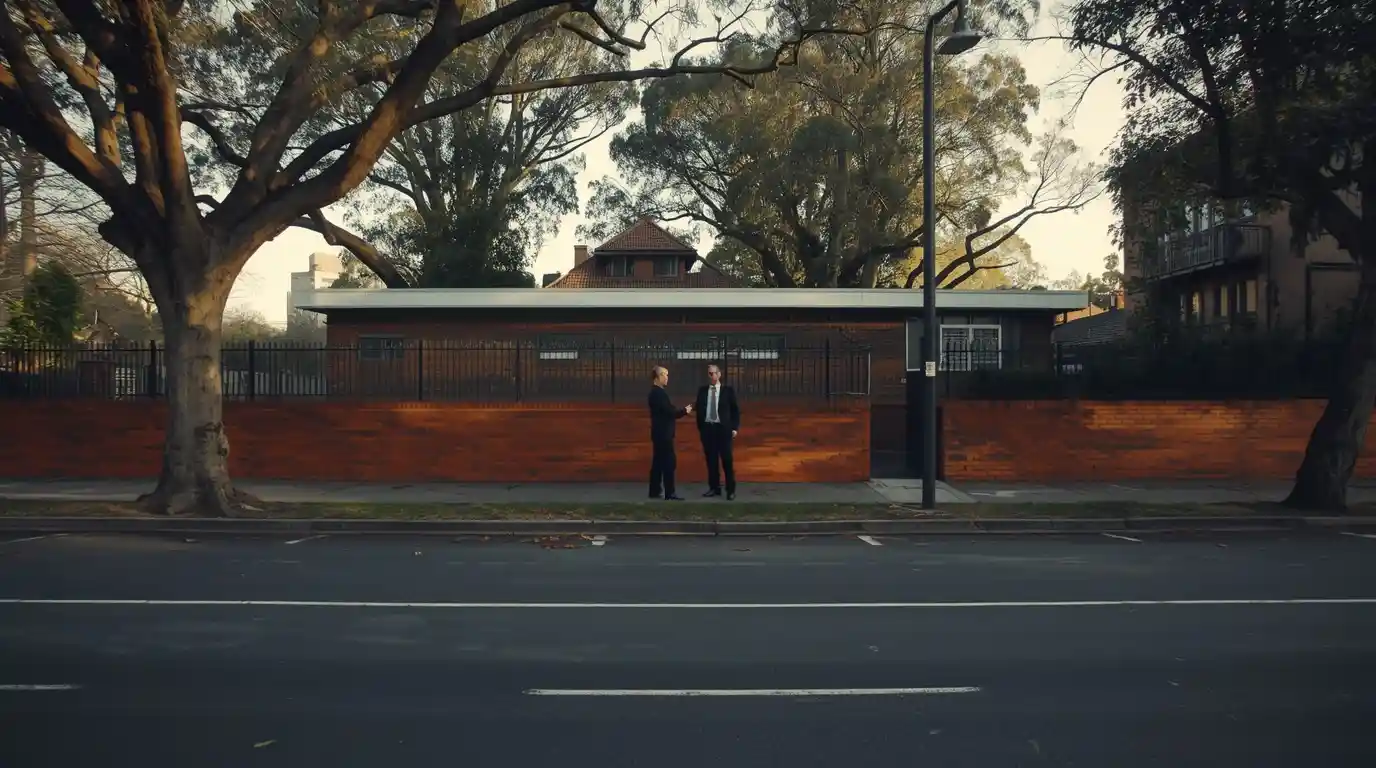
Scotch College is in the final stage of an exclusive process to buy the Vision Australia headquarters in Kooyong for about $60 million, with contracts expected to be exchanged within weeks, according to The Age. The property at 446-456 Glenferrie Road covers 1.64 hectares — a rare open slab of land in one of Melbourne's tightest property markets, sitting directly alongside the school's existing grounds.
The second number is the interesting one. Less than a year ago the same block was under contract to the Kooyong Lawn Tennis Club for more than $50 million. That deal fell over in December, when the club told the charity its redevelopment plans were no longer viable. The land did not stay available for long, and the price has climbed by roughly a fifth in the meantime.
For anyone living in Boroondara, this is more than a property transaction. Melbourne's established private schools have spent years quietly absorbing whatever land loosens up around them, and every purchase shrinks what's left for housing, sport or community use. In this case the seller is an organisation that has served blind and low-vision Victorians from that corner for close to a century.
What Scotch College Is Actually Buying
Scotch was founded in 1851 and its Hawthorn campus already runs to about 27 hectares, with 1,890 students from preschool to Year 12 and roughly 160 boarders. It also holds 80 hectares at Healesville and beachfront land at Phillip Island. Adding 1.64 hectares lifts the main campus by only about six per cent — but it is contiguous land, which is the part money usually cannot buy.
The school has not publicly set out what it intends to build. Sites like this typically get absorbed into sporting fields, teaching buildings or boarding accommodation, and the eventual answer will show up first as a planning application to Boroondara Council rather than a media release. Anything requiring a permit will be advertised, and immediate neighbours are notified directly.
Why the Vision Australia Headquarters Is for Sale
The charity did not put the site up because it was in trouble. Its stated reasoning was more mundane, and increasingly familiar to any organisation with a big suburban office.
Too much office, too few people at desks
Vision Australia said the building had become underused once staff shifted to remote work and to delivering services in clients' homes and communities rather than from a central office. Owning 1.64 hectares of Glenferrie Road to run a half-empty floor plate is expensive in a way that shows up on a charity's balance sheet every single year.
What the sale money is meant to do
Proceeds were earmarked for expanded service delivery and better facilities, not for shoring up operations. That distinction matters to donors: it is the difference between selling an asset to grow and selling one to survive. Sixty million dollars is a substantial endowment for a disability services provider of Vision Australia's size.
Where the charity goes next
Vision Australia is expected to stay at Kooyong for about two years while it finds a new Melbourne base, and has said its priorities are central location, strong public transport links and accessible design. For clients who navigate the city by tram, train and cane, proximity to transport is not a nice-to-have.
Vision Australia and the blind and low vision community have had a connection to the location for close to 100 years, the charity's then acting chief executive Justine Heath said when the sale process began.

The Tennis Club That Got There First
Kooyong Lawn Tennis Club has controlled its neighbouring site since 1920, built its main stadium in 1927 and hosted the Australian Open there until 1987. Its plan for the charity's land was ambitious: ten hard courts, a wellness centre, padel and pickleball facilities, and an enclosed main stadium, creating a combined 7.93-hectare precinct. Club president Steve Wood called it a once-in-a-lifetime chance to future-proof the venue.
By mid-December the club had concluded the redevelopment no longer stacked up financially and walked away before its deadline. Both organisations said they intended to stay on good terms. Construction costs, borrowing rates and member appetite for a project of that scale all had to line up, and they didn't.
Is $60 Million a Lot for 1.64 Hectares?
Work it out per square metre and Scotch would be paying roughly $3,660, against about $3,050 implied by the tennis club's bid. That premium buys certainty — no fundraising round, no membership vote. Scotch was found in a 2021 investigation to hold the largest investment portfolio of any Australian school, valued then at more than $144 million, which puts the cheque in context.
What to Watch Over the Next Two Years
Three things will tell you how this lands. First, whether contracts actually exchange in the coming weeks or the process stalls the way the last one did. Second, where Vision Australia lands its new city headquarters and whether accessibility genuinely improves for clients. Third, the planning applications Scotch lodges with Boroondara once the leaseback ends.
If you live near Glenferrie Road, the practical step is simple: keep an eye on the council's advertised planning applications register from about 2028, and lodge a submission during the notice period if the proposed use concerns you. That window is short, and once a permit issues, the shape of that corner is settled for decades.

Comments 0