

Why Are Smallcap Stocks Suddenly Beating The Big Names?
Indian markets bounced on August 20 after three losing sessions, and for once the small companies led the way — but the money behind the move says more than the index numbers do.

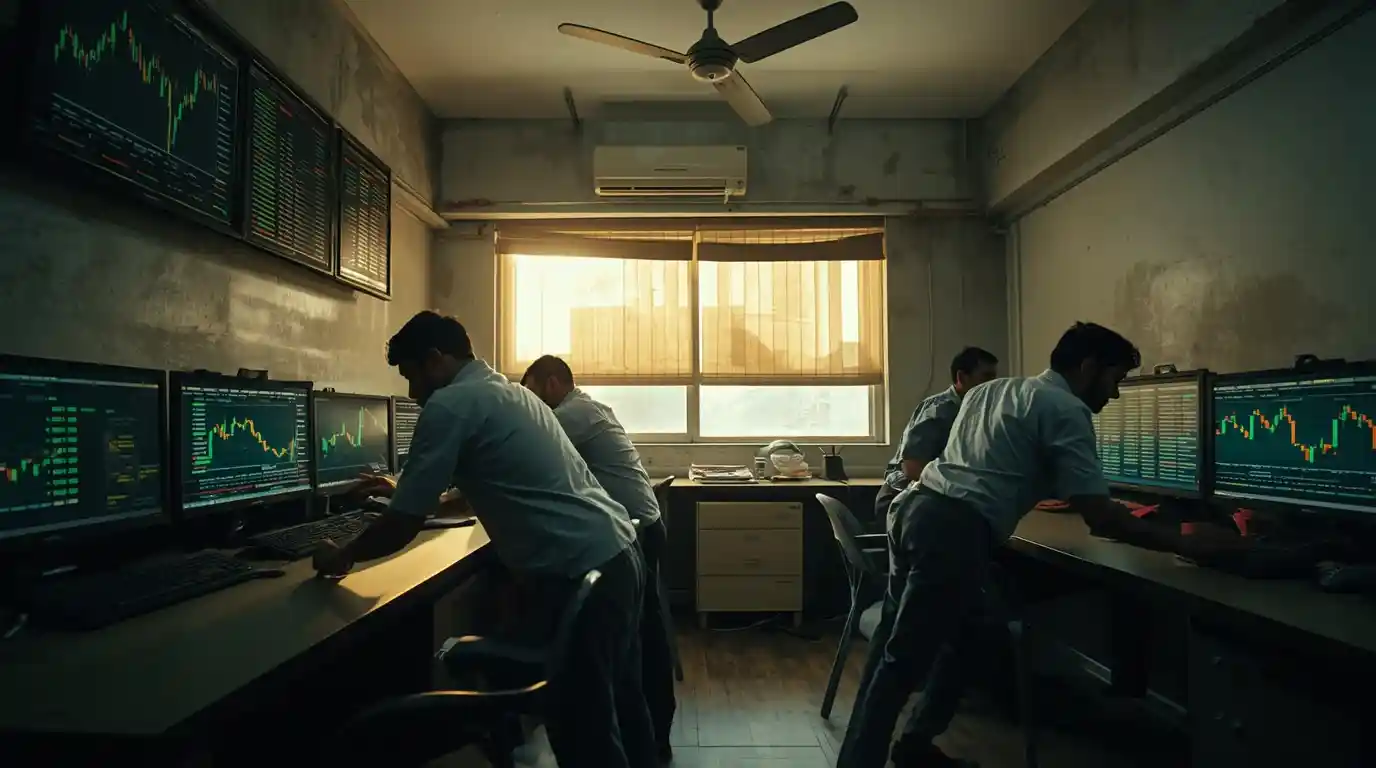
Smallcap stocks led the Indian market on Thursday, and the gap over the big indices was wider than the headline suggests. The BSE Sensex opened August 20 at 77,468.45, up 558.77 points or 0.72 per cent from the previous close of 76,909.68. The Nifty 50 started 147.15 points higher at 24,225.45. Below them, the BSE Smallcap Select index rose 0.78 per cent to 9,148.12, while the Nifty smallcap gauge ran close to 1 per cent — comfortably ahead of both benchmarks.
Market breadth told the story better than any index level. Around 2,148 shares were advancing against just 600 declining, with 90 flat. That is more than three gainers for every loser. A rally that lopsided isn't being carried by four or five heavyweights. It means buying is spreading out across hundreds of smaller names at once, which is a very different thing from the Sensex being dragged up by Infosys.
This matters because of what came just before it. The Sensex had fallen for three straight sessions into August 18, including a 493-point drop, and the Nifty Smallcap 100 had gone essentially nowhere that day. If you hold a smallcap or midcap mutual fund — and a very large share of India's monthly SIP money now does — Thursday was the first session in a week where your part of the market beat the benchmark instead of trailing it.
Why Smallcap Stocks Turned Around This Week
The trigger was imported. Reports of a US Treasury buyback lifted sentiment across Asia overnight, and Indian traders arrived to a green screen. Japan's Nikkei 225 climbed 493.58 points, or 0.76 per cent, to 65,820. Hong Kong's Hang Seng added 277.93 points, up 1.09 per cent. Shanghai edged up 0.28 per cent, and Seoul was the standout gainer of the session. Gift Nifty had already signalled the direction, opening at 24,200.50 against a previous close of 24,090.
The Money Behind Thursday's Move
Global cues explain the direction. They don't explain why the small end of the market outran the large end. For that, look at who is actually writing the cheques.
Domestic Funds Did Almost All The Buying
On August 19, domestic institutional investors bought equities worth ₹3,973.72 crore. That is close to ten times what foreign institutional investors put in the same day. Indian fund houses run on SIP inflows, and SIP money has to be deployed whether or not the news is comfortable. That steady, price-insensitive buying tends to reach further down the market-cap ladder than foreign flows do.
Foreign Investors Have Only Just Stopped Selling
FIIs were net buyers on August 19 — but only to the tune of ₹407.99 crore. In a market this size, that is barely a rounding error. Foreign desks typically trade the liquid large caps first: the banks, the IT majors, the index names. When they are this quiet, large caps lose their usual sponsor while domestic money keeps pushing into everything else. That asymmetry is the mechanism behind smallcap stocks outperforming right now.

The $89 Problem That Hasn't Gone Away
None of this cancels the reason markets fell in the first place. Brent crude has been trading near $89 a barrel after US–Iran talks stalled and shipping through the Strait of Hormuz slowed sharply. India imports the overwhelming majority of its crude, so a sustained $89 print feeds straight into the import bill, the rupee and eventually inflation. A one-day bounce on a US Treasury headline does not fix that. Watch oil, not the ticker.
A ₹650 Crore IPO Opens Into A Green Market
Timing favoured Tempsens Instruments (India), whose ₹650 crore IPO opened for subscription on August 20 and runs to August 24. The price band is ₹285 to ₹300 per share, with a lot of 50 shares — about ₹15,000 for a retail application at the top end. Grey market premium had climbed to roughly ₹220, or 73 per cent above the upper band, and Business Standard reported analysts assigning a subscribe rating. Allotment is expected August 25, with listing on both exchanges around August 28.
A word of caution on that 73 per cent figure. Grey market premium is an unregulated, thinly traded indicator that has repeatedly overstated listing gains, and it swings hard — the same premium was near 58 per cent only a day earlier. Treat it as sentiment, not a forecast.
What To Watch Before You Chase This
One strong opening does not make a trend, and smallcaps are the first thing sold when sentiment cracks. Watch three things over the next few sessions: whether FII buying grows beyond token amounts, whether Brent slips back below the mid-$80s, and whether market breadth stays this wide or narrows back to a handful of index names. If you are running a monthly SIP into a smallcap fund, the honest answer is to do nothing differently — that's the point of averaging. If you were thinking of a lump sum, this particular morning, with oil where it is, is not the obvious entry.




Comments 0