

Why Does a Backyard Ultra Have No Finish Line?
A San Diego software engineer outlasted 239 rivals over 33 straight hours in a race format that Australia currently dominates.

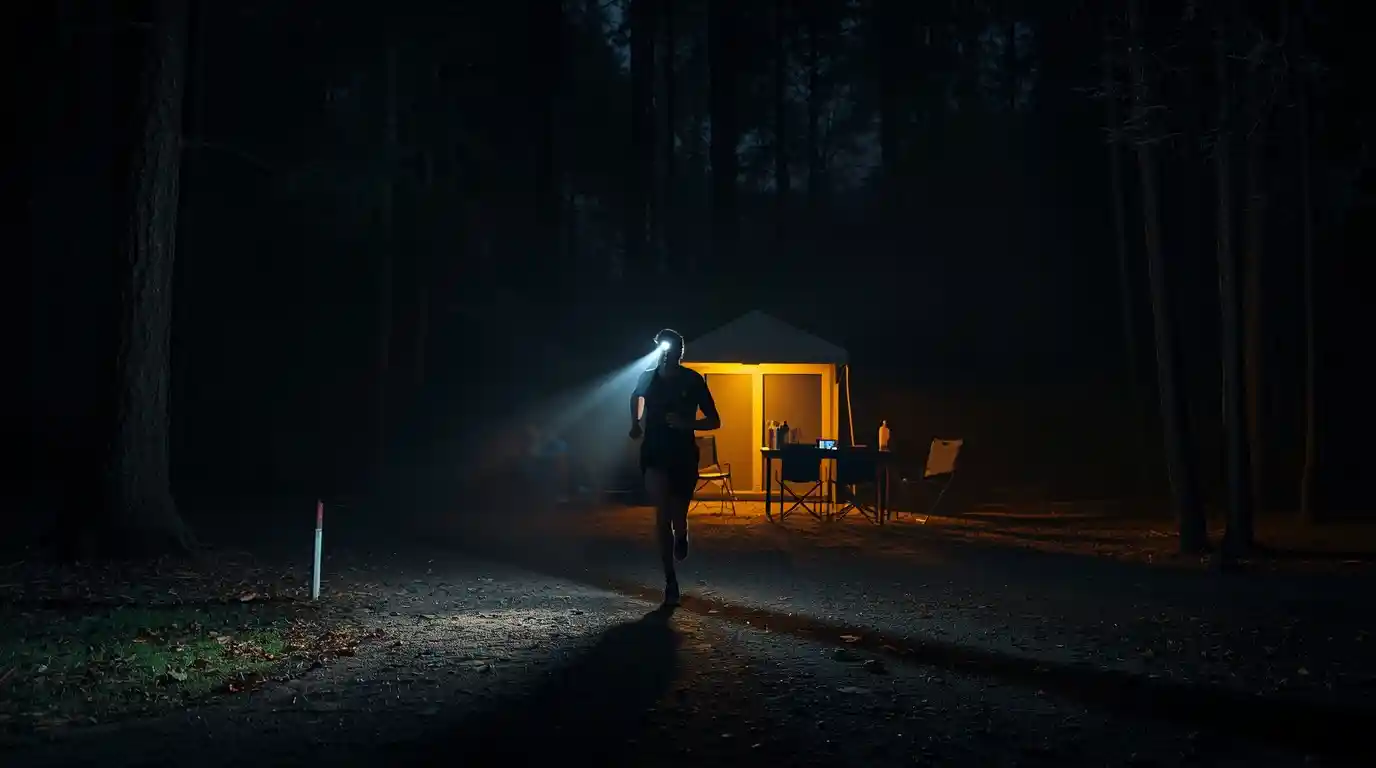
A backyard ultra has no finish line, no fixed distance and no prize for second place — it just keeps going until one runner is left. In late July, at the Last Man Standing event in Lake Placid, New York, that runner was Kyle Hunter, a 35-year-old software engineer from Pacific Beach in San Diego. He completed 33 laps in 33 consecutive hours, roughly 138 miles or about 221km, and outlasted 239 other starters, according to Fox 5 San Diego.
Put that in terms most of us can picture. It's a little over five marathons run back to back, and the longest rest he ever got was whatever was left of each hour after he finished the loop. Along the way he raised more than US$6,500 — close to A$10,000 — for the Animal Cancer Foundation, a detail that says something about why people sign up for a race with no guaranteed end point.
So why should an Australian reader care about a small event in upstate New York? Two reasons. Australia currently holds the men's world record in this format, and by a long way. And the race itself has become an odd little laboratory for something plenty of us deal with at work: how long you can keep repeating the same task before your judgement, rather than your body, is what gives out.
How a Backyard Ultra Actually Works
The rules fit on a napkin. Everyone leaves the same start line at the top of each hour and must cover a loop of 6.706km — 4.167 miles — before the next hour begins. Finish in 50 minutes and you've earned 10 minutes to eat, change socks and lie down. Finish in 58 and you get two. Miss the start, or fail to get back in time, and you're out on the spot.
That loop length isn't random. Twenty-four laps comes to exactly 100 miles in 24 hours. The race ends only when a single runner remains and completes one more lap alone. Everyone else — including the person who lasted second longest, known as the assist — is officially recorded as a did-not-finish. There is no silver medal in a backyard ultra. There's a winner, and there's a list of DNFs.
The 33 Hours That Emptied the Field
Two hundred and forty people started in Lake Placid. Most were gone inside the first day, which is typical: attrition in these events tends to arrive in clumps rather than steadily, usually once darkness lands and the loop stops being scenic. Hunter kept turning up at the corral, hour after hour, until eventually there was nobody left to send out alongside him.

What This Has to Do With Your Day Job
Strip away the sweat and the format is a management problem. You're given a fixed recurring deadline, a task that never changes, and complete freedom over how hard you push. Almost everyone who fails does so because of decisions made hours earlier, not because their legs stopped working.
The Winner Is the One Who Wastes the Least
Running the loop faster earns you nothing except more minutes on a camp chair. That flips the usual competitive instinct. The runners who blow up are typically the ones who treated an early lap like a race, banked a few extra minutes, then spent them on stiff legs and a cold body. The winning skill is restraint, applied for a day and a half.
One Hour Is a Unit You Can Train Around
Here's the part that appeals to people with mortgages and standups. You never have to contemplate 221km. You only ever have to do the next 6.7km, then decide again. That's also why the format is unusually friendly to full-time workers: the training block that matters is a single hour, repeated, which fits a weekday morning better than a five-hour trail session ever will.
Australia Still Holds the Men's Record
On 26 June 2025, Perth's Phil Gore ran 119 laps at Dead Cow Gully in Queensland — 798km, or almost 496 miles, over roughly five continuous days. He broke a mark of 116 laps set only weeks earlier by Poland's Łukasz Wróbel. New Zealand's Sam Harvey stopped at 118 laps, which is close to 791km, and was still recorded as a DNF. That's the sport in one line.
For comparison, Britain's Sarah Perry set the women's record of 95 laps, about 637km, at the world individual championship in Tennessee in October 2025. Hunter's 33 laps sits a long way below those numbers — and is still further than most Australians will run in a year.
Thinking of Trying One? Start Small
The barrier to entry is genuinely low. There's no qualifying time, the pace required is a walk-jog for most reasonably fit people, and you can stop at any hour without a shred of shame. What catches beginners out is logistics: no crew, no dry clothes, no plan for eating at 2am.
If the idea has hooked you, pick a local event with a stated cut-off — a 12 or 24-hour cap — rather than an open-ended one for your first backyard ultra. Set a lap you can hold comfortably, pack twice the food you think you need, and treat the first six hours as admin, not competition. Then watch the results at Dead Cow Gully next winter, because that's where the record will move again.


Comments 0