

Why Has No Vaccine Stopped the Congo Ebola Outbreak?
Ebola has a licensed vaccine — but not for the rare strain now tearing through eastern Congo at record speed, with Canada's border measures set to expire this month.

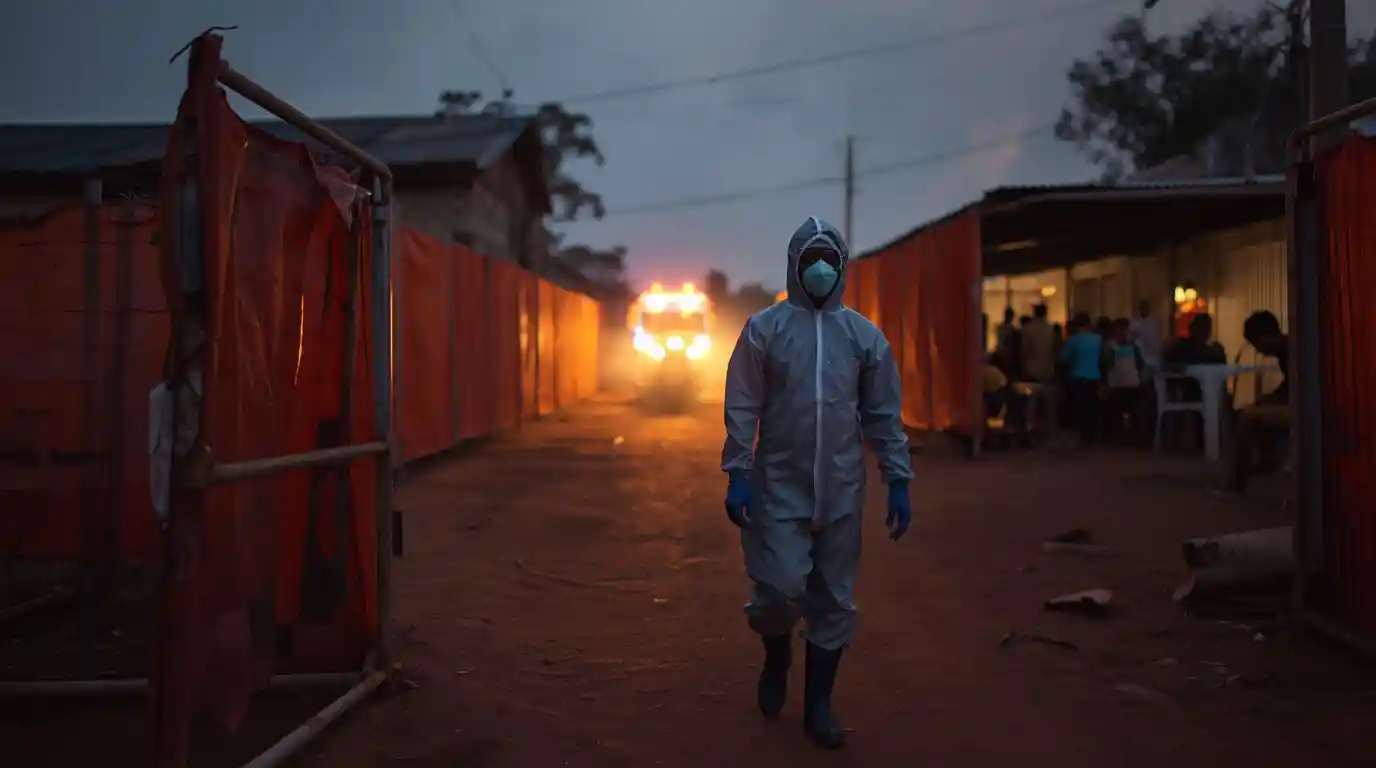
The Congo Ebola outbreak has pushed past 5,000 confirmed cases, and the people trying to contain it say they are still running behind the virus. Congo's health ministry counted 5,021 cases and 2,378 deaths as of Sunday, according to figures cited by CBS News. The epidemic was declared in mid-May. Three months on, close to half of everyone who catches it has died.
Here is the part that catches people off guard, especially anyone who remembers the last global Ebola scare. There is a licensed Ebola vaccine. It was not built for this virus. This epidemic is driven by Bundibugyo ebolavirus, a rare relative of the Zaire strain that today's approved shots and antibody drugs were designed to defeat. For Bundibugyo, nothing is approved — no vaccine, no treatment.
Speed is the second problem. Measured from the first known infection, this epidemic has spread roughly three times faster than the West African outbreak of 2014 to 2016, which killed more than 11,000 people and still holds the record as the deadliest. Congo has managed 16 previous Ebola epidemics and its responders are among the most experienced on earth. This is the one slipping away from them.
The Numbers Behind the Congo Ebola Outbreak
The overall case fatality rate sits near 47 per cent, but that average hides the worst pockets. In North Kivu, where insecurity blocks contact tracing, roughly seven in ten patients have died. Ituri province in the northeast remains the epicentre, and the virus has since seeded clusters in five other provinces. Health workers have been hit hard: 45 have died and 155 have been infected.
- Ituri: about 4,200 cases and 1,800 deaths
- North Kivu: under 600 cases, but more than 400 deaths
- Haut-Uélé, Tshopo, South Kivu and Bas-Uélé: smaller clusters, all traced to travel
- Beyond Congo: 20 cases in Uganda, including Kampala, and a single case in France
We must be frank: The epidemic is far from being under control.
That was World Health Organization Director-General Tedros Adhanom Ghebreyesus on Wednesday, adding that the risk of further spread inside Congo and across borders stays high. The WHO declared a public health emergency of international concern on May 16, only two days after Congo announced the outbreak — an unusually fast call by the agency's own standards.
Why the Usual Ebola Playbook Fails Here
The response toolkit that finally worked in eastern Congo last decade — ring vaccination around each confirmed case, plus antibody infusions for the sick — assumes you have products that match the virus. This time, responders opened the box and found the tools were the wrong shape.
A Vaccine Made for a Different Species
Ervebo, the licensed Ebola vaccine, targets the Zaire species. On May 28 the WHO advised against using it here because evidence of cross-protection against Bundibugyo was too thin. That guidance was later reversed, and a Phase 3 trial was cleared on July 31. A separate Phase 1 trial of an Oxford-designed vaccine began on July 24. Neither will deliver an answer overnight.
Treatments Still Being Tested Mid-Crisis
Clinical trials of the antiviral remdesivir and the monoclonal antibody MBP-134 started on July 12 — two months into a fast-moving epidemic. Running a drug trial inside an active outbreak zone is slow, ethically fraught work, and the results arrive long after the current wave of patients has been treated with supportive care alone.
What Keeps Outrunning the Responders
Eastern Congo is one of the hardest places on the planet to run a disease response. Armed groups restrict humanitarian access, families have been displaced repeatedly, and people move constantly across informal borders. Distrust does the rest. On August 18, residents in Aru territory burned an ambulance and damaged two other vehicles after a suspected case was reported. Every torched vehicle means contacts who never get traced.
What It Means at the Canadian Border
Ottawa moved early. Under the Quarantine Act, temporary border measures took effect May 30 and run to August 29 for anyone who has been in the Democratic Republic of Congo, Uganda or South Sudan in the previous 21 days. Since July 20, foreign nationals who were in the DRC within 21 days are barred from entering Canada outright. Travellers arriving from Uganda or South Sudan with valid documents must quarantine for 21 days even without symptoms.
For most people in Canada, the day-to-day risk stays very low. Ebola does not spread through the air — it moves through direct contact with the body fluids of someone who is already sick. The practical exposure here is travel, work and family ties to the region, not community transmission in Toronto or Vancouver. The Government of Canada currently advises against non-essential travel to the affected areas.
What to Watch in the Weeks Ahead
Three things will tell you whether the Congo Ebola outbreak is turning. First, whether Canada's border measures are extended past August 29 or quietly allowed to lapse — that decision signals how Ottawa reads the trajectory. Second, whether North Kivu's brutal 70 per cent death rate starts falling, which would mean responders are finally reaching patients early. Third, early signals from the Ervebo trial.
If you have travel booked to Congo, Uganda or South Sudan this autumn, check the federal travel health notices before you pay any remaining balance, and read your trip-cancellation policy closely — many insurers void coverage once a government advisory is already in place. If family members are travelling home from the region, plan for the 21-day quarantine rather than assuming it will be gone by the time they land.




Comments 0