

Why Hasn't NFL International Expansion Happened Already?
The NFL will play nine regular-season games outside the United States in 2026 — and still has no plan to put a franchise there.

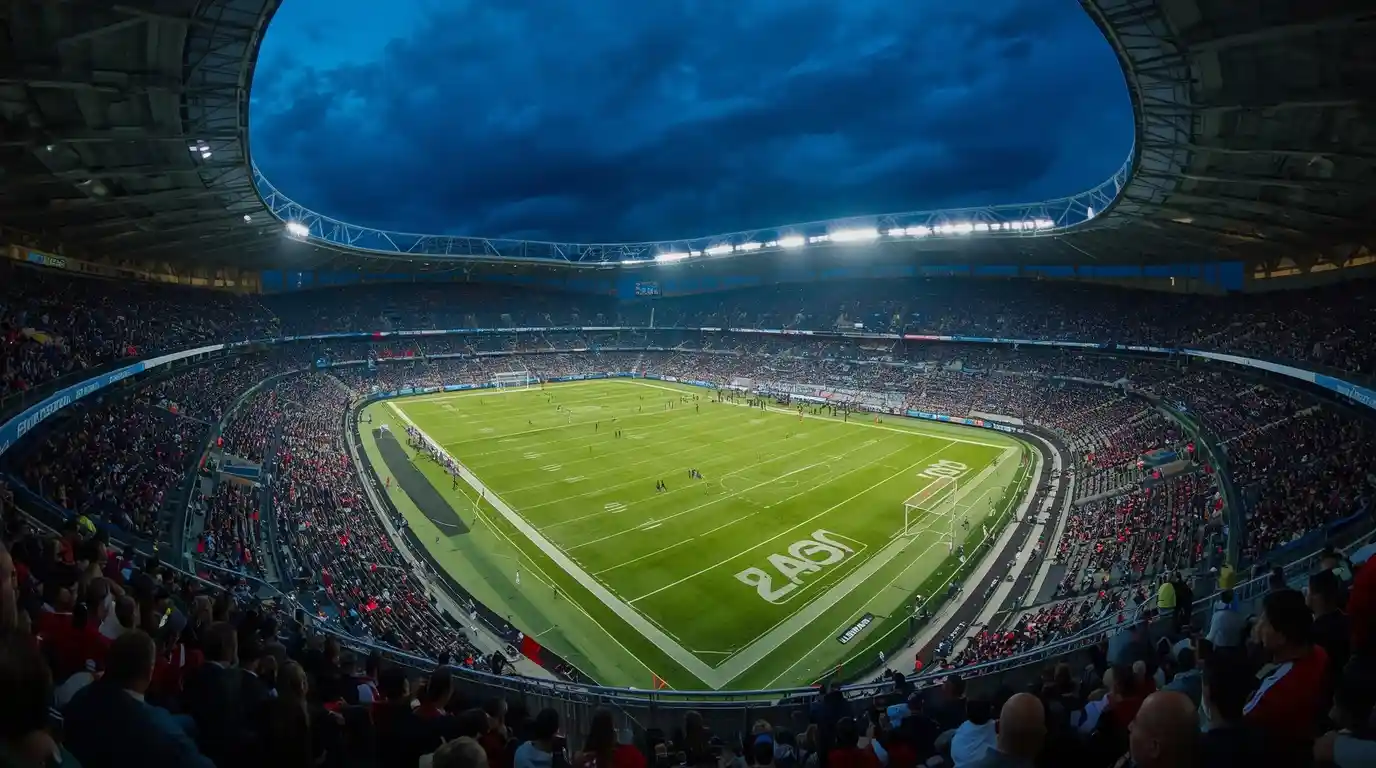
NFL international expansion has been discussed for so long that it's easy to forget the league has never actually done it. Meanwhile, the 2026 schedule is the most aggressive overseas push in NFL history: nine regular-season games, seven countries, four continents, running from September 10 to November 22.
That last part deserves a beat. Nine games out of 272 — roughly one in every thirty on the calendar — will kick off outside the United States next season. Melbourne and Paris host NFL games for the first time. Madrid gets its second. London gets three in fifteen days. Two clubs, Jacksonville and San Francisco, will be the designated home team abroad twice each.
For American fans, none of that is abstract. It means more Sundays that start before the coffee does, more of your team's home dates sold to a stadium several thousand miles away, and one honest question underneath it all: is the league laying track toward a franchise overseas, or just running a very profitable travel business?
Nine Games, Four Continents, Ten Weeks
The 2026 slate is not a tour so much as a rolling occupation of the fall calendar. According to NFL.com, the schedule stretches across ten weeks and includes stadiums better known for soccer finals than for punt coverage. Here's the full run:
- Sept. 10 — 49ers at Rams, Melbourne Cricket Ground
- Sept. 27 — Ravens at Cowboys, Maracanã, Rio de Janeiro
- Oct. 4 — Colts at Commanders, Tottenham Hotspur Stadium
- Oct. 11 — Eagles at Jaguars, Tottenham Hotspur Stadium
- Oct. 18 — Texans at Jaguars, Wembley Stadium
- Oct. 25 — Steelers at Saints, Stade de France, Paris
- Nov. 8 — Bengals at Falcons, the Bernabéu, Madrid
- Nov. 15 — Patriots at Lions, Munich
- Nov. 22 — Vikings at 49ers, Estadio Banorte, Mexico City
Read that list again and notice what's missing. Every one of these is a home game donated by an existing franchise. Not one belongs to a team that lives there. The NFL has built a supply chain for playing abroad without ever building an address abroad.
The Real Barrier to NFL International Expansion
The holdup isn't demand. Commissioner Roger Goodell told CNBC's Alex Sherman that overseas markets are attractive and that some could support a team, comments reported by Sports Illustrated in September 2025. He also flagged the thing that keeps stalling NFL international expansion — not whether tickets sell, but what a permanent overseas club would do to competition.
"We've always focused on, what are the competitive consequences of that?" — Roger Goodell
Those consequences are brutal in practice. A London club's division rivals would each fly transatlantic once a year while the London team flies eight or nine times. Free agents would weigh visas, taxes and schooling. A single franchise abroad is a scheduling orphan, which is why reporting has pointed toward a whole international division instead.

Which Cities Actually Have a Case
Strip away the novelty games and only a handful of markets clear the bar of hosting eight or nine dates a year, every year, in November weather, with the practice facilities and medical infrastructure to match.
London Is Already Running the Trial
London has staged NFL games since 2007 and draws three in 2026 alone. Tottenham Hotspur Stadium was designed with American football in mind, and Wembley provides overflow capacity. No other candidate city has nineteen seasons of operational data, established broadcast windows, or a proven willingness to fill the building on a Sunday morning.
Mexico City Brings the Crowd and the Altitude
Mexico City hosted regularly from 2016 through 2022 and returns in Week 11. Geography is its strongest argument: natural rivalries with Dallas, Houston and Arizona, and short flights by NFL standards. Sitting above 7,000 feet is a genuine home-field weapon — and a genuine recruiting problem for visiting rosters and their conditioning staffs.
Munich and Madrid Are the Insurance Policy
Germany has delivered some of the loudest crowds the league has seen abroad, and Munich is back on the 2026 calendar. Madrid earns a return visit after its 2025 debut. Both are plausible members of a European division; neither is plausible as a standalone franchise, which is exactly the point.
Melbourne and Rio Are Showcases, Not Homes
Melbourne runs about fourteen hours ahead of the East Coast in September. Rio is a marketing conquest with no domestic football pipeline. These are brand-building stops — valuable, televised, and entirely disconnected from where a team could actually be based.
Why 2002 Still Hangs Over All of This
The last time the NFL added a franchise was the Houston Texans in 2002. Before that, Carolina and Jacksonville in 1995. That's it in three decades. Expansion requires a supermajority of owners to vote away a slice of shared revenue, and per a Front Office Sports report cited by CBS Sports, one owner put the international-division timeline anywhere from two to five years — which is another way of saying nobody has committed.
What to Watch Next Fall
Three markers will tell you more than any press conference. Watch whether London's three games sell out at full price rather than through packages. Watch whether the NFL adds a tenth or eleventh overseas date for 2027. And watch for any owner attaching a real number to a stadium project in London or Mexico City.
Until one of those happens, treat NFL international expansion the way you'd treat a friend who keeps browsing real estate listings. Set your DVR for the 9:30 a.m. ET windows, enjoy the Maracanã and the Bernabéu as television, and don't expect a new team's logo on your Sunday schedule anytime this decade.




Comments 0