

Why Is the Wakefield Dog Attack Being Treated as Murder?
A row on a converted railway path in Calder Grove left one man dead within hours — and police arrested a suspect for murder, not just a dog offence.

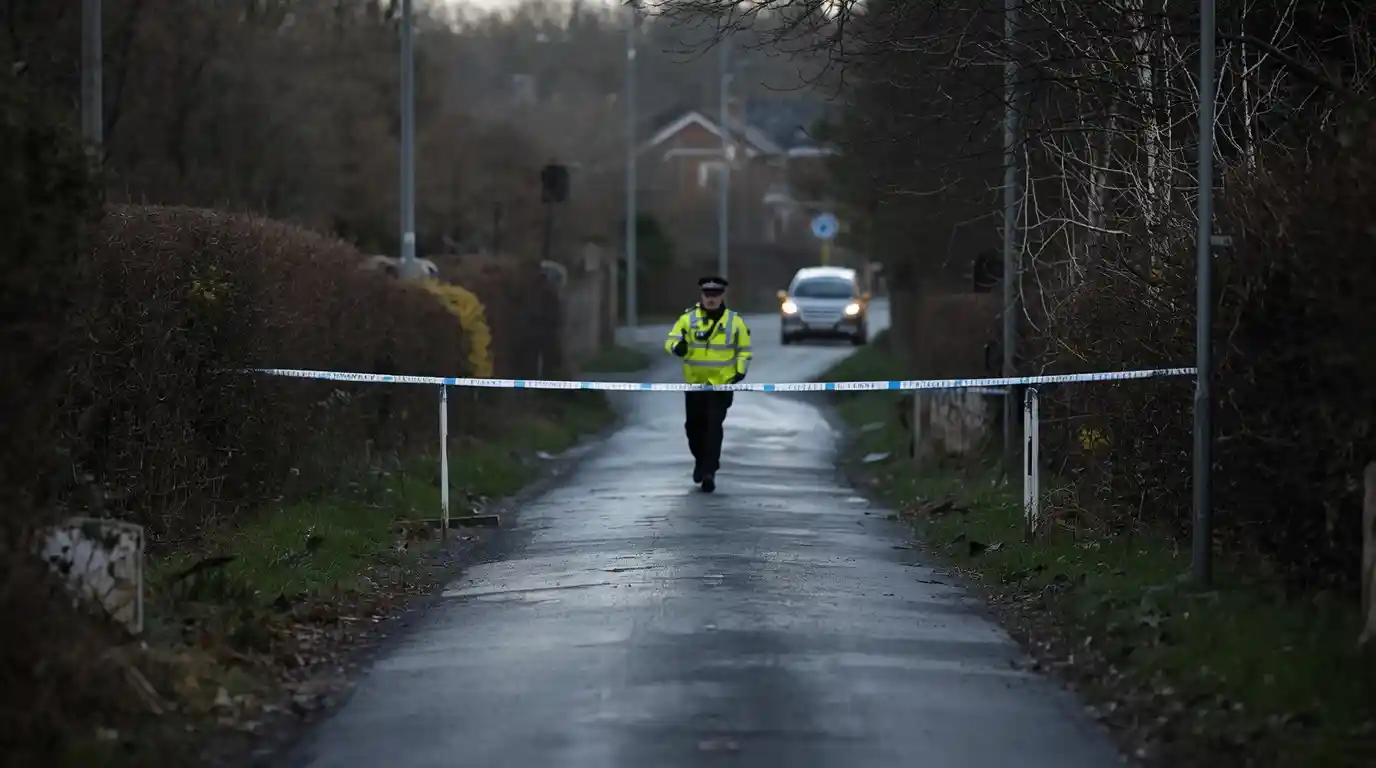
A Wakefield dog attack that began as a row on a quiet footpath has ended with one man dead and another in a police cell on suspicion of murder. West Yorkshire Police were called at 1.36pm on Saturday 15 August to the old railway line path off Blacker Lane in Calder Grove, after reports of an altercation during which a man was bitten by a dog.
The injured man, 55, was taken to hospital with critical injuries. He died shortly after 7pm — under six hours from the first call. A 55-year-old man was arrested on suspicion of murder and of being the owner of a dog dangerously out of control in a public place causing injury. He remains in custody. The dog believed to have been involved has been seized.
That double wording in the arrest matters far more than it looks. Deaths involving dogs in England are nearly always handled under the Dangerous Dogs Act, where the question is whether an owner lost control of an animal. Murder asks something completely different: whether a person intended serious harm or death. The force's Homicide and Major Enquiry Team has the case.
What Police Say Happened on Blacker Lane
Calder Grove sits a few miles south-west of Wakefield city centre, and the route involved is a converted stretch of disused railway — exactly the sort of path locals use for dog walks, cycling and shortcuts to school. Police have not said what the argument was about, how many people were present, or what type of dog was involved. The man who died has not been named.
Detective Chief Inspector Michael Cox is leading the investigation and has asked anyone who was on that path on Saturday afternoon to come forward.
Sadly, a man has died and it is really important that we understand the circumstances of what has taken place.
Officers are especially keen to trace two women who stopped to help the injured man and directed police to him when they arrived. One is known only as Sophie. Anyone with information can call 101 or use the force's live chat, quoting crime reference 13260465524, or contact Crimestoppers anonymously on 0800 555 111.
Why the Wakefield Dog Attack Is a Murder Inquiry
An arrest is not a charge, and nobody has been charged with anything yet. But the pairing of the two suspected offences tells you how detectives are thinking about the afternoon on Blacker Lane. They are keeping both doors open: the accident route and the deliberate route.
The Charge Most Fatal Dog Cases End With
Section 3 of the Dangerous Dogs Act 1991 makes it an offence to be in charge of a dog that is dangerously out of control. The 2014 overhaul raised the maximum sentence for a fatal attack to 14 years and extended the law to private property, closing the loophole that had protected owners whose dogs killed indoors. Crucially, it does not require the owner to have wanted anyone hurt.
When a Dog Counts as a Weapon
Murder is a much higher bar. Prosecutors would need evidence that someone intended to kill or cause really serious harm. In principle, an animal deliberately set on another person can be treated in law much like any other weapon — the intent sits with the handler, not the dog. Proving that, from a chaotic few seconds on a footpath, is hard.
How Often Do Dogs Kill Someone in Britain?
Fatal dog attacks used to be rare here: roughly three a year across the UK before 2021. That figure jumped to around ten a year in 2022 and 2023. Recorded Dangerous Dogs Act offences also climbed, from 31,398 in 2023 to 32,568 in 2024 — close to 89 recorded offences every day across the country.
The Breed Nobody Has Named Yet
Expect speculation, and treat it carefully. Police have not confirmed the breed. The American XL Bully was banned in England and Wales in early 2024, requiring exemption certificates and a lead and muzzle in public, and analysis published by Animals 24-7 suggests deaths linked to that breed fell from ten in 2024 to four in 2025. None of that tells us anything about this case.
What to Do if You See a Dog Attack
The blunt lesson from cases like this is that most people freeze. If you come across one, the advice from vets and police is consistent:
- Call 999 immediately — dog bites bleed and infect fast, and ambulance crews prioritise them.
- Do not put your hands between the animals or grab a collar; use a bag, coat or bin lid as a barrier.
- Photograph the dog and note which way its owner went, before anyone leaves.
- Apply firm pressure to the wound and keep the injured person still and warm.
The next milestone in the Wakefield dog attack is procedural but decisive: police can hold a murder suspect for 24 hours, extendable to 96 with authorisation, before charging or releasing him. Watch for a charging decision, an inquest opening at Wakefield Coroner's Court, and a formal naming of the man who died. If you were on that footpath on Saturday, or you know a Sophie who was, ring 101 today rather than assuming someone else already has.




Comments 0