

Why Nova Scotia Tourism Funding Is Buying Cabins, Not Ads
Ottawa's latest $1.2 million for Cape Breton, Antigonish and Baddeck goes into buildings and beds rather than marketing — a bet that the province's real shortage is supply, not visitors.

The latest round of Nova Scotia tourism funding from Ottawa is not going into advertising. The federal government is putting $1.2 million behind nine recipients across Cape Breton, Antigonish and Baddeck, and nearly all of it buys physical things — cabins, a theatre building, community space and outdoor attractions a visitor can walk into.
The money comes from the Atlantic Canada Opportunities Agency, the federal body responsible for economic development in the four Atlantic provinces. This announcement covers five tourism operators on Cape Breton Island plus two non-profit organizations in Antigonish and two more in Baddeck. The largest single item made public is $400,000 for Auberge Doucet, a hilltop inn in Chéticamp on the Cabot Trail.
That matters more than a routine funding notice normally would, because the province's tourism problem right now isn't demand. Visitors spent $3.7 billion in Nova Scotia in 2025, up eight per cent year over year and ahead of the national growth rate. The province counted 2.1 million visitors, roughly 79,000 more than in 2024. What's thin is supply outside Halifax.
Where the Nova Scotia Tourism Funding Actually Lands
The agency has published details on some projects rather than a full line-by-line ledger, but the geography is clear enough, and three of the named projects show what it is betting on: distinctive places to sleep, and a stage that keeps running after the beaches empty out.
- Five tourism operators on Cape Breton Island
- Two non-profit organizations in Antigonish
- Two non-profit organizations in Baddeck
Four Glass-Fronted Cabins Above Chéticamp
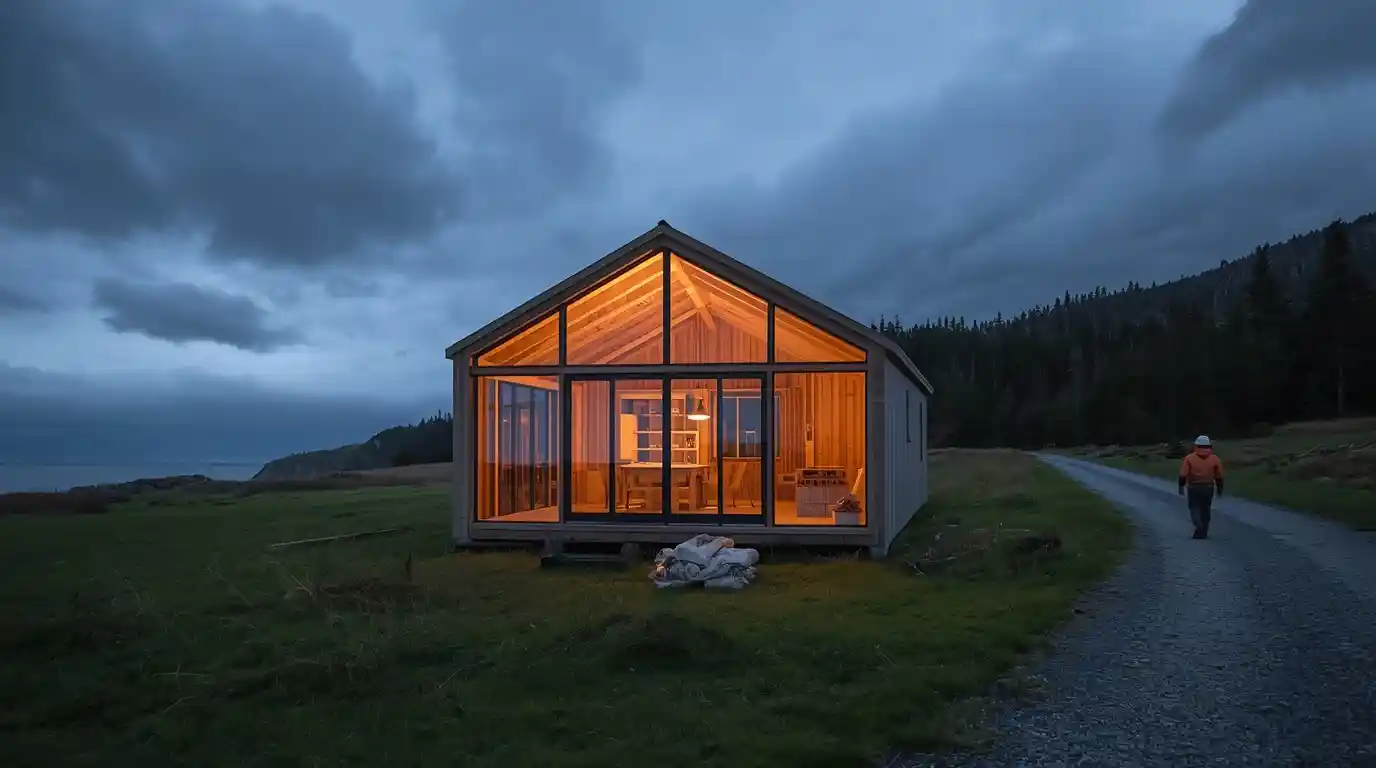
Auberge Doucet receives $400,000 to build four design-forward "Looking Glass" cabins. The contribution is repayable, so it behaves more like a loan than a gift. Chéticamp sits at the western entrance to Cape Breton Highlands National Park, where July and August rooms sell out early and there is very little distinctive stock for anyone arriving in late September.
Off-Grid Cabins Built to Survive February
Another $250,000 supports Live Life In Tents in expanding its outdoor hospitality operation, including four off-grid, all-season wilderness cabins and upgraded facilities on site. That phrase "all-season" is doing the heavy lifting. Canvas tents earn revenue for about twelve weeks a year; heated cabins can sell in October, and in February to people chasing snow, quiet and dark skies.
A Permanent Home for Theatre Baddeck
In Baddeck, money goes toward securing a permanent building for the Theatre Baddeck Society and turning it into a community arts hub — structural work, a lighting grid, lighting, sound and projection equipment, plus electrical and mechanical upgrades. Baddeck is the Cabot Trail's traditional overnight stop, and a working venue is often what separates a stopover from a second night's spend.
Why Beds and Stages Instead of Ad Campaigns?
Federal tourism dollars frequently go to promotion. Wine Growers Nova Scotia received $150,000 from the same agency purely for a marketing and social media plan. This package inverts that logic. It reads as an argument that the province no longer has to persuade Canadians to visit — it has to house them once they get there, and give them something to do at eight in the evening in a village of 3,000 people. Announced separately this month, $135,000 also went to Devour! Studios for a Nova Scotia Seafood Academy, which follows the same pattern: build the experience, not the billboard.

Is It a Grant or a Loan? It Depends Who Got It
Two very different instruments sit inside that $1.2 million, and the distinction usually vanishes in headlines. Private operators are typically funded through the Regional Economic Growth through Innovation program on repayable terms, meaning the business pays the money back over time. Registered non-profits, such as the Antigonish and Baddeck groups, generally receive non-repayable contributions. So part of this package is a subsidy and part of it is a revolving fund that returns to Ottawa.
The $3.7-Billion Industry Has One Soft Spot
Look under the 2025 headline and the growth is regional. Atlantic Canadians made 891,000 visits, up five per cent. Quebec surged 22 per cent to 128,000 visitors. Ontario, still the biggest out-of-region market at 584,000, slipped two per cent — about 13,000 fewer people. Growth is coming from drivers, not flyers, and drive-market travellers are exactly who books a cabin on the Cabot Trail rather than a Halifax hotel.
What Travellers Will Notice, and When
Not much this season. Small builds like these usually take a construction cycle, which in Cape Breton means the 2027 summer at the earliest, and theatre renovations are often phased across two or three winters. The practical read for anyone planning a trip: rural Nova Scotia stays supply-constrained through 2026, so book Cabot Trail accommodation months ahead, and expect the new places to launch at premium nightly rates rather than budget ones.
Watch two things over the next year. First, whether these operators actually open in shoulder season, because October and May availability is the real test of whether the money changed anything. Second, whether the pattern holds in the next announcement — the agency put over $3 million into Saint John's tourism and cultural sector in June, and if that money also lands in buildings rather than campaigns, this is a deliberate regional strategy, not a one-off.


Comments 0