

Why Pixel 11 Spare Parts Now Matter More Than Updates
Google will stock batteries and screens for the Pixel 11 line for seven years in every market it sells in — a bigger deal in India than the update policy it matches.

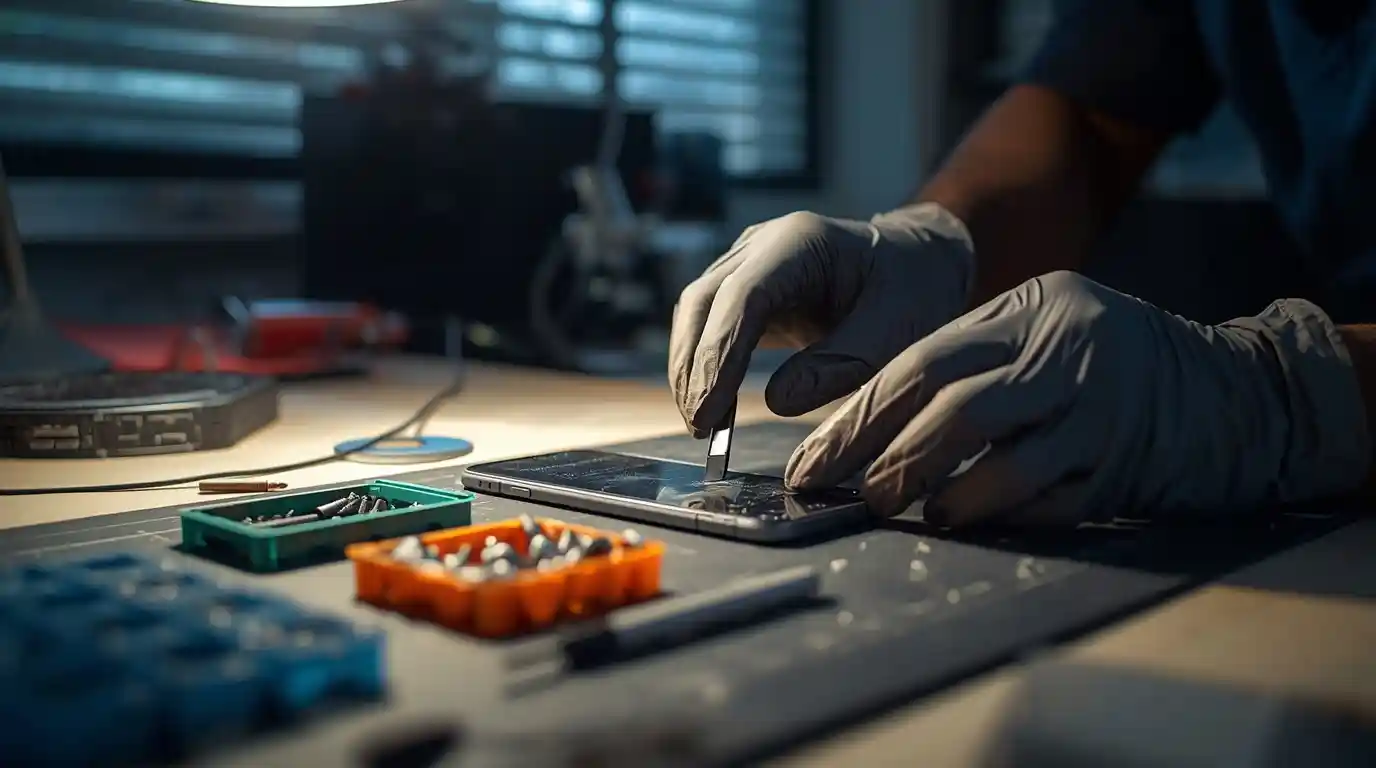
Google has committed to seven years of Pixel 11 spare parts in every market where the phone goes on sale, and it chose its India launch to say so. The promise covers the entire line — Pixel 11, Pixel 11 Pro, Pixel 11 Pro XL and the Pixel 11 Pro Fold — and it matches, year for year, the seven years of Android and security updates Google already puts on the same devices.
That lands differently once you look at what these cost here. The Pixel 11 starts at ₹89,999 for 12GB/256GB and runs to ₹1,04,999 for 512GB. The Pro opens at ₹1,19,999, the Pro XL at ₹1,34,999, and the Pro Fold sits alone at ₹1,86,999 in a single 16GB/512GB trim. The base model is roughly ₹10,000 dearer than where the Pixel 10 started.
Spend that and the real question stops being "will it get the next Android version" and becomes "can I still buy a screen for it in 2033". Software support without hardware support gives you a phone that boots beautifully and can't hold a charge past lunch. Google is finally answering both halves of that, which is rarer than it ought to be.
What Google actually promised
This is a stocking commitment, not free repairs. Parts — batteries and displays being the two that touch most owners — are meant to stay available for seven years in each country the Pixel 11 is sold in, India and the United States included. You still pay for the component and the labour. What changes is that the component exists at all, which is the thing that quietly retires most three-year-old handsets.
It's a continuation rather than a bolt from the blue. Google began selling genuine Pixel components through iFixit back in 2022, and the Pixel 8 generation in 2023 was the first to carry the seven-year software pledge every Pixel has inherited since. The parts half was always implied. Now it's stated.
Why Pixel 11 spare parts matter more than updates
Run the battery maths. Google rates recent Pixel cells at about 1,000 charge cycles before capacity falls roughly 20%. Charge once a day and you reach that in under three years. So a Pixel 11 bought this month probably wants a new battery around 2029 — with four years of promised update support still sitting unused on the clock. Without parts on the shelf, those four years are decorative.

How the seven years play out in real use
The promise breaks into three practical moments, and only one of them is about the phone getting old on its own.
Year three: the battery bill
This is the common one. Screen time gets worse, the phone dies at 30%, and you decide between a replacement cell and a new handset. A battery swap on a flagship typically costs a small fraction of the phone. On a ₹89,999 device, that arithmetic favours repair heavily — provided the part is in the country.
Year four or five: the drop
Screens don't fail on a schedule; they fail on a staircase. The value of a seven-year window here is that a broken display in 2031 is still a repair job rather than a forced upgrade. Foldables raise the stakes further — the Pro Fold's inner panel is the most expensive single thing on the phone.
Getting it fitted in India
Here's the gap. Google's announcement didn't spell out how parts reach independent repair shops in India, or whether ordinary buyers can order components directly the way iFixit allows elsewhere. Availability through authorised centres only, versus an open parts channel, changes what a repair costs in a smaller city by a lot.
The rule Europe wrote first
Google isn't inventing this standard. The EU's ecodesign rules for phones took effect on 20 June 2025 and require makers to keep critical parts — batteries, displays, cameras, charging ports, buttons — available for at least seven years after a model stops selling there, shipped within five to ten working days. Batteries must survive 800 cycles at 80% capacity, and phones must take 45 accidental drops.
Two things worth noticing. Google's 1,000-cycle rating comfortably clears the European floor. And the EU counts its seven years from the end of sales, not from launch — so a phone sold for two years can owe parts for nine. Whether Google's clock starts at launch or at discontinuation is the detail nobody has pinned down yet.
What India's own repair rules already give you
The Department of Consumer Affairs runs a Right to Repair portal covering four sectors, including mobiles and electronics, launched under the LiFE initiative. Brands listed there are expected to publish spare-part prices, availability and the total cost of a repair. It's underused, but it turns "how much for a screen" from a shrug at the counter into something you can check before you walk in.
If you're buying a Pixel 11 this season, do two things. Ask the seller what a display and battery replacement will cost today, in writing, and look the model up on the Right to Repair portal before the warranty runs out. Then watch for Google to clarify whether Indian buyers get an open parts channel or only service-centre access — that single answer decides whether seven years is a genuine promise or a line on a slide.



Comments 0