

Why the Congo Ebola Outbreak Has No Vaccine to Stop It
A rare strain of the virus has slipped past the one Ebola vaccine that works, and eastern Congo is adding roughly 600 cases a week.
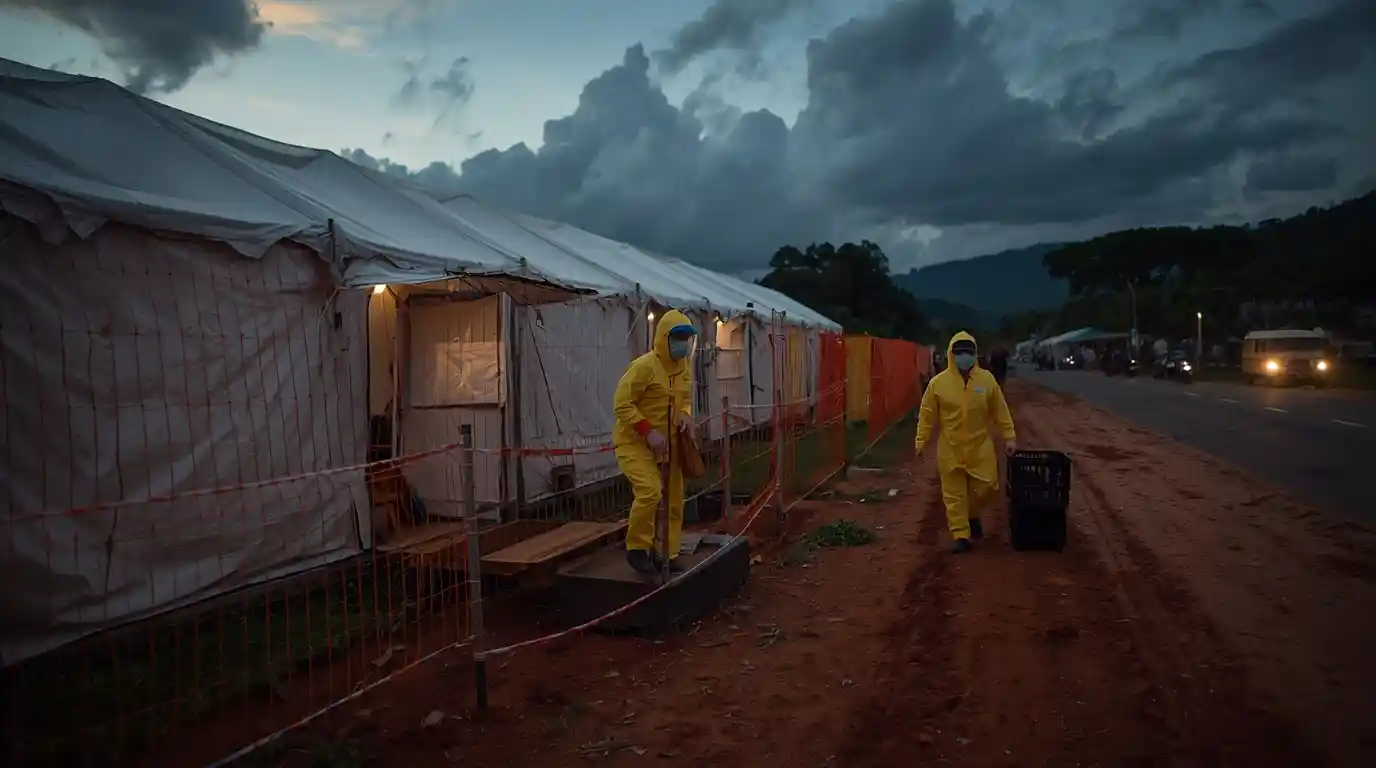
The Congo Ebola outbreak has now passed 5,021 confirmed cases, and 2,378 of those patients have died. The figures, reported by Congolese health authorities and carried by CBS News and The Associated Press, run through Aug. 18. A week earlier the count stood at 4,381 cases and 2,011 deaths — roughly 640 new infections and 367 more deaths in seven days.
Speed is what alarms epidemiologists. The World Health Organization estimates the virus is moving through eastern Congo about three times faster than the 2014-2016 West Africa epidemic, which remains the deadliest on record with more than 11,000 deaths. Congo declared this outbreak on May 15, though the first suspected case is believed to date to February. WHO expects the final toll here to pass West Africa's.
Then there's the part most Americans won't expect. A licensed Ebola vaccine exists, and it has been used in Congo before. It does not work against this one. The culprit is the Bundibugyo species of the virus, a rare cousin with no approved vaccine and no approved treatment anywhere in the world.
Nearly Half the People Infected Are Dying
The case fatality rate stands at 47.4%. In North Kivu province, where fighting and displacement make patients hardest to reach, it climbs to about 70%. A rate that high usually says less about the virus itself than about how late people get to care. Untreated, Ebola dehydrates patients to death; with early fluids and supportive care, a large share survive.
The Vaccine Gap Behind the Congo Ebola Outbreak
The shot deployed during Congo's 2018-2020 epidemic targets the Zaire species. Bundibugyo is a different virus, and until this year almost nobody was building against it. That changed quickly. On June 1, the Coalition for Epidemic Preparedness Innovations backed three candidates: $50 million to Moderna, $8.6 million to the University of Oxford and $3.2 million to IAVI. Oxford's Phase 1 trial began July 24.
A Phase 1 trial tests safety in a small group of volunteers. Nothing in that pipeline will be licensed in time to stop the current wave. WHO has deployed a field trial protocol called PARTNERS in Congo and Uganda to gather evidence on candidate products — the same route the Zaire vaccine took a decade ago.
Why Responders Keep Getting Pushed Out
This is the Congo Ebola outbreak the country's 17th, and Congo has some of the most experienced outbreak teams alive. The obstacle is the ground they work on: armed conflict, mass displacement and constant movement across a remote border region where six provinces now report cases.
We must be frank: The epidemic is far from being under control. — Tedros Adhanom Ghebreyesus, WHO Director-General
An Ambulance Set on Fire in Aru
On Aug. 18, residents of Aru territory attacked a health team and burned an ambulance, according to The Associated Press. Attacks like that rarely come from nowhere; they follow rumor, grief and the sight of relatives carried off in sealed vehicles. Each one costs days of contact tracing, and untraced contacts are exactly how the case count keeps climbing.
Health Workers Who Haven't Been Paid
Some responders have gone on strike over unpaid wages. Ituri, the hardest-hit province and home to the mining town where the outbreak is thought to have begun, has also seen health workers deliberately targeted. Losing trained staff halfway through an epidemic hurts more than never having had them.
How This Stacks Up Against 2014
West Africa's epidemic ran roughly two years before it was contained. The Congo Ebola outbreak reached nearly 2,400 deaths in the six months since its first suspected case. Money moved faster this time: the State Department announced $112 million in bilateral assistance in late May for protective gear, screening, contact tracing and diagnostics, while the UK pledged up to £20 million and the European Union €15 million. Funding isn't the binding constraint. Access is.
What It Means if You're Flying From the Region
WHO declared a public health emergency of international concern on May 17 — the same designation it used for COVID-19. US agencies moved within days: a CDC health alert on May 19, a Level 3 travel notice for Congo and a Level 1 notice for Uganda, and enhanced screening at Washington Dulles starting May 21.
Flights carrying passengers who have been in Congo, Uganda or South Sudan are routed to one of four airports — Dulles, Atlanta, Houston Bush and JFK — where CDC quarantine staff run a multi-stage check. A CDC order issued May 18 also suspends entry for foreign nationals who were in those three countries during the previous 21 days. US citizens, nationals and green card holders are exempt.
How Worried Should You Be at Home?
Not very. No suspected, probable or confirmed case has been reported in the United States, and the CDC calls domestic risk low. One American who had been working in Congo tested positive, recovered fully and was released from care. Ebola passes through direct contact with the bodily fluids of a symptomatic person, not through the air, which is why it tears through households and clinics but travels poorly on aircraft.
If you have travel booked to East or Central Africa, read the CDC's notice before you fly and plan for the rerouting rules on the way home. Otherwise, watch one number: the weekly jump in cases. The Congo Ebola outbreak stays out of control for as long as it keeps adding around 600 infections a week, and the first genuine sign of a turn will be that figure falling — not a vaccine announcement.




Comments 0