

Your 1982 Copper Penny Is Almost Certainly Worth 3 Cents
The five-figure penny is real, but only two have ever been confirmed sold — and the coin in your jar is almost certainly one of the seven common ones.

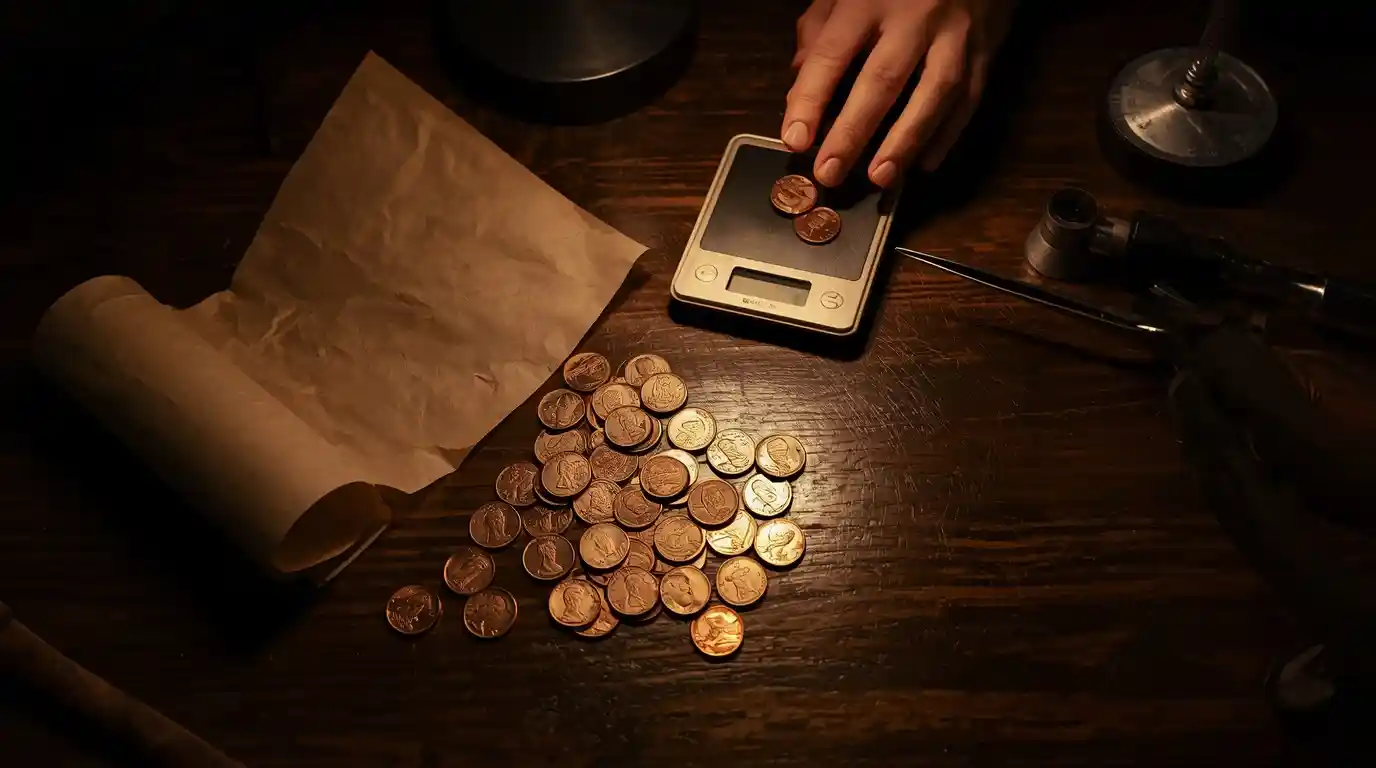
If someone told you that your 1982 copper penny could be worth $20,000, the honest answer is that it almost certainly isn't. A typical one that's been through cash registers and coin jars for four decades is worth about three cents — a little over its metal, and nothing more. The five-figure coin behind the rumor is real. It's just so rare that the entire confirmed population can be counted on one hand.
Here's what actually happened that year. The U.S. Mint switched the cent from a 95% copper alloy to a zinc core wearing a thin copper coat, because copper had simply gotten too expensive to spend on a one-cent coin. The changeover wasn't clean. Both compositions ran through 1982, and the Mint also used two slightly different date punches — a large date and a small date. Multiply those out and you get seven ordinary 1982 cents, all of which still turn up in pocket change.
Then there's the eighth one. At Denver, the small-date design was supposed to be struck only on the new zinc blanks. A few leftover copper blanks apparently slipped into the presses anyway. A 1982-D small date struck in copper is the coin worth serious money — and for 34 years, nobody could prove one existed.
The Coin Collectors Spent 34 Years Chasing
Paul Malone, a collector in Minnesota, found the first confirmed example on November 23, 2016. He wasn't bidding at a major auction or trading at a show. He was working his way through a bag of 5,000 cents picked up from a local bank — face value, $50. Numismatic News reported the find in its January 3, 2017 issue, confirming something dealers had whispered about for decades but had never actually held.
NGC graded the coin AU58, meaning it had circulated but barely. It crossed the block at a Stack's Bowers auction in August 2017 and brought $18,800. A second example surfaced later and sold for $10,800 at a Heritage Auctions sale on April 25, 2019. Those two results are, more or less, the coin's entire market history.
How to Check Your 1982 Copper Penny
Three things have to be true at once, and any one of them failing kills it. The good news is that the test takes under a minute per coin and the first step eliminates the overwhelming majority.
Weigh It Before You Squint at Anything
Copper 1982 cents weigh about 3.11 grams, with a tolerance running roughly 2.98 to 3.24. Zinc ones weigh about 2.5 grams, in a 2.40 to 2.60 band. There's no overlap, which makes the scale the only test you can't argue with. A kitchen scale reading whole grams is useless here — you want a small digital scale accurate to a hundredth of a gram, the kind sold for jewelry for around $15.
Read the Tops of the Four Numerals
On a large date, the tops of the 9 and the 8 sit visibly higher than the 1 and the 2. On a small date, all four numerals line up neatly across the top. The other reliable tell is the 2 itself: on small-date coins the top of the 2 curls downward, while on large-date coins it finishes flat. Good light and magnification help more than you'd expect.
Find the Mint Mark Under the Date
A D below the date means Denver. No letter means Philadelphia, and a Philadelphia small-date copper cent is a common coin worth a few cents. The rare piece needs the D, the small date and the copper weight together. Two out of three is nothing.

Where That $20,000 Number Came From
Neither verified sale reached $20,000. The higher figures you see quoted are price-guide projections — estimates of what an uncirculated example might fetch if one ever showed up, not records of what anyone has paid. Both known coins graded AU58, so the top of this market has never actually been tested. Anything advertised as a rare 1982 copper penny without certification from PCGS or NGC is selling you a story, not a coin.
What the Other 1982 Cents Are Actually Worth
Circulated copper 1982 cents trade for roughly three cents apiece. The zinc ones are worth a cent. Real premiums show up only in high uncirculated grades, which almost never survive a coin jar. Put that in perspective: sorting an entire $50 bank bag the way Malone did means handling 5,000 coins for maybe a few dollars in metal. It's a hobby with a lottery ticket buried in it, not a side hustle.
Why the Timing Makes This Rumor Louder
The Mint struck its last circulating cent at Philadelphia on November 12, 2025, ending more than two centuries of production. Each penny had climbed to nearly four cents in production cost by 2024, and U.S. Treasurer Brandon Beach said stopping saved taxpayers $56 million. The final coins carried an omega symbol, the last letter of the Greek alphabet. With the denomination now closed, the jars are coming out — and so are the scams.
If you want to search, buy the $15 scale first and check only the 1982-D coins that read near 3.11 grams. Don't clean anything you find; cleaning destroys most of the value. And if a coin does pass all three tests, send it to a grading service before you believe any price at all.




Comments 0