

Your Unused Vacation Days and Croatia's Art of Doing Nothing
Encyclopaedia Britannica just handed English speakers a Croatian word for guilt-free idleness — arriving in a country where four in ten workers can't finish their own paid time off.

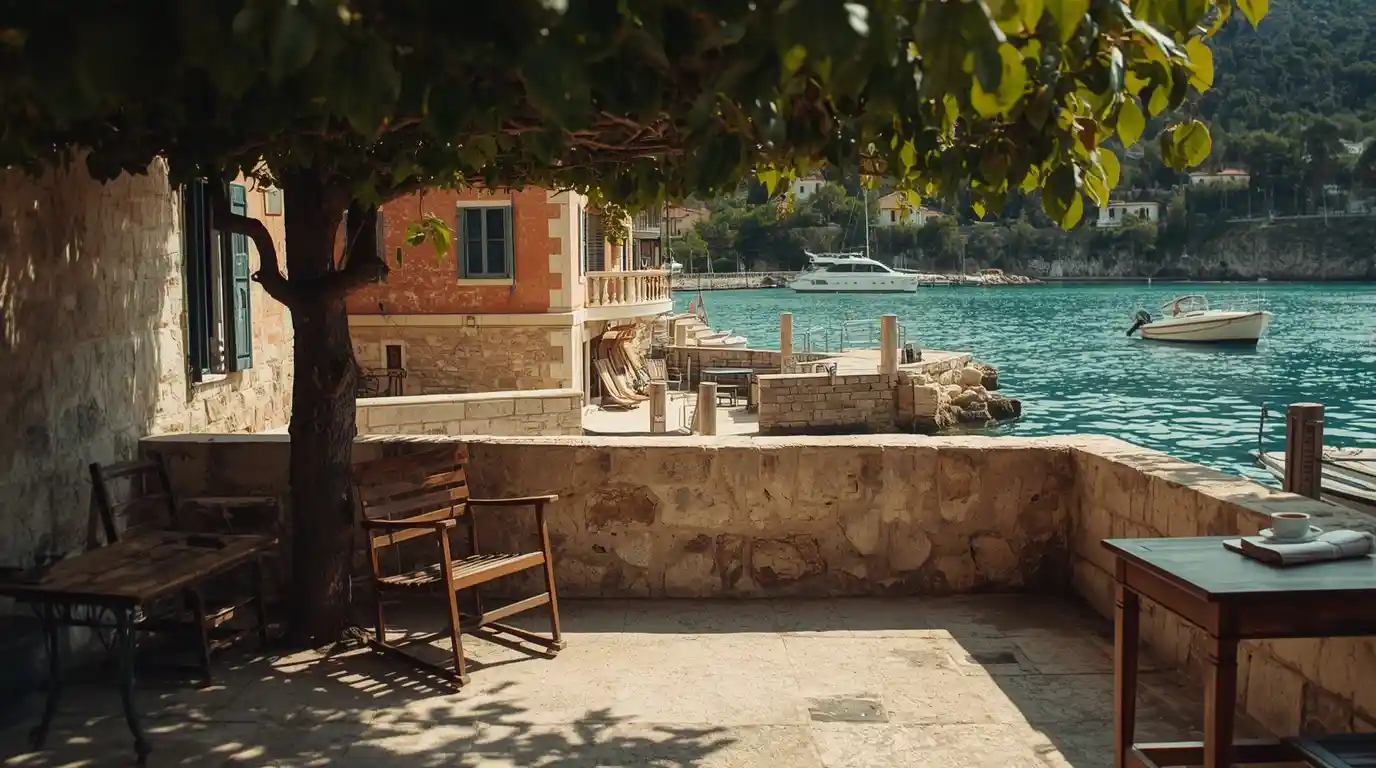
Forty per cent of Canadian workers didn't use all their paid time off last year, which makes this a strange country to be taking lessons in the art of doing nothing — and yet the lesson has arrived. Encyclopaedia Britannica introduced English speakers to fjaka, a word from Croatia's Dalmatian coast, and defined it plainly as complete relaxation.
The post went out in June 2025 and drew close to 26,000 views within two days, according to Croatia Week. Britannica also floated the idea of making "Fjaka Fridays" a thing. Coming from a reference publisher rather than a lifestyle brand, that's a small but telling moment: the institution people cite in term papers is now suggesting you sit still.
Fjaka isn't a new discovery. The BBC covered it back in 2018, and the Daily Mail slotted it into a list of trending foreign buzzwords that same year, alongside Iceland's gluggaveður and Greece's philoxenia. What has changed is the audience. English has imported this same idea roughly three times in a decade, and the timing lines up with numbers that should bother any Canadian manager.
So What Exactly Is Fjaka?
People on the Dalmatian coast are firm that fjaka is not laziness. Laziness implies a duty being dodged. Fjaka is what's left when there is no duty to dodge — a hot afternoon, a chair in the shade, no plan for the next hour and no guilt attached to that. It's contentment specific enough to have earned its own noun.
Britannica's own wording hints at why it resists a how-to guide:
Fjaka is something that can't be learned; rather, you must experience it to awaken its meaning.
You can't book it, measure it, or log it in a habit tracker. That is exactly what makes it awkward for a work culture that treats rest as recharging — a maintenance window before the next sprint, rather than something worth having on its own.
Why the Art of Doing Nothing Keeps Getting Imported
Hygge got here first, about ten years ago, and within two winters it had been flattened into a shopping list of blankets, candles and wool socks. Niksen followed. The Dutch word crossed into English largely through writer Olga Mecking, who covered it for a small magazine, then for The New York Times, then in a book.
Look at how that book is sold: doing nothing, packaged with expert-backed strategies for stress, burnout and productivity. A concept whose entire point is having no point ended up with a results section. That's the pattern in miniature — the borrowed word shows up as permission and leaves as a method.

The Canadian Numbers Behind the Craving
The appetite for a foreign word about rest isn't random. Three separate sets of Canadian data point the same direction, and they're worth reading together rather than one at a time.
Four in Ten Leave Paid Days Unused
Robert Half's March 2025 survey found 40 per cent of workers didn't use all their vacation in the previous year, and roughly a third held back because the backlog waiting on their return would cancel out the break. An ADP Canada survey in 2023 found just 31 per cent used everything they were owed, while 32 per cent took less than half.
Burnout Is Still Climbing
The same Robert Half research put nearly half of Canadian workers in the burned-out column, with more than three in ten saying it had gotten worse over the year. A separate reading found 36 per cent felt more burned out than they had twelve months earlier. Unused days and rising exhaustion are the same story told twice.
The Squeeze Peaks Mid-Career
Statistics Canada's 2022 Time Use Survey measured the pressure directly: 34.8 per cent of core working-age adults reported high time pressure, against 5.1 per cent of older Canadians. It isn't spread evenly across a lifetime. It lands hardest in the years spent building a career and raising kids.
Hygge Sold Candles. What Does Fjaka Sell?
Nothing, and that's its one real advantage. Hygge needed props. Niksen came with instructions. Fjaka needs a chair, some shade and no ambition for the next 40 minutes. There's no seasonal aisle to build around it, which may be the only reason it survives contact with English intact.
Watch for that anyway. If fjaka-branded linen and $60 ceramic cups turn up by next summer, the cycle has simply run again.
How to Try It Without Buying Anything
The practical version costs nothing and fits a Canadian schedule better than a Croatian one, given the weather. A few things that actually work:
- Book the vacation days now, in the calendar, before the workload argument wins again.
- Take one stretch of 30 to 40 minutes a week with no screen, no podcast and no errand attached.
- Stop calling it self-care or recovery. Naming it as an input to productivity defeats it.
- If you manage people, approve the time off out loud — a third of Canadians skip it over workload fear.
The useful part of fjaka isn't the word, it's the permission. Britannica handed English speakers a label for something Canadians already know how to feel and rarely allow. Check your remaining vacation balance this week, pick a date, and send the request before the next quarter eats it.


Comments 0