

Your Unused Vacation Days and the Art of Doing Nothing
An encyclopedia defined a Croatian word for total rest, then admitted the definition was useless — and that admission says more about Canadian work habits than about Croatia.

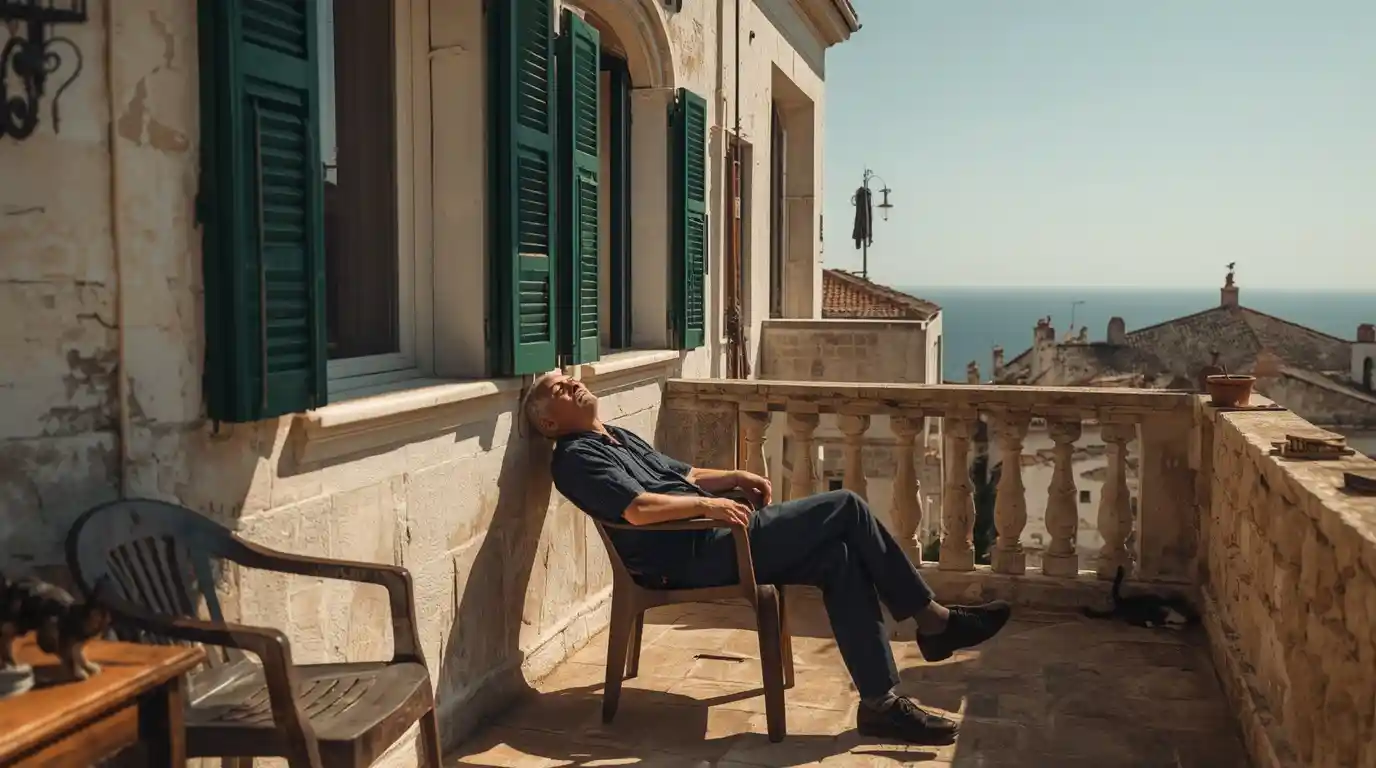
Encyclopaedia Britannica did something unusual for a reference work when it handed English speakers the art of doing nothing: it supplied the definition and then said the definition wouldn't get you there. The word is fjaka, from the Dalmatian coast of Croatia. Britannica posted it on June 6, 2025, calling it complete relaxation, and added that fjaka can't be learned — you have to experience it before the meaning shows up.
That caveat is the whole story. A dictionary exists to make a word portable, so an encyclopedia conceding that a term resists explanation is a small act of surrender. It also isn't new. The BBC wrote about fjaka back in 2018. What changed is that English-speaking readers were ready for another imported word for rest, because the last two worked so well.
For a reader in Canada, this lands in a specific context. Statistics Canada data from 2023 found more than 4.1 million people reporting high or very high work stress — 21.2 per cent of everyone employed in the country. A Robert Half survey of 1,500 Canadian professionals released in March 2025 found 47 per cent feeling burned out, with 31 per cent saying it had worsened over the previous year.
What Fjaka Means Where People Actually Use It
On the Dalmatian coast, fjaka is tied to the flattening heat of the afternoon, when the sensible response to a stone town at 35 degrees is to stop moving. Croatians are firm that it isn't laziness. Laziness dodges a task. Fjaka isn't dodging anything, because nothing is owed. It's a state of needing nothing, which is a different thing from wanting a break.
The Croatian term "fjaka" is defined as complete relaxation or the art of doing nothing. "Fjaka" is something that can't be learned; rather, you must experience it to awaken its meaning.
The Rest Words That Arrived First
Fjaka is the third stop on a well-worn route. English has spent roughly a decade borrowing vocabulary from cultures perceived as calmer, and the pattern each time is identical: a feeling gets a name, the name gets a book, the book gets a shelf in the airport bookstore, and the feeling itself never quite makes the trip.
Hygge Sold Coziness, Then Sold Candles
The Oxford English Dictionary took in hygge in 2017, defining it as a quality of coziness and companionable warmth. Within two years it had become a retail category. You could buy hygge blankets, hygge mugs and hygge cookbooks — an impressive outcome for a word that mostly describes sitting with people you like.
Niksen Turned Idleness Into Instructions
Dutch niksen means doing nothing on purpose. Writer Olga Mecking, a journalist based in the Netherlands, brought it to a mass English audience through The New York Times, and her book Niksen: Embracing the Dutch Art of Doing Nothing followed in 2020. The irony is hard to miss: an ordinary household word ended up with expert-backed strategies and a recommended technique.
Fjaka Is Next in the Queue
Croatian tourism sites already market fjaka as something visitors can come and get. That's the tell. When a state of needing nothing becomes a reason to book a flight, it has been converted into a product, and the product costs money that the original state never did.

Why the Art of Doing Nothing Is a Hard Sell in Canada
Borrowed words work because they grant permission. Saying you're doing niksen sounds like a practice; saying you're sitting on the couch sounds like a confession. The problem is that permission borrowed from somewhere else runs out fast, and it never came with the thing that made it real in Dalmatia — a culture where nobody around you is working either.
The Vacation Days Canadians Leave on the Table
Canada already grants a version of this permission and workers decline it. An ADP Canada survey found 31 per cent of respondents used all their vacation days, while 32 per cent took less than half. Roughly a third said they skipped time off because work would simply pile up while they were gone, which turns rest into a debt paid back with interest.
Put that against the baseline: in most provinces the legal minimum is two weeks of paid vacation after a year of service. Leaving half of that unused is a meaningful subtraction from an already thin allowance, and no imported noun fixes it. A word can't approve your leave request.
How to Try It This Weekend Without Buying Anything
If fjaka appeals, the cheapest honest version costs nothing and needs no book:
- Pick an hour where nothing is scheduled and leave it empty — no podcast, no tidying, no "productive rest."
- Put the phone in another room, because scrolling is activity wearing a disguise.
- Sit somewhere warm and don't set a goal for the hour.
- Book one vacation day you've been hoarding, and take it before December.
Watch for the moment fjaka shows up in a retreat brochure or a scented-candle line — that's the point where the word stops describing rest and starts selling it. Until then, treat it as a reminder rather than a technique. The useful part was never the Croatian noun. It was Britannica quietly admitting that the state it names is something you have to actually sit down and do.


Comments 0