

Zero Sugar on the Label, a Blood Sugar Spike on Your Meter
Doctors say industrial starches like maltodextrin can push a reading from 200 to 250 mg/dL — and Indian nutrition panels are not required to call them sugar.

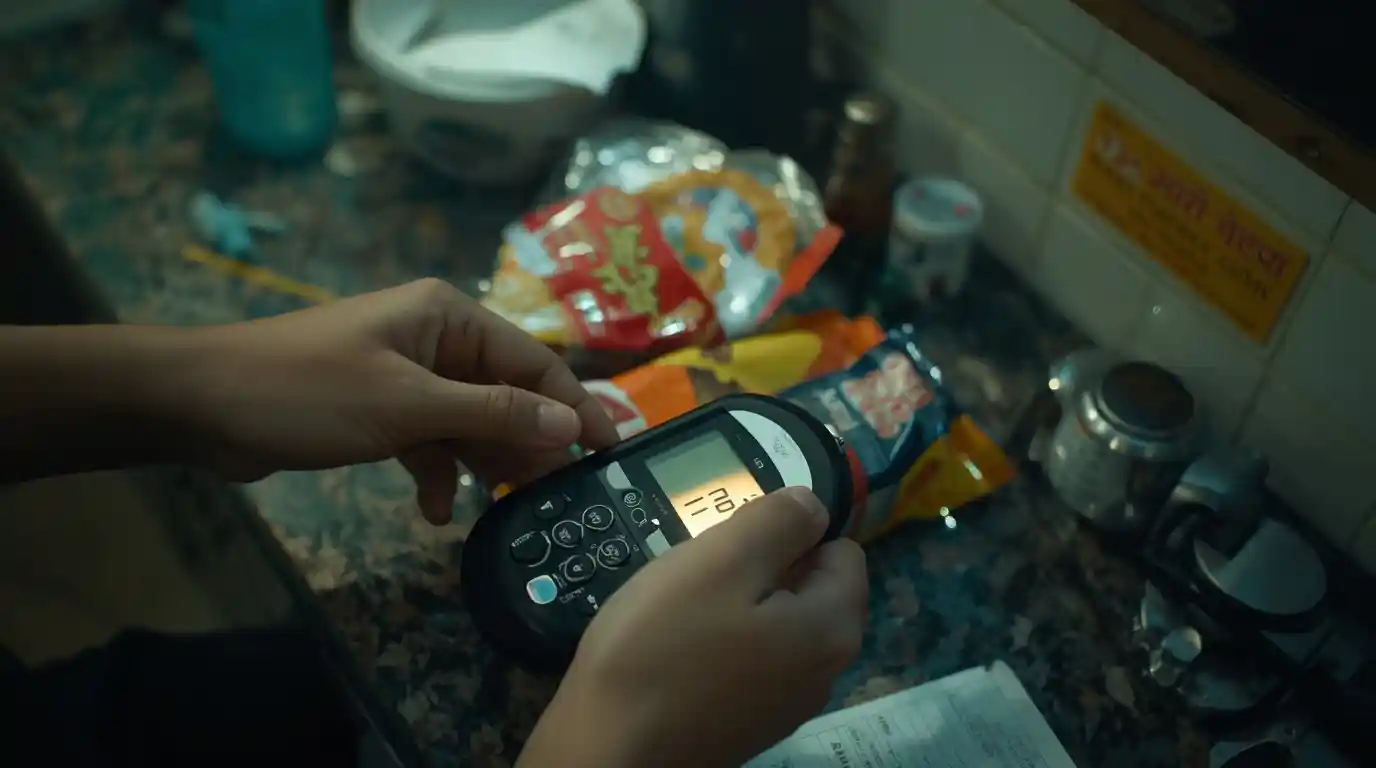
If your glucometer shows a blood sugar spike after a snack whose packet promised "zero added sugar", the ingredient responsible is probably one you skim straight past. The Indian Express has reported doctors pointing at industrial starches — maltodextrin, modified food starch and their relatives — as the carbohydrate most likely to wreck a reading, and calling them more dangerous, in daily practice, than sugar itself.
The number they quoted is blunt. A reading already sitting at 200 mg/dL can be pushed to 250 mg/dL. That is a 50-point jump delivered by a food that never declares itself as sugar on the nutrition panel. For someone managing type 2 diabetes on tablets or insulin, 50 points is the gap between an ordinary afternoon and a correction dose.
This lands hard in India for a simple reason. The ICMR-INDIAB survey published in The Lancet Diabetes & Endocrinology put adult diabetes prevalence at 11.4% — roughly 10.1 crore people — with another 15.3%, about 13.6 crore, sitting in prediabetes. In a country with those numbers, a hidden 50-point swing isn't a curiosity. It's a daily event for tens of millions of households.
Why the Blood Sugar Spike Doesn't Show Up as Sugar
Maltodextrin is starch that a factory has already taken apart. The resulting chains are longer than two sugar units, and labelling conventions count only the one- and two-unit molecules as "sugars". So maltodextrin lands under total carbohydrate instead, and a pack can legally print 0 g sugar while carrying a large dose of it.
The glycemic index tells the other half of the story. Maltodextrin is commonly measured between 105 and 110. Table sugar sits near 65. Pure glucose is the 100 benchmark. In other words, a cheap filler can move blood glucose faster than the glucose syrup you're made to drink for a tolerance test — because your gut does almost none of the work. The plant did it.
Where These Starches Hide on Indian Shelves
Most people scan the nutrition table and ignore the ingredient list underneath. That's backwards. The nutrition table is where these starches disappear; the ingredient list is where they're named. Ingredients are printed in descending order of weight, so position matters as much as presence.
The Names Worth Memorising
Netmeds' health library lists the aliases that turn up most often on Indian packs:
- Maltodextrin and resistant maltodextrin
- Modified food starch, modified corn starch
- Glucose syrup and corn syrup solids
- Dextrose and invert sugar
- High-fructose corn syrup and polydextrose
The Products That Carry Them Most Often
Instant noodles and their masala sachets. Ready-to-eat curries and soup mixes. Breakfast cereals and muesli. Flavoured dahi and drinking yogurt. Ketchup, salad dressings and packaged chutneys. Chips and extruded namkeen. Energy and sports drinks. None of this is exotic — it's an average urban Indian trolley.
The "Healthy" Aisle Isn't Exempt
This is the part that catches people out. Protein bars, protein powders, gluten-free biscuits, malted health drinks and many "diabetic-friendly" products lean on these starches for texture and bulk, precisely because the ingredient lets them keep the sugar column low. A pack can be marketed for the health-conscious and still behave like glucose in the bloodstream.

How Bad Is a 50-Point Jump, Really?
Can raise blood sugar from 200 to 250 mg/dL
Clinicians generally want post-meal glucose staying under about 180 mg/dL. A person already at 200 is above that line before eating anything, so the extra 50 doesn't just add a number — it stretches the time spent in the range where damage accumulates. Repeat that after most snacks and the effect shows up in the next HbA1c, not on the day.
One caveat worth stating plainly: this figure is a doctor's clinical observation, not a controlled trial result. How far any individual rises depends on the quantity eaten, what else was on the plate, and their own insulin response. The direction of the effect is well established. The exact size is personal.
The Label Gap India Still Hasn't Closed
Front-of-pack labelling — a star rating or a warning symbol that tells you at a glance how a product scores — has been argued over in India for years and still isn't printed on packs. Until it is, the burden sits entirely on the shopper, who must know that "sugars" and "carbohydrates" are different rows on the same table, and that only the second one tells the truth about a starch.
What to Check Before Your Next Grocery Run
Do one paired test this week. Note your reading before a suspect packaged snack, then again 90 to 120 minutes after. Your own meter settles the argument faster than any headline. Beyond that: read the ingredient list before the nutrition table, treat total carbohydrate as the honest number, and be suspicious of any product where a starch appears in the first four ingredients.
None of this makes starch the enemy. Roti, rice, dal and potatoes come with fibre, protein and a structure your body has to dismantle slowly. The problem is the version that arrives pre-dismantled. Over the next few months, watch whether front-of-pack rules finally reach Indian shelves — and until they do, assume that a pack claiming zero sugar is describing its chemistry, not its effect on you.




Comments 0