

210 of 320 Mozart Figurines Vanished From a Public Garden
Two hundred and ten of the 320 statues in Ottmar Hörl's 270th-birthday tribute to Mozart were carried off before the display could finish its run.

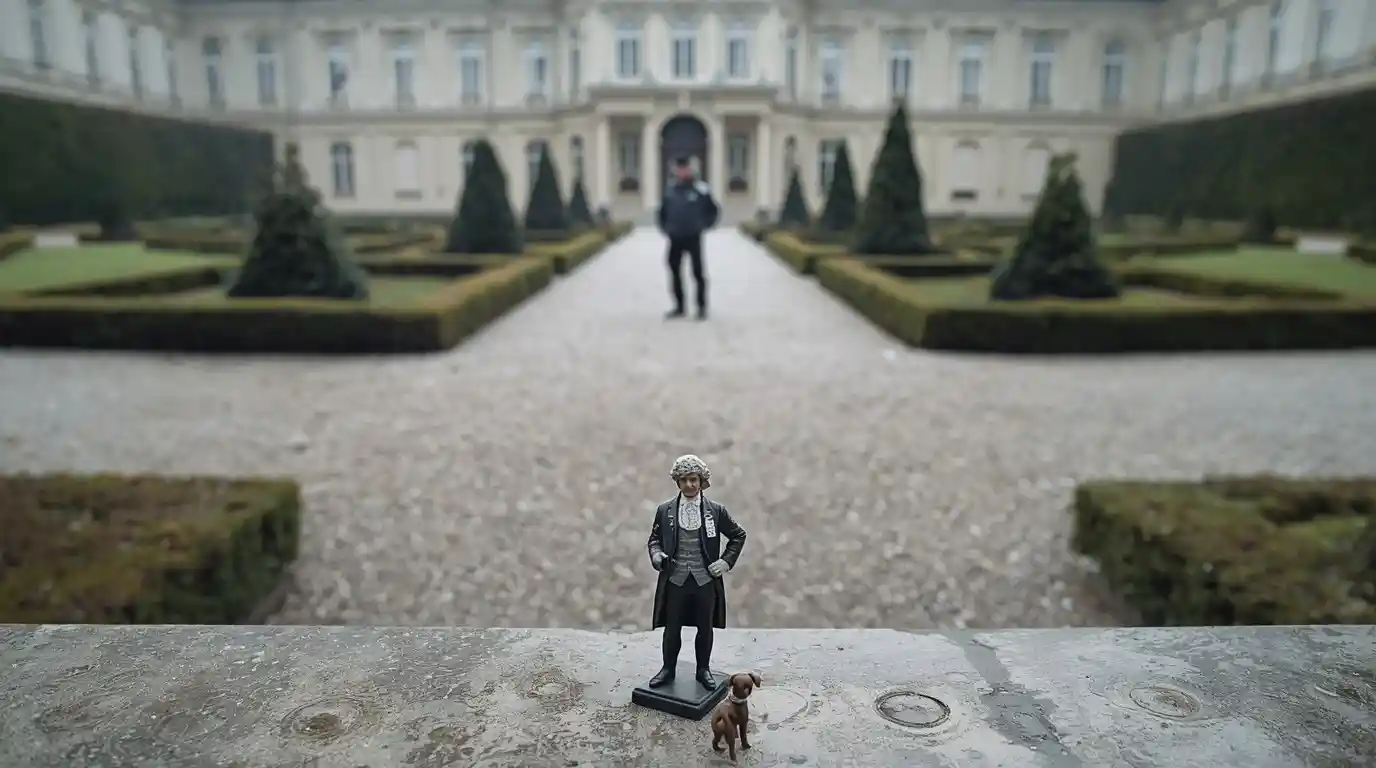
Somebody in Salzburg has been collecting Mozart figurines the hard way. Between mid-July and August 12, 210 of the 320 small statues installed around the Austrian city disappeared, and organizers shut the outdoor portion of the tribute more than two weeks ahead of schedule. The first 80 or so went missing within a fortnight. The rest followed fast.
The display went up on July 15 to mark the 270th anniversary of Wolfgang Amadeus Mozart's birth — he was born in Salzburg on January 27, 1756. It was made by Ottmar Hörl, a German conceptual artist who works almost entirely in cheap, brightly colored polymer multiples. Each figure stood under 50 centimeters, roughly 20 inches, and showed the composer walking with Pimperl, the family dog. The run was meant to last until August 30.
Here's the part that stings. The figures were priced for public sale at about 100 euros apiece, or roughly $114. Do the arithmetic on 210 missing statues and you land near 21,000 euros, somewhere around $24,000 in vanished stock — not a fortune by art-world standards, but a real hole in a project built on volume rather than price. And the artist, oddly, is not the one making the most noise about it.
Why the Mozart Figurines Had a Dog Beside Them
Hörl didn't want another marble genius on a plinth. Salzburg already has those. He put Pimperl in the sculpture because the Mozart family walked their dogs through the Mirabell Garden — the same formal baroque grounds American visitors recognize from the "Do-Re-Mi" sequence in The Sound of Music. The point was domestic, not divine.
I didn't want to do a monument of Mozart. There are already enough of these. But I wanted to show his human side. — Ottmar Hörl
Scattering hundreds of identical Mozart figurines across a public park is the whole method. Hörl has spent decades arguing that sculpture should be reproducible and affordable instead of singular and guarded. The flip side of that argument is exactly what played out here: work designed to be walked up to and touched is also work that fits under a jacket.
The Artist Who Keeps Losing His Own Work
This is not Hörl's first mass disappearance, and he knows it. He told reporters he doubts ordinary tourists were responsible, describing it instead as "organized theft" and suggesting the statues were lifted at night after the garden closed. Someone hauling away dozens of 20-inch figures in daylight would be hard to miss.
Bayreuth, where an entire Wagner set went in 10 days
He staged a comparable tribute to Richard Wagner in Bayreuth, the German town built around Wagner's festival. The complete installation was gone inside 10 days. Measured against that, Salzburg's survival rate looks almost respectable — 110 figures were still standing when organizers pulled the plug.
Nuremberg, where 700 gnomes summoned prosecutors
Hörl, born in 1950, has taught at the Academy of Fine Arts in Nuremberg since 1999 and has served as its president since 2005. His most notorious project involved roughly 700 garden gnomes, one of them gold with an arm raised in a Nazi-style salute. Prosecutors opened an investigation and dropped it within a week, ruling the piece protected as art.
What 210 Missing Statues Actually Cost
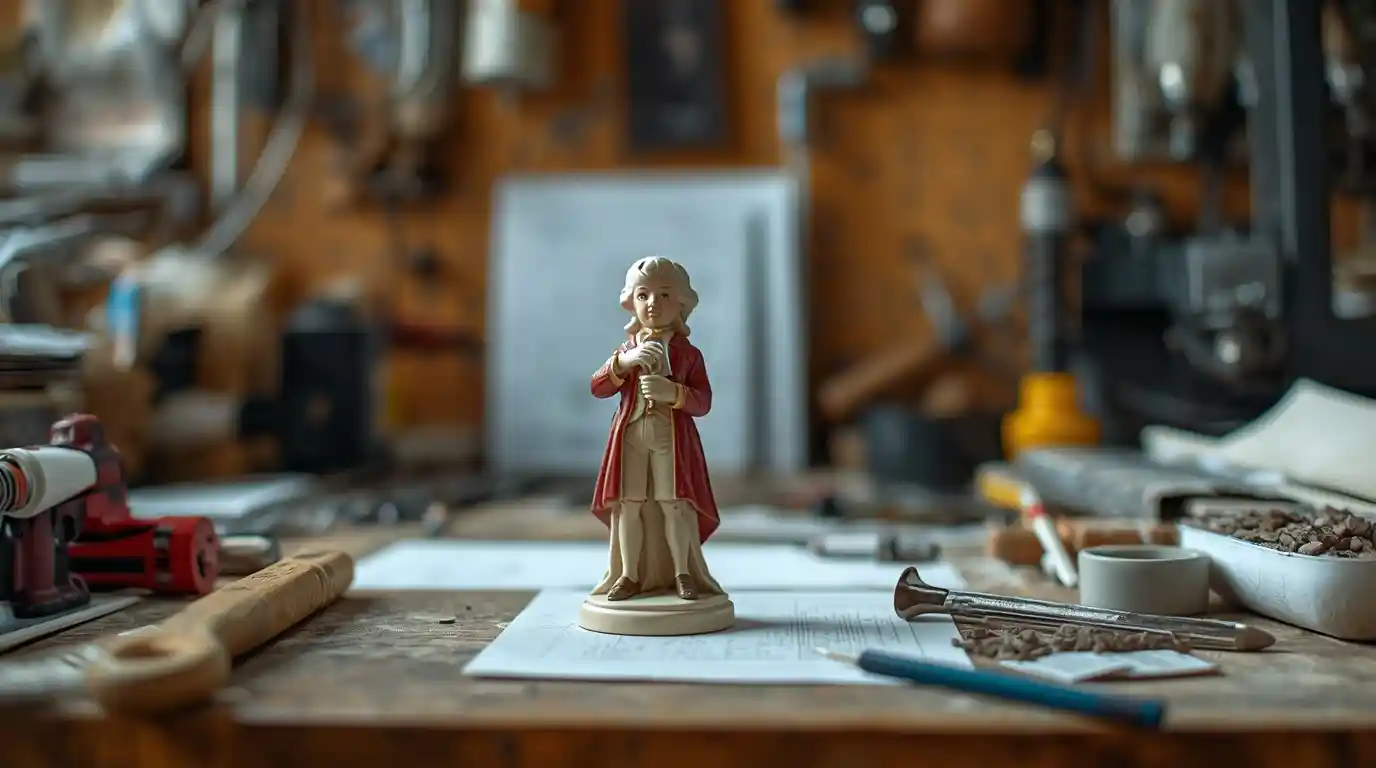
The financial damage is modest. The practical damage is not. Replacements can't simply be ordered, because the manufacturer is shut for summer holidays — a very European problem that turns a solvable supply question into a dead end for the rest of the month. Hörl has said the worst thing that can happen to an artist is watching a work dissolve, which is precisely what a piecemeal theft does.
Put the figure in perspective. At about $114 each, the Mozart figurines were worth less than a decent seat at a Salzburg festival concert. The value was never in any single statue. It was in seeing 320 of them at once, filling a garden.
Can You Still See Any of Them?
Yes, but not many, and not for long. Several dozen figures remain on display indoors at the Mozarteum and at Mozart's birthplace, and that portion runs through the end of August. The garden installation is over. If you're flying to Austria this month expecting the field of little composers you saw in photographs, adjust your plans before you book the taxi.
For American travelers already in the city, both indoor sites sit within an easy walk of the center and keep normal museum hours. The Mozarteum Foundation, which runs the Mozart museums and funds research on the composer, confirmed the missing count. Anyone offered a suspiciously cheap "original" at a flea market or on a resale app should assume it came out of that garden.
What Happens to Public Art After This
Hörl's public reaction has been strikingly unbothered. Working in public space, he said, means you don't get to complain about what happens there. That's a rare stance, and worth noting, because institutions usually respond the opposite way — with fences, cameras, bolts, and eventually no installation at all.
Two things are worth watching over the next few weeks:
- Whether any of the 210 statues surface on European resale listings. Mass-produced multiples are traceable mainly by volume, so a sudden cluster of identical listings would be the tell.
- Whether Salzburg attempts anything outdoors again during the anniversary year, or quietly retreats indoors.
If Salzburg is on your late-summer itinerary, go see the surviving figures indoors before August 30 and write off the garden. And if a 20-inch polymer composer with a small dog at his heel shows up in your feed at a price that seems too good, that isn't a souvenir. It's evidence.


Comments 0