

$2,685 Buys an HP Keyboard PC With No Screen at All
HP's EliteBoard G1a crams a full Windows machine into a 12mm keyboard, lands in Australia from $2,685 — and the company says it isn't for you.

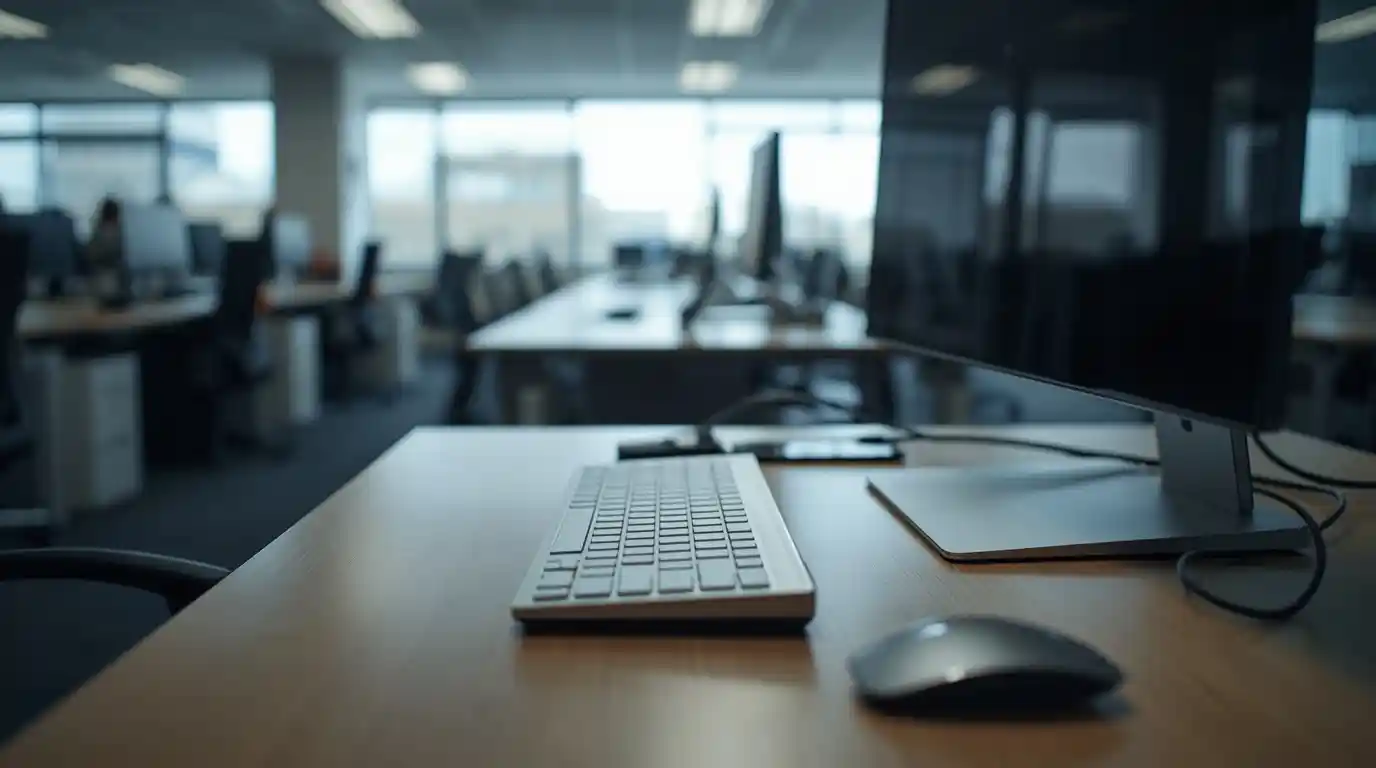
The HP keyboard PC is on sale in Australia now, and almost nobody who wants one will be allowed to buy it. HP's EliteBoard G1a folds an entire Windows machine — processor, memory, storage, speakers and microphones — into a full-size keyboard about 12mm thick. Local pricing starts at $2,685, and HP has been unusually blunt about the audience: businesses, not homes.
The spec sheet reads like a thin-and-light laptop that lost its lid. AMD Ryzen AI silicon, from the Ryzen AI 5 330 up to the Ryzen AI 7 350 PRO, with a neural processor rated above 50 TOPS — well past Microsoft's Copilot+ bar. Up to 64GB of DDR5, up to 2TB of storage, integrated Radeon graphics, and enough bandwidth to drive four 4K monitors at once.
What's missing is the part you actually look at. There's no screen, and no battery unless you pay for the optional 32Whr pack, which HP rates at a bit over three and a half hours. Power, video and data all travel down one USB-C cable. Arrive at a desk with a compatible monitor and your machine is simply there. Arrive without one and you own a very expensive keyboard.
What the HP Keyboard PC Actually Replaces
HP's pitch is aimed at a habit, not a gap in the market. Huge numbers of office workers were handed a laptop, docked it on day one and never unplugged it again — paying for a screen, a keyboard, a battery and a hinge that never leave the building. Neil Westhof, HP's Director of Personal Systems for Australia and New Zealand, has described the EliteBoard as a fix for precisely that waste.
"The EliteBoard G1a represents a new category of desktop computing, combining enterprise-grade security and desktop-class performance." — Neil Westhof, Director Personal Systems, HP Australia and New Zealand
Strip a notebook back to the bit that computes and you're left with something that weighs about as much as a paperback. HP quotes 676g without the optional battery or cable, and Australian coverage has landed around the 700g mark. It slips into a bag alongside the bundled mouse and carry case. The keys are spill-resistant, which tells you exactly which rooms HP pictured.
Why You Can't Just Add One to Your Cart
This sits in HP's commercial range, wrapped in Wolf Security, fleet management tooling and enterprise support contracts. HP confirmed to Pickr that it isn't building this one for consumers or the home. The named targets are specific: fixed-desk offices, hot-desking floors, healthcare, government and financial services — the kinds of buyers who order three hundred identical units, not one.
There's a practical logic to it. A home buyer would have to supply the monitor, sort out the power, and fix it themselves when it misbehaves. An Australian workplace already has all three waiting on the desk, plus a help desk down the hall.

What You Give Up for $2,685
Judged as a desktop it's compelling. Judged as a laptop replacement, the shortfalls are real and worth naming before anyone signs a purchase order.
You're buying a monitor too
Nothing on the invoice includes a display. HP is pushing its Series 7 Pro 4K panel as the natural partner, with Thunderbolt 4 handling 140W of power and 40Gbps of data over that single cable. Budget for one screen per location — which quietly doubles the real cost of a two-site hybrid worker.
The battery is a box you have to tick
Ordered without it, the EliteBoard is dead the moment it leaves the cable. Even with the 32Whr pack fitted, you're looking at a few hours, and you still have nothing to look at while you use them.
It won't help you on the train
This is a machine you carry between desks, not something you open on a Sydney commute or in a departure lounge. If your staff genuinely work away from desks, a laptop still wins.
This Idea Is Older Than Most of Its Buyers
Putting the computer inside the keyboard isn't new — it's how the Commodore 64 and its contemporaries were built, back when a separate box was an expense nobody could justify. Raspberry Pi has been selling keyboard computers for years, for a small fraction of what HP is asking. The difference is that the HP keyboard PC carries a 50-TOPS NPU, enterprise security and an EPEAT 2.0 Gold registration, and is designed to be opened and upgraded rather than glued shut.
What to Watch Before You Commit
The obvious question is whether a home version ever appears. HP hasn't ruled it out, and the hardware needs no redesign — only a support model and a price that doesn't assume a fleet contract. Until then, three things are worth pinning down with your reseller:
- Whether the quoted $2,685 is before or after GST, and what the entry configuration actually includes
- The total cost once a compatible monitor is added at every site the device will live
- Whether the optional battery is fitted at order time or can be added later
If your organisation is paying for laptops that never move, this is the first genuinely sensible alternative in years — run the numbers on a small pilot before committing a whole floor. If you were hoping to put one under the Christmas tree, keep waiting.



Comments 0