

Seattle's Public CCTV Cameras Went Dark After the World Cup
A US city turned its surveillance cameras on for the World Cup, switched them off days later, and is now fighting about it in public — a fight Australian councils are quietly heading into.

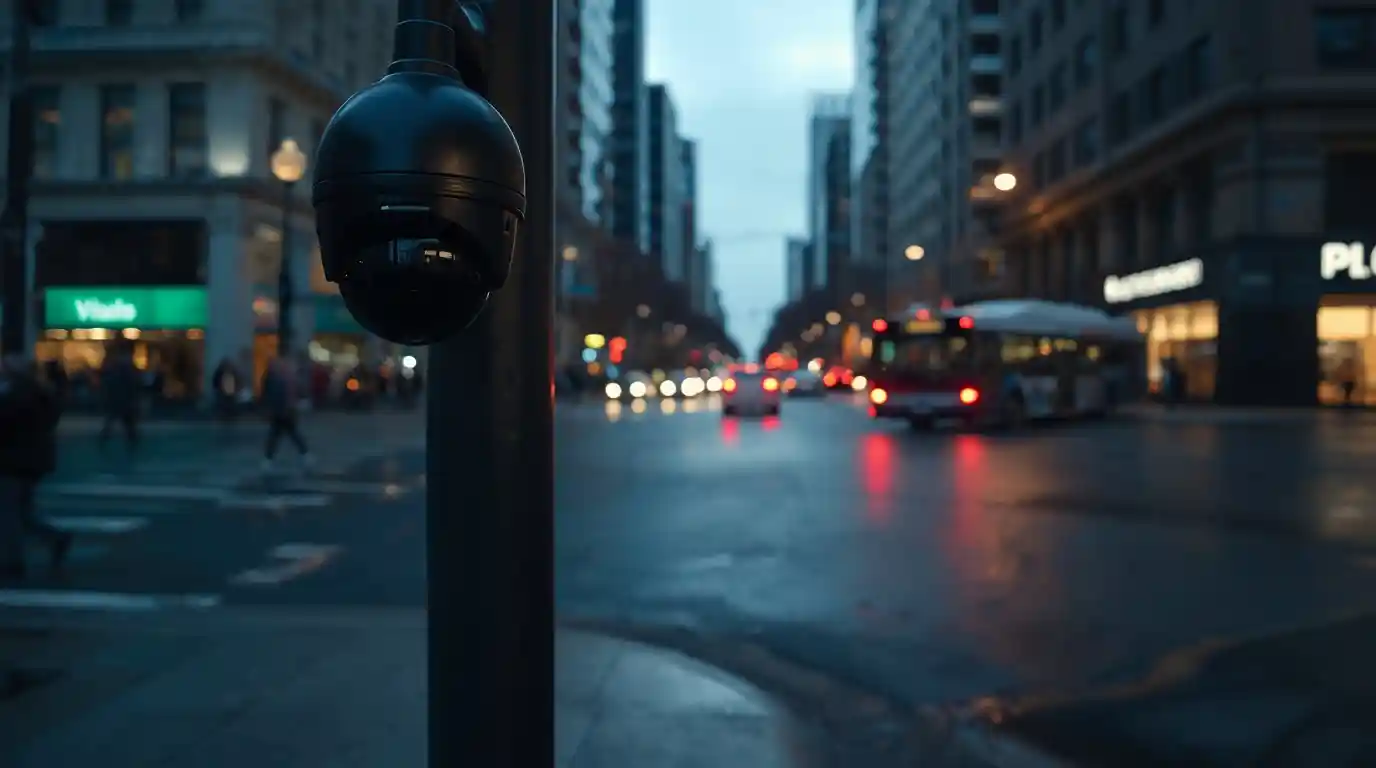
Seattle has spent six weeks tearing itself apart over public CCTV cameras, and the argument keeps getting louder because of what the footage did and didn't capture. On 7 July, the city switched off 22 cameras covering the Stadium District and Pioneer Square. Those cameras had been turned on for World Cup crowds. Once the last match cleared out, they went dark again.
Nineteen days later, on 26 July, a shooting at the Bite of Seattle food festival near the Seattle Center Armory killed three people and wounded four more, including a toddler. A 15-year-old was arrested. Police confirmed there were no city cameras covering the immediate area. Within days an open letter arrived at the mayor's office, signed by Seafair, Climate Pledge Arena, the Seattle Storm, the Space Needle, the Seattle Convention Center, Capitol Hill Block Party and Chihuly Garden and Glass.
None of this is a uniquely American mess. Australian councils are running the same experiment right now — grant-funded cameras first, privacy policy later, facial recognition somewhere down the track — just with far less shouting. Seattle is a live preview of an argument that will land in a council chamber near you.
Why the cameras were switched off
Mayor Katie Wilson paused expansion of the city's camera pilot in March, saying the programme would stay frozen until a privacy and data governance audit was finished and policies were tightened. The council had already voted 7-2 to widen the network. Groups including the Northwest Immigrant Rights Project argued the footage would become standing infrastructure that federal agencies could later point at immigrant communities and protesters.
Turning on more cameras won't magically make our neighborhoods safer, but it will certainly make our neighborhoods more vulnerable.
That line, from Wilson in March, is now quoted back at her almost daily. Her position since has been narrower: different communities experience being watched differently, and any decision has to weigh the benefits and the harms with actual evidence.
The attack that put the mayor on the spot
The immediate trigger was a beating. A 77-year-old man was shoved to the ground and assaulted in downtown Seattle, suffering a broken arm, a broken knee and facial injuries that kept him in hospital for a week. According to Fox News, city cameras captured the attack and gave detectives what they needed to name Ahmed Abdullahi Osman, 29, who was charged with second-degree assault.
He was booked, then released before his bail hearing, and is now wanted on a US$200,000 warrant. A second man, Jes'Sean Tyrell Elion, was arrested later. The awkwardness for City Hall is obvious: the technology the mayor had put on ice was the technology that produced a name.
Do public CCTV cameras actually work?
This is where the debate usually collapses into slogans, so it's worth separating two very different claims. Cameras helping police identify someone after an offence is a detection argument. Cameras stopping the offence happening is a deterrence argument. The Seattle data speaks loudly to the first and barely at all to the second.
What Seattle's arrest numbers show
The city's Real Time Crime Center opened on 20 May 2025 and runs from 8am to 3am, with plans to go around the clock. In its first 11 months, police say it assisted investigations into 21 homicides, 558 aggravated assaults, 25 rapes and 249 robberies, and that cases involving the centre were close to three times more likely to end in an arrest. That's a real operational result — but it's also a correlation. Serious cases are exactly the ones analysts get pulled into.
Where the cameras weren't
Sixty-two cameras remain live across downtown, the Chinatown-International District and the North Aurora corridor. The festival shooting happened outside all of them. That single fact undercuts both camps at once: it shows coverage gaps matter, and it shows a network that only covers designated hotspots was never going to blanket a city of 750,000 people.
What this means for Australian councils
Here the money works differently, and worse. Australian councils typically buy public CCTV cameras with state or Commonwealth grants, then carry the maintenance, replacement and monitoring costs on ratepayer money forever. The Commonwealth Auditor-General criticised the federal CCTV grants programmes in both 2015 and 2016 over how the funding was handed out. The cameras arrive as a windfall; the bill arrives quietly, year after year.
The second-order problem is the one Seattle is having now. The Conversation has reported that face-tracking technology has been deployed in Perth, Melbourne, Brisbane and Darwin with minimal or no public consultation, and Victoria's Auditor-General has already examined how public-place surveillance is secured and governed. Once the poles are up, upgrading the software is an administrative decision, not a public one — which is precisely why the governance question has to be settled first.
What to watch next
Three things will decide how Seattle ends: whether the privacy audit actually lands, whether the 22 dark cameras come back before the next big event, and whether the crime centre goes 24/7 while its rules are still unsettled. Any of those could set the template other cities copy.
If you'd rather not find out about your own street from a news story, the practical move is small and boring: pull your council's surveillance or CCTV policy off its website and check three lines — how long footage is kept, who outside the council can request it, and whether the policy mentions analytics or facial recognition at all. If it doesn't say, ask at the next council meeting. That question is far easier to ask before the cameras go up than after.


Comments 0