

A 5% Deposit, and Negative Equity Before Year One
Australia's price slide has removed the investors who usually put a floor under a falling market, leaving 50,000-odd low-deposit first home buyers to absorb the drop alone.

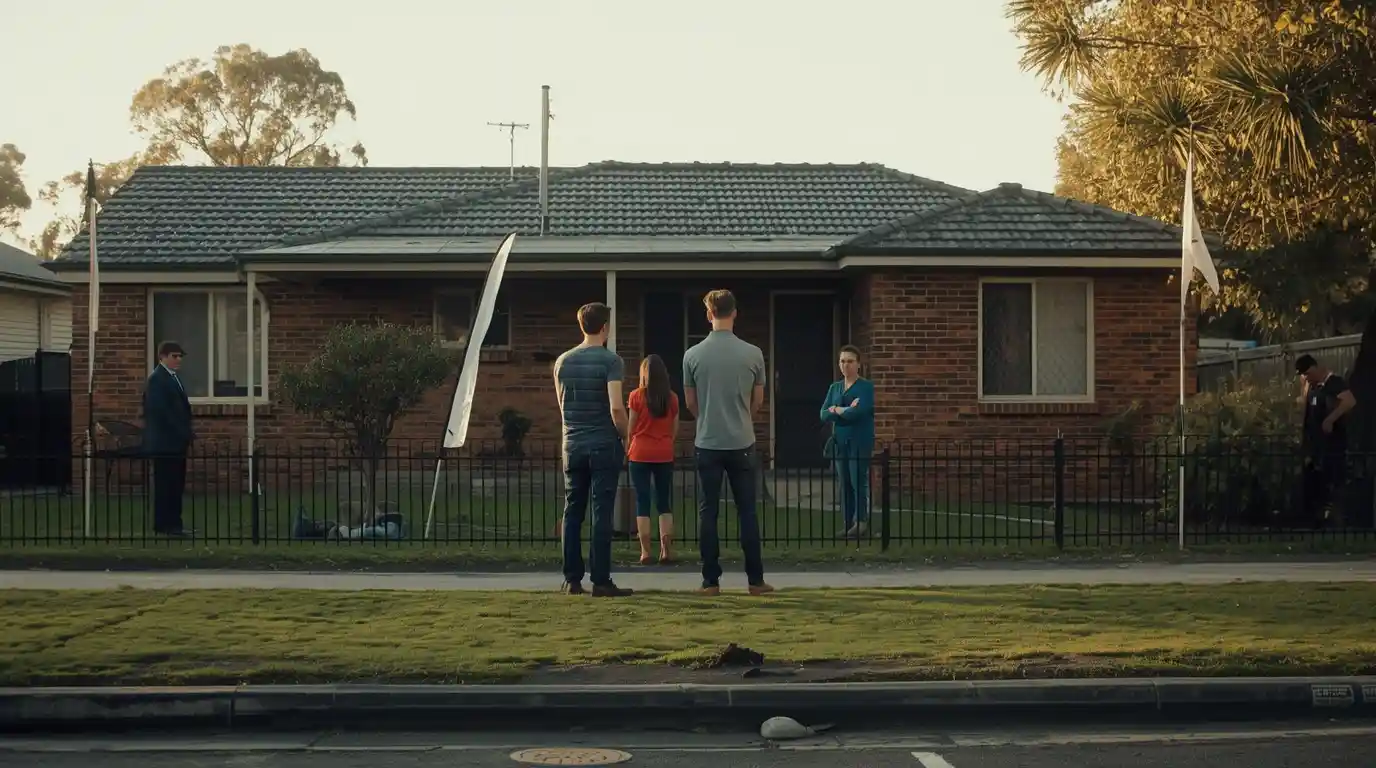
Australia's housing downturn has handed first home buyers something they were assured they would never face: a live risk of negative equity within months of settling. Prices are falling across most capitals, and the buyers who normally arrive to catch a sliding market — investors — have largely stopped turning up. That leaves recent low-deposit borrowers wearing the whole drop themselves.
The scale isn't trivial. ANZ expects Sydney values to fall 9.9 per cent this year and a further 2.9 per cent in 2027, a peak-to-trough slide of 14.5 per cent from the January 2026 high. Modelling by Canstar, reported by Mortgage Professional Australia, translates that into roughly $236,312 off Sydney's median house price, pulling it back to about $1.393 million. Melbourne's forecast fall is 12.8 per cent, or around $127,577.
Here's why that lands so hard on one particular group. Housing Australia figures cited by MacroBusiness show 50,633 guarantees were issued under the expanded 5 per cent deposit scheme between October 2025 and June 2026. Those buyers put down almost nothing. A double-digit price fall doesn't shave their equity — it wipes it out and keeps going.
Where Did the Bargain-Hunting Investors Go?
In previous Australian downturns, investors did the unglamorous work of stopping the fall. Prices dipped, yields looked better, and landlords with borrowing capacity stepped in and set a floor. That reflex has been switched off this cycle, and the reason is fiscal rather than emotional.
Changes passed by Parliament mean investors buying affected established housing after 7.30pm AEST on 12 May 2026 can no longer deduct rental losses against wages or other non-residential income, with the rules taking effect from 1 July 2027. Commonwealth Bank economists say sentiment softened noticeably in the weeks after the Budget. New investor lending is tipped to run at roughly half its late-2025 volume across 2026, with overall market turnover down about 20 per cent.
The Deposit Scheme That Arrived at the Peak
Timing is doing most of the damage. The scheme broadened just as the market was topping out, and the borrowing it unlocked was concentrated in exactly the cities now falling fastest.
A record rush into low-deposit loans
A record $10.2 billion of low-deposit lending was approved in the six months to 31 March 2026 — up 51 per cent on the prior period, and 4.3 per cent of all new owner-occupier mortgages, the highest share on record. Almost all of it was written within touching distance of the peak.
What a 5 per cent buffer actually survives
Canstar's scenario is blunt. By mid-2027, a Sydney buyer who used a 5 per cent deposit is around 9 per cent under water, roughly $128,322 short of what they owe. The same house bought with a 20 per cent deposit still sits about 8 per cent ahead, near $111,954 in the black. Same property, same slide — the deposit decides the outcome.

What Negative Equity Actually Does to You
It is not a margin call. Australian lenders won't ring up demanding the difference while you keep paying. The problem is that negative equity quietly removes your options: you can't refinance to a sharper rate, you can't sell without writing a cheque at settlement, and you can't take a job interstate without unwinding the whole thing at a loss.
Some recent buyers in Sydney could find themselves owing the bank more than their home is worth before they've celebrated their first anniversary. — Sally Tindall, data insights director at Canstar
For perspective, national corrections over the past two decades have averaged about 8 per cent. A 14.5 per cent Sydney fall would be meaningfully worse than the recent norm, which is why forecasters keep revising. NAB has cut its 2026 outlook to a 5 per cent decline from 2 per cent, and CBA now expects the trough around January 2027.
Rates Are Still Pushing the Wrong Way
The RBA has lifted the cash rate three times this year — February, March and May — taking it from 3.60 to 4.35 per cent after headline inflation re-accelerated to 4.6 per cent in the March quarter. On a $600,000 loan with 25 years to run, the May move alone added about $91 a month. On the average Australian loan of roughly $736,259, repayments climbed $118 to around $4,410.
Stress is already visible. First home buyer delinquencies have hit a seven-month high, and 90-day arrears in that group are running at close to double the rate of other borrowers. Meanwhile 54 per cent of market segments are now falling, up from 33 per cent three months earlier, and national dwelling values have slipped back to where they sat in November 2025.
What to Watch Before You Sign Anything
None of this makes buying wrong. It makes the deposit size the decision that matters most, and it argues for patience over urgency in a market with no investor bid underneath it. A few things worth tracking:
- Whether investor lending stabilises before the 1 July 2027 start date, or keeps thinning out
- The RBA's next moves — most economists expect a hold, but Westpac has flagged further hikes
- Whether the January 2027 trough forecast holds as more segments turn negative
- Your own buffer: what a further 10 per cent fall would do to your loan-to-value ratio
If you're within a year of buying with a small deposit, the practical step is unglamorous: build cash savings outside the mortgage rather than rushing to a bigger purchase, and ask your lender now what refinancing looks like if your valuation drops. Equity you don't have can't be borrowed against, and the cheapest protection against a falling market is a deposit that can absorb the fall.




Comments 0