

The KPMG Audit Scandal Fines Started at $19,000
Macquarie, Westpac, Optus and Dexus fronted a parliamentary committee on Friday to describe what KPMG's leaked client files cost them — and the penalties look small next to the contracts at stake.

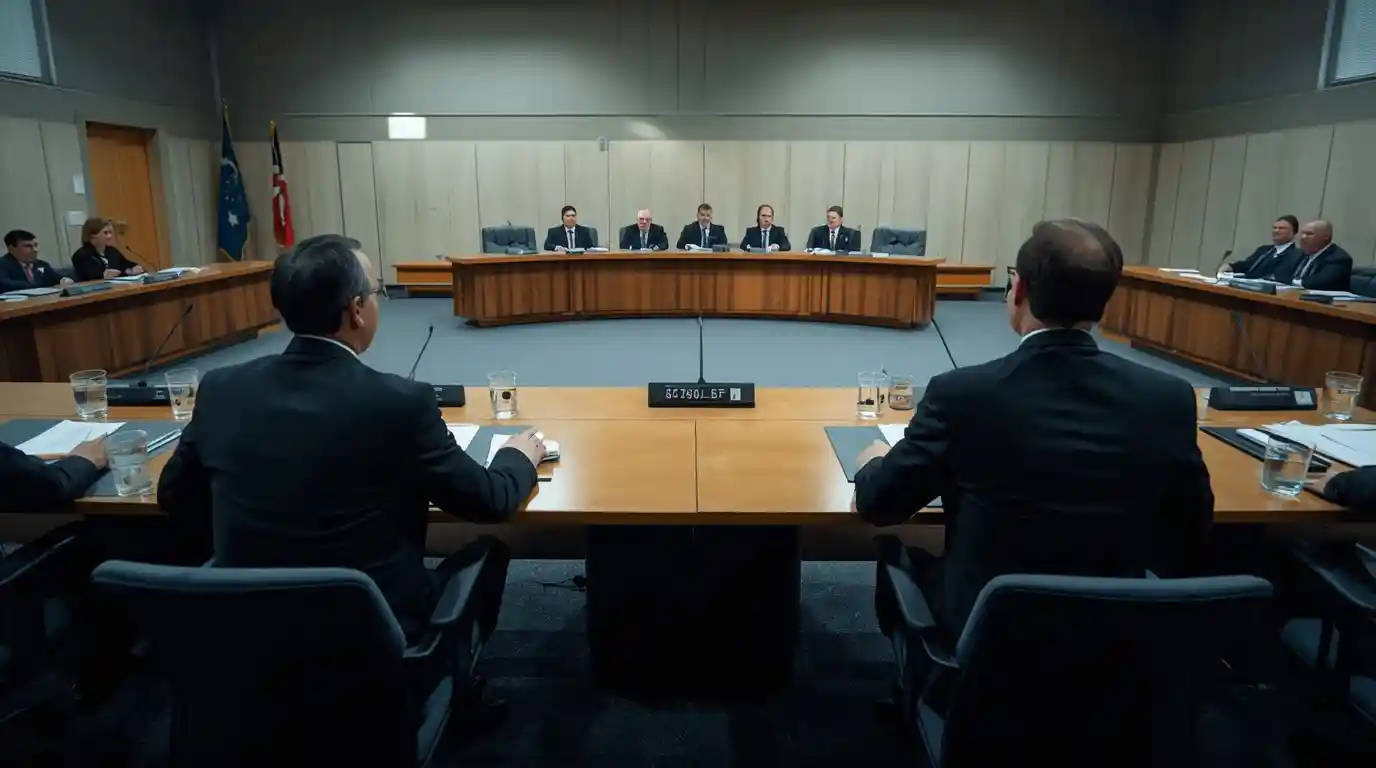
The KPMG audit scandal moved out of the firm's own offices and into a Canberra hearing room on Friday, when leaders from Macquarie Group, Westpac, Optus and Dexus were called to explain what a leak of confidential client files did to their businesses. It was the second public hearing held by the Parliamentary Joint Committee on Corporations and Financial Services since a whistleblower's allegations surfaced in March, and this round put the clients, not the accountants, in the chair.
Here's the number that sticks. When KPMG finally sanctioned the partners who handled confidential Lendlease material, the penalties reported in June came to roughly $40,000 for one partner, $22,000 for another and $19,000 for a third. The Westpac audit those partners were pitching for has been reported at about $32 million. A second round of sanctions in July, over Optus information used in an unsuccessful bid for Telstra's audit work, reached as high as $180,000 across seven partners and staff.
That gap between the penalty and the prize is the whole argument playing out in front of the committee. If the worst internal consequence of misusing a client's board papers is a fine worth a fraction of one year's audit fee, the deterrent isn't really a deterrent. And auditors are not just another supplier — their signature is what tells you a listed company's accounts can be trusted, including the companies sitting inside your superannuation balance.
What the Whistleblower Says Happened
The whistleblower, a former senior KPMG executive, alleges confidential documents belonging to Lendlease were used to help the firm compete for audit work at Westpac and Dexus. Separately, Optus information was allegedly used in a failed pitch for Telstra. KPMG first described the claims as unsubstantiated. It has since confirmed that a senior partner improperly accessed and displayed Lendlease board documents, apologised for how it treated the whistleblower, and conceded its own investigations fell short.
The internal fallout has been severe. Chief executive Andrew Yates and audit chief Julian McPherson resigned in late May, chairman Martin Sheppard announced his exit in June, and former chief operating officer Eileen Hoggett was expelled from the partnership in July. John Sams took over as chief executive on 21 July. Documents released by the committee on 10 August, reported by Bloomberg, suggest KPMG gave law firm Ashurst only a partial account of the allegations.
Why the Clients Are the Ones Being Questioned
Committee chair Senator Deborah O'Neill framed Friday's witnesses as performing a public service rather than facing punishment.
Putting on the record how the failure of this audit sector has actually impacted them in a negative way.
Their positions differ sharply. Westpac has kept KPMG as auditor but demanded lead partner Kim Lawry be removed, and non-executive director Peter Nash — a former KPMG national chairman — stepped down from the bank's board on 1 July. Macquarie hasn't even started with KPMG yet: it announced the switch from PwC in November 2025, and its chairman told July's annual meeting the company would run an integrity review of that decision. Lendlease has already changed auditors, ending a relationship proxy adviser Ownership Matters said ran 68 years.
What It Has Cost KPMG So Far
Penalties Worth Less Than the Work
Beyond the individual fines, evidence before the committee indicated proposed penalties for two partners were reduced after the then-chief executive intervened. That detail matters more than the dollar figures, because it goes to whether the firm's own discipline process was independent of the people it was judging.
Roughly 1,000 Jobs Under Review
Reports in late July put a restructure at dozens of partners and about 1,000 staff — more than a tenth of the workforce — with partner pay cuts of up to 20 per cent under consideration. KPMG said no final decisions had been made. The people carrying most of that cost had nothing to do with the tenders.
Government Work Frozen Until 30 September
KPMG agreed with the Department of Finance not to bid for new Commonwealth work from 16 June until 30 September, with more than $270 million in existing contracts under heightened scrutiny. Victoria imposed a similar ban on new state work. The limits of that pause showed immediately: one day after it began, Defence approved a $9 million extension to an existing contract, because extensions weren't covered.
How the KPMG Audit Scandal Could Rewrite the Rules
Treasury released an options paper on 1 July canvassing structural separation of audit and consulting, direct ASIC licensing and oversight of large firms, heavier financial penalties and mandatory audit tendering and rotation. Submissions closed on 12 August. ASIC, whose chair Sarah Court called the conduct an egregious and serious breach of trust at the June hearing, has launched a sector-wide review of how all four big firms handle internal complaints and has written to about 2,900 registered auditors warning of tougher surveillance.
What to Watch Next
Two things land on 30 September: Dr Ian Watt's independent review of KPMG's culture, ethics and governance is due, and the federal bidding pause expires. If you hold Australian shares directly or through super, the practical move is smaller — check the auditor named in the annual reports of the companies you own, note how long that firm has held the job, and read the auditor-ratification resolution at the next AGM instead of voting it through on autopilot. That resolution has been a formality for decades. It may not stay one.



Comments 0