

A Beach Town Built a Community Canteen on a Leftover Corner
Verse Design's 1,000-square-metre canteen at Aranya, Qinhuangdao, is the eleventh in a numbered series — and a blunt lesson in the kind of shared building Australia keeps closing.

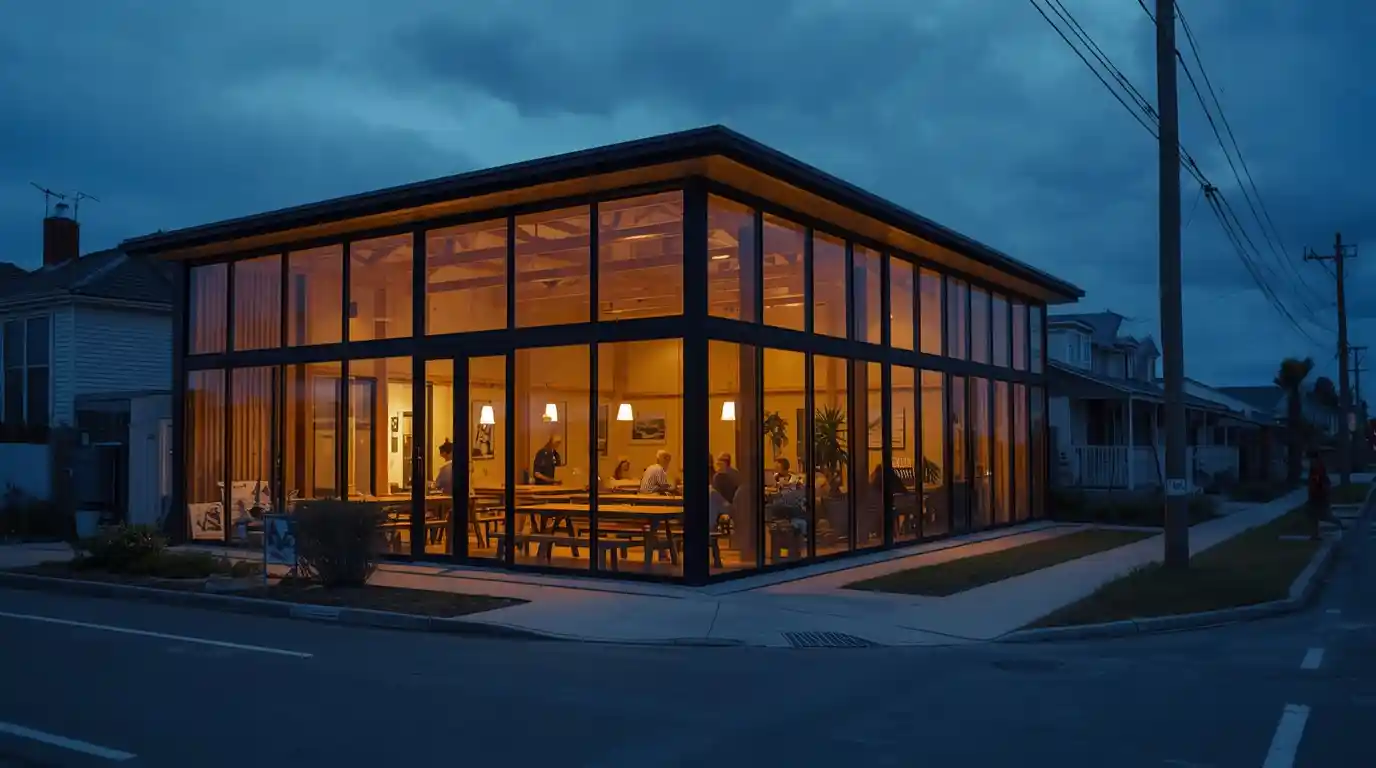
A community canteen has just opened on a scrap of leftover land at the eastern edge of a Chinese beach resort, roughly two hours from Beijing. Verse Design completed Community Canteen No. 11 at Aranya North Shore Art Bay in Qinhuangdao this year — 1,000 square metres, or about four tennis courts of floor space, wedged between apartment blocks, ground-floor shops, a children's water park and a run of community streets. On paper it's somewhere to eat. In practice it answers a question Australian councils argue about endlessly.
The detail worth pausing on is the number. It's canteen eleven. Not a one-off pavilion with a famous name attached, but the eleventh in a numbered series of shared dining rooms across a single master-planned town. Aranya has spent more than a decade quietly building the ordinary infrastructure most new estates skip, and the architecture press mostly photographs the glamorous bits instead.
That should interest anyone watching Australian suburbs, because we keep losing this building type. More than 40 per cent of young Australians report feeling lonely, according to research published by the University of Sydney in August 2025, and young people with persistent loneliness were over seven times more likely to report high psychological distress. The Australian Institute of Health and Welfare has tracked social contact declining across every age group for decades. The diagnosis is settled. What to build is not.
What Verse Design Actually Built
The site was the kind of corner that usually becomes a bin store or a bit of tired lawn. ArchDaily describes it as a fragmented urban edge, a transitional patch left over once the apartments, retail and streets were set out. Verse Design's response was to make the leftover piece the destination rather than the gap between destinations.
Leon Dai and He Xiaojian led the design, with construction documentation by the Dalian Architectural Design & Research Institute. The glazed envelope was engineered by BRM Facade Technology and built by a local Qinhuangdao curtain wall contractor, using glass supplied by CSG Holding. TUNGSTEN Studio did the lighting — a telling line item, since a canteen only works after dark if it looks warm from fifty metres away.
Rather than functioning as a standalone facility, it introduces a bright and welcoming public space, transforming a transitional corner into a place for gathering, interaction, and everyday community life.
Why Number 11 Beats a Landmark
Aranya is best known abroad for its set-piece buildings — the concrete "Lonely Library" on the sand, the seaside chapel, the art centre. Those get the magazine covers. But architecture critic Oliver Wainwright has reported the development now draws more than 1.5 million visitors a year, and you don't feed that many people, or 365 dinners a year for residents, with a library.
The numbering is the actual innovation. It signals that a canteen is a repeatable unit, like a bus stop, not a special occasion. Compare it to how Australian estates get delivered: one community centre, built last, on the least valuable land, opened after the display village closes.
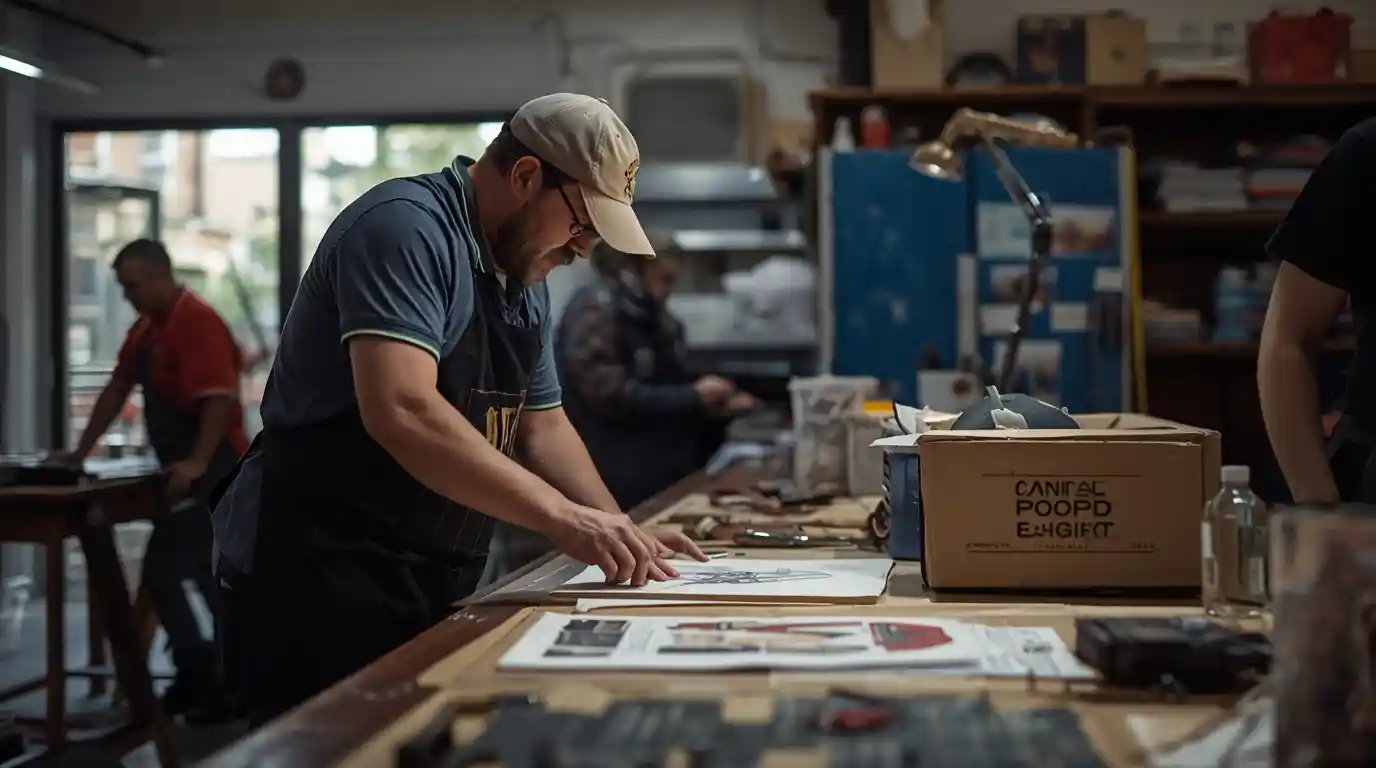
How a Community Canteen Earns Its Keep
Strip away the Chinese context and three transferable moves remain. None of them are expensive, and all of them are things Australian planning schemes routinely fail to require.
Put It on the Awkward Land
Odd corners are usually treated as a loss. Here the offcut became the one address every surrounding building faces. Awkward sites are cheap, centrally located and already surrounded by foot traffic — exactly what a shared room needs and exactly what a car park doesn't.
Make the Inside Visible From the Street
A full-height glass wall is a social device before it's an aesthetic one. You can see whether anyone's in there, whether it's your kind of crowd, whether you'd be intruding. Most Australian neighbourhood houses hide behind brick and a noticeboard, and then wonder why the same twelve people turn up.
Repeat It Until It's Boring
Eleven canteens means no single one has to be an event. Boring is the goal. A place you use on a wet Tuesday does more for social connection than a beautiful hall you visit twice a year.
The Part the Renders Don't Show
Aranya isn't a public commons and shouldn't be sold as one. Sixth Tone has reported that entry requires property ownership, a hotel booking or a valid event ticket, and that dining facilities are split between owners and general visitors. Founder Ma Yin took over the half-finished site in 2013; residents began arriving in 2015 and drew up an owners' pact of their own. Peak-season hotel rooms run around 2,000 yuan a night — comfortably over A$400. This is a property product with a gate, and its community canteen is part of the sales pitch.
What an Australian Suburb Could Copy
The gate is the bit to reject. The rest is a cheap playbook. Surf clubs, bowls clubs, RSL bistros and neighbourhood houses already do this work here — they're just ageing, under-funded and rarely counted as infrastructure when a new precinct is costed. A community canteen is really just a subsidised room with food in it, sited where people already walk.
If a masterplan lands in your area, check the plans for one thing: is there a shared indoor room, on a corner people pass daily, opening in stage one rather than stage six? If not, say so at the exhibition period. That's the moment it's still a line item, and not a leftover.
Comments 0