

A Fight, Not a Metal Detector, Found the Gun on Campus
A firearm surfaced at a South Los Angeles high school hours into the first day of class — found the same way almost every gun in the district gets found.

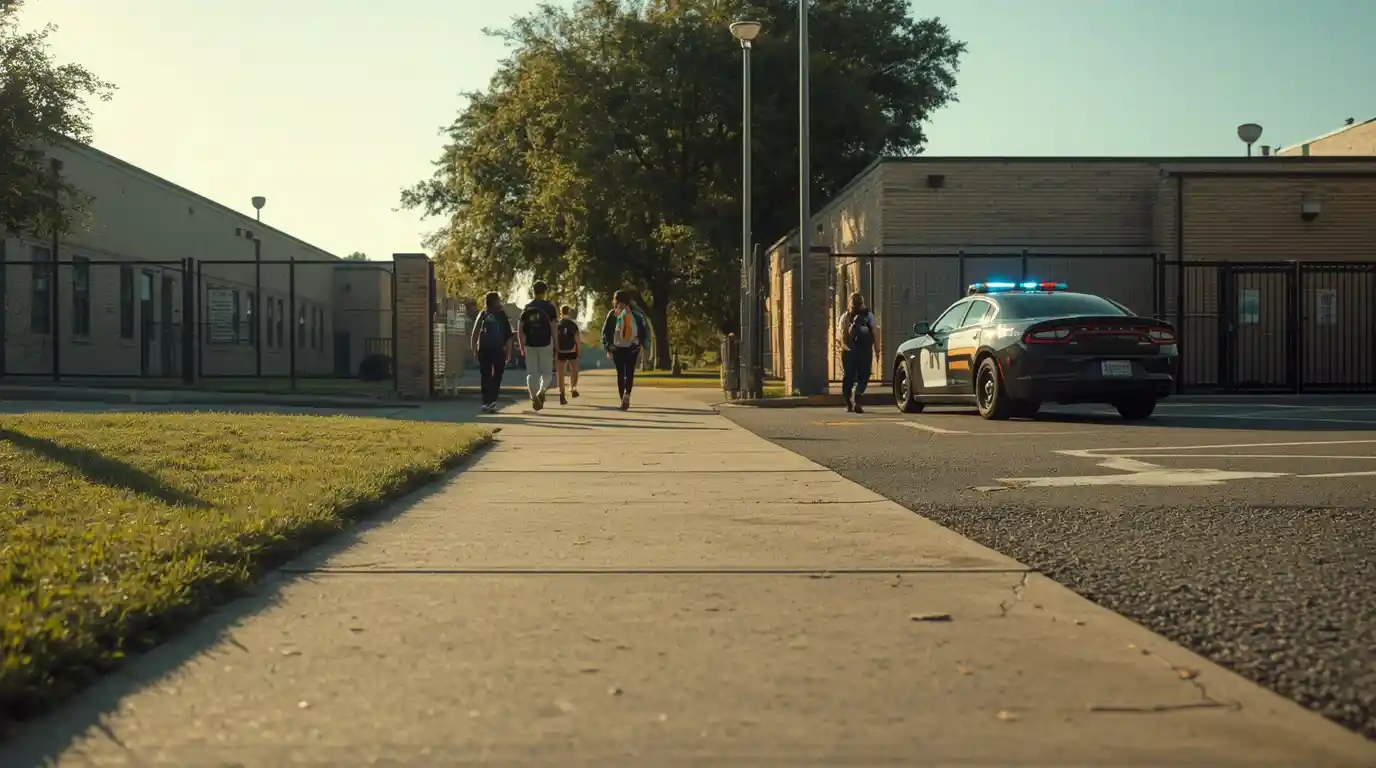
A gun on campus turned up at Santee Education Complex on Wednesday morning, barely two hours into the first day of the Los Angeles Unified school year. Staff were dealing with an altercation between students when the circumstances prompted an administrative search — and that search produced a firearm. Los Angeles School Police took one student into custody without incident, and the district said parents were notified.
The campus went into a brief lockdown. It was lifted by 10:45 a.m., and students went back to their regular schedules, according to ABC7. Nobody was hurt, no shots were fired, and by lunch the first day of school looked like any other first day of school. That's roughly where most of the coverage stopped.
The detail worth sitting with is how the weapon surfaced. Nobody walked through a metal detector. No wand beeped. A fight happened, adults responded, a student got searched, and the gun was found. According to years of the district's own data, that is almost exactly how guns get found in Los Angeles schools.
How the Gun on Campus Was Actually Found
An administrative search is not a random pull-out. It's a search by school staff triggered by a specific reason to suspect a specific student, and the trigger here was the fight. LAUSD pointed to its Discipline Foundation Policy as the framework it will apply from here — the district's rulebook for responding to serious incidents, which is designed to weigh alternatives rather than jump straight to expulsion.
Los Angeles School Police said in a statement that students should not bring dangerous items to school and that the department takes the safety of students and campuses seriously. The student's age and grade haven't been released, and no charging decision has been announced.
Why L.A. Stopped Wanding Students at Random
For years, every LAUSD middle and high school was required to pull a group of students out of class daily and pass a handheld metal detector over them. The school board voted to end that in 2020 after a sustained push from the ACLU of Southern California and student organizers, and the practice stopped that July. The argument that won wasn't only about dignity. It was about results.
The ACLU's review found random wand searches turned up essentially no guns. Weapons kept being discovered, just by other means — a tip, a fight, an argument that escalated. Districtwide weapons incidents actually climbed after daily random wanding became mandatory, from 653 in 2013-14 to 783 the next year. The searches ate instructional time and caught very little.

What the Numbers Actually Show
School police in Los Angeles recover roughly 400 weapons in a typical year, and only about 20 of those are firearms. Most of the rest are knives. Go back before the district tightened its policies and the annual total was closer to 1,000. So the real picture isn't a district awash in guns. It's one of the largest school systems in the country where a small number of firearms appear each year, and nearly all of them are found by adults reacting to something.
The wider trend is less reassuring. LAUSD logged 994 weapons-related incidents in one recent year and 1,197 the next, and the broader category of serious safety calls — fights, threats, substances, suicide risk — rose about 45% between 2017-18 and 2022-23, EdSource reported. Weapons are the sharp edge of a much larger increase in campus crises.
Santee is not an outlier. The campus opened in 2005, the first new four-year high school LAUSD had built in more than 35 years, created to relieve overcrowding at nearby Jefferson High. It enrolled about 1,469 students last school year, and roughly 89% of them are economically disadvantaged.
What Happens to the Student Now
Two processes start at the same time, and families frequently confuse them. One is run by law enforcement and the courts. The other is run by the school district. They move on different timelines, apply different standards of proof, and can reach opposite conclusions about the same afternoon.
The Criminal Case
Bringing a firearm onto school grounds is a felony in California, and juvenile cases are referred to prosecutors who decide whether to file. Age matters enormously here — outcomes for a 14-year-old and a 17-year-old with identical facts can diverge sharply. Adults can also face exposure if the gun came from an unsecured home.
The District's Own Process
Separately, the school moves through its discipline policy, which can involve an expulsion hearing, a transfer, or placement with support services. A student can be cleared in court and still be removed from the campus, because the district's threshold is far lower than a prosecutor's.
What Parents Should Check This Week
The most useful thing you can do has nothing to do with this particular school. A lockdown notification is one of those systems nobody tests until it matters, and the first weeks of a school year are exactly when contact records are stale.
- Confirm the phone number and email on file with your school actually reach you, not an old work line.
- Ask how the school notifies families during a lockdown — text, robocall, app — and whether you're opted in.
- Find out the reunification location before you need it, so you're not driving toward a closed campus.
- If there's a firearm in your home, store it locked and separate from ammunition. California law can hold adults responsible when a minor gains access to a gun that wasn't secured.
Watch for whether LAUSD releases the student's age and any charging decision in the coming days, and whether Santee's own safety plan changes as a result. But the more telling signal will be what the district does about detection. Wednesday showed again that a gun on campus in Los Angeles gets found by an adult paying attention, not by a machine — and staffing, not hardware, is what that depends on.



Comments 0