

Why Did Broward School Enrollment Fall Twice as Fast as Planned?
Florida's second-largest district opened the year with 11,000 fewer students — more than double what its own analysts predicted in December.

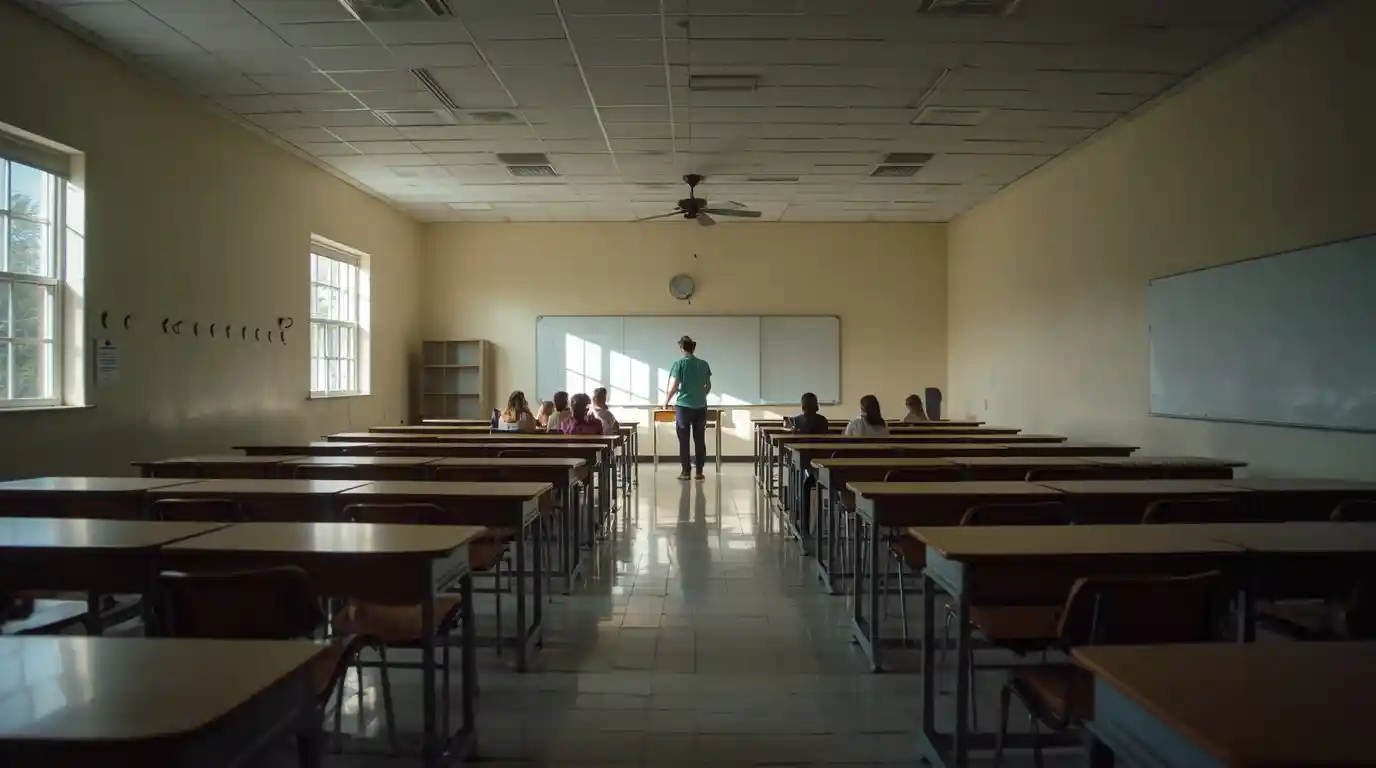
Broward school enrollment came up roughly 11,000 students short on the first day of classes this month, and the district's own forecasters never saw a drop that big coming. Superintendent Howard Hepburn said about 180,000 students walked into Broward County Public Schools on Aug. 10. That's the sixth-largest district in the country and the second-largest in Florida, opening a full mid-sized town lighter than last year.
Attach a dollar figure and the number gets sharper. In Florida, money follows the child, and the district puts the shortfall at about $100 million. Divide it out and every empty desk costs Broward somewhere near $9,000 a year. Eleven thousand of them adds up to more than the entire budget gap administrators were fretting about twelve months ago.
Here's the part that complicates the usual storyline: charter schools shrank too. They opened with roughly 2,100 fewer students than last August. When traditional schools and their competitors both lose kids in the same week, the explanation isn't that families picked a different school. It's that fewer families are in the county at all.
The Forecast That Missed by 6,000 Students
Back in December, district analysts projected the year would start with about 5,000 fewer students. The real count more than doubled that estimate. A miss that size matters because districts lock in staffing, bus routes and campus budgets months ahead based on those projections, then settle up with Tallahassee once actual headcounts land.
Hepburn has said the district budgeted for the majority of the decline it expected. The problem is the half it didn't. Broward has already spent a year trimming — a hiring freeze that saved around $18 million, six campus closures approved in January worth up to $10 million annually, and a stated goal of $100 million in total savings.
What's Actually Pulling Students Out
There's no single villain here. Three separate pressures are stacking on top of one another, and only one of them is something a school board can vote on.
Vouchers and the Universal School-Choice Law
Florida scrapped income limits on its voucher program starting in 2023-24, opening it to essentially everyone. State figures now count about 1.4 million Florida students in some form of school of choice, including more than 500,000 using a voucher at a private school and roughly 155,000 learning at home. That funding comes out of the same pot districts draw from.
The Haitian TPS Cutoff
Hepburn has flagged the end of Temporary Protected Status for Haitian immigrants as a direct threat to his rolls. Florida is home to roughly 113,000 Haitian TPS holders, more than any other state, concentrated heavily in Broward and Miami-Dade. Families facing a status change often withdraw children or simply stop showing up, whether or not anyone actually leaves the country.
We don't ask for immigration status. We want you to enroll. It is a safe and secure space for learning.
That was Hepburn in January, and the message hasn't shifted since. Federal law requires public schools to enroll every child regardless of immigration status. But a superintendent's reassurance doesn't always outweigh what parents are hearing at the kitchen table, and attendance data suggests plenty of them decided not to risk it.
The Cost of Staying in South Florida
Housing prices and property insurance have pushed working families out of the Fort Lauderdale metro entirely. Hepburn has pointed to people relocating somewhere a paycheck stretches further. Fewer young families in the county means fewer kindergartners enrolling, and kindergarten is the leading indicator every district watches — this year's shortfall becomes next decade's high school.

Why Broward School Enrollment Decides the Budget
Florida pays districts through a per-student formula, which means Broward school enrollment isn't one input among many. It's the input. A district can hold class sizes steady, keep every campus lit and still lose nine figures because the count came in low. Against an operating budget running around $5 billion, a $100 million gap is roughly two percent.
Two percent sounds survivable until you look at what's locked inside it: salaries under union contract, debt service, legally mandated services for students with disabilities. The genuinely flexible money is a much thinner slice, so cuts land there — electives, classroom aides, media specialists, athletics. The stuff parents notice immediately.
Broward Isn't the Outlier. It's the Pattern.
Miami-Dade opened last August roughly 12,000 students lighter, Axios reported. Orange County is down about 3,100 this year, worth as much as $27 million, while roughly $211 million that would have gone to the district follows students to vouchers instead — up from $152 million the prior year. Statewide, projections point to more than 70,000 fewer public school students.
What to Watch Before Thanksgiving
The first-day count is not the number that counts. Broward's benchmark enrollment report is due Sept. 14, and it usually claws back some students who registered late — transfers, families still traveling, kids whose paperwork lagged. If Broward school enrollment is still five figures short on that report, the closure and boundary conversation restarts in earnest.
Look up your own school's count rather than the district total, because the pain concentrates rather than spreads. An under-enrolled campus is the one that loses a teacher unit, gets combination classes, or lands on a consolidation list. Teachers should brace for surplus and reassignment notices this fall. Mark Sept. 14 on the calendar — that's when the real number arrives.



Comments 0