

A Robot Arm Is Where Apple Smart Home Plans Are Headed
Apple's home lineup finally gets new hardware this fall, and the pipeline behind it runs all the way to a motorized display and a Face ID doorbell.

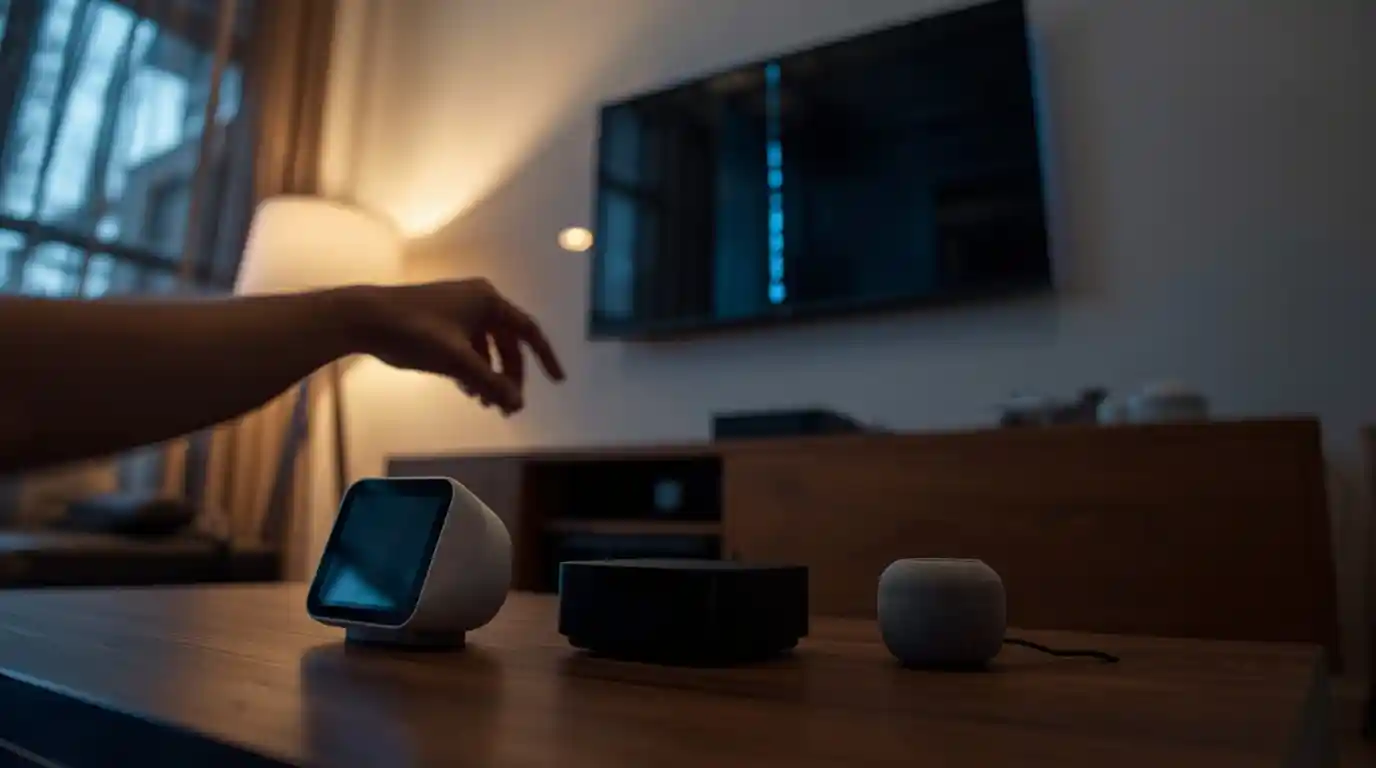
After years of hints and slipped dates, the Apple smart home effort is finally about to produce hardware you can actually put in a room. Bloomberg's Mark Gurman has mapped out a pipeline that begins this fall with two familiar products getting new brains, and it stretches — eventually — to a screen bolted to a motorized arm. 9to5Mac pulled the full picture together on August 15.
The arm is the part that makes you sit up. Gurman's reporting describes a later, more ambitious version of Apple's home display: roughly 9 inches, mounted on a moving base that can turn toward whoever is speaking. Call it a tabletop robot. Before that, Apple is said to be working on its first security camera and a video doorbell that recognizes your face and unlocks the door.
All of it lands in a market Apple barely competes in. Widely cited industry estimates give Amazon's Echo line about 65% of US smart speaker ownership, with Google Home a distant second near 24%. Apple's answer for the past several years has been a mini speaker, a full-size speaker, and a streaming box. The company is about to try something considerably more aggressive.
What Actually Ships This Fall
Two refreshes come first, and neither is a redesign. The Apple TV 4K, which starts at $199, moves from the A15 Bionic to the A17 Pro — enough horsepower to run Apple Intelligence features on the box itself instead of shipping everything to a server. The remote reportedly gets minor tweaks. Worth noting: the A17 Pro debuted in the iPhone 15 Pro back in 2023, so this is a catch-up chip, not a leap.
The $129 HomePod mini gets a bigger relative jump. Its S5 processor first shipped inside an Apple Watch in 2019, and it's expected to be replaced by the S9, alongside a newer wireless chip and fresh color options. Audio tuning is said to improve too. The full-size HomePod is also in line for a faster chip, though no one has pinned down when.
The 7-Inch Screen Apple Wants on Your Wall
The genuinely new product is a small square touchscreen, internally tracked as J490 and long referred to by the codename Charismatic. It runs a home-focused operating system Apple has been trademarking as homeOS. Expected timing is October 2026 through early 2027 — which means it may not make the holiday shopping window at all.
Two shapes, one device
Reporting points to a wall-mounted version that attaches magnetically, plus a tabletop model that sits on a rounded speaker base reminiscent of the old iMac G4. Both are built around a 7-inch display with an A18 chip and at least 8GB of memory. Silver and black are the expected finishes, with a 1080p camera on the front.
What it's supposed to do
FaceTime calls, music, room-to-room intercom, and full control of connected lights, locks and cameras. Face ID handles sign-in and tells family members apart, switching profiles as different people walk up. Sensors reportedly adjust what's on screen based on how close you are — glanceable from across the kitchen, detailed when you're standing at it.
The price nobody has confirmed
MacRumors reports an expected price around $350. That would place it above most Echo Show models, which routinely sell for well under $200 during Amazon's own sale events. Apple has never won on price in this category, and it clearly isn't planning to start now. The pitch will be privacy and integration instead.

Why Apple Smart Home Plans Kept Slipping
One feature held up everything: Siri. Apple demonstrated a rebuilt, context-aware assistant at WWDC in June 2024 and used it in iPhone 16 marketing. By March 2025 the company had publicly acknowledged the features weren't ready, a reversal that drew class-action lawsuits from buyers who felt they'd paid for something that never arrived.
Apple then swapped the underlying architecture and targeted spring 2026, with the upgraded Siri expected to arrive in an iOS 26.4 update. That matters here because none of the new home hardware makes sense without it. A wall screen you talk to is only as good as the assistant behind it — which is exactly why the devices waited on the software rather than the other way around.
What Apple Is Walking Into
Amazon has roughly 101 million US users aged 12 and up on Echo devices, according to industry estimates, and both Amazon and Google have spent this cycle rebuilding their assistants around large language models. Ring and Nest have owned the doorbell and camera aisle for a decade. Apple's differentiator is the same one it always reaches for: on-device processing, encrypted video, and no advertising business quietly attached to your living room.
Should You Buy an Apple TV or HomePod mini Now?
If you're within a few weeks of a purchase, wait. Buying the current Apple TV 4K means an A15 that likely won't run the local AI features the next box is built for, and a HomePod mini bought today ships with a chip from 2019. Neither is broken — they just sit on the wrong side of a hardware line.
- Fall 2026: Apple TV 4K and HomePod mini refreshes
- October 2026 to early 2027: the 7-inch home display
- Later: security camera, Face ID doorbell, and the 9-inch motorized display
Watch for an Apple event announcement in September or October, and watch the Siri rollout more closely than the hardware leaks. If the assistant ships on time and works as demonstrated, the rest of this roadmap follows. If it slips again, expect these dates to move with it — they have every time so far.


Comments 0