

Why the Pixel 11 Price Rose but the Chip Stayed Put
Google's new flagships cost more and store more, but the Tensor G6 skipped the manufacturing leap almost everyone expected this year.

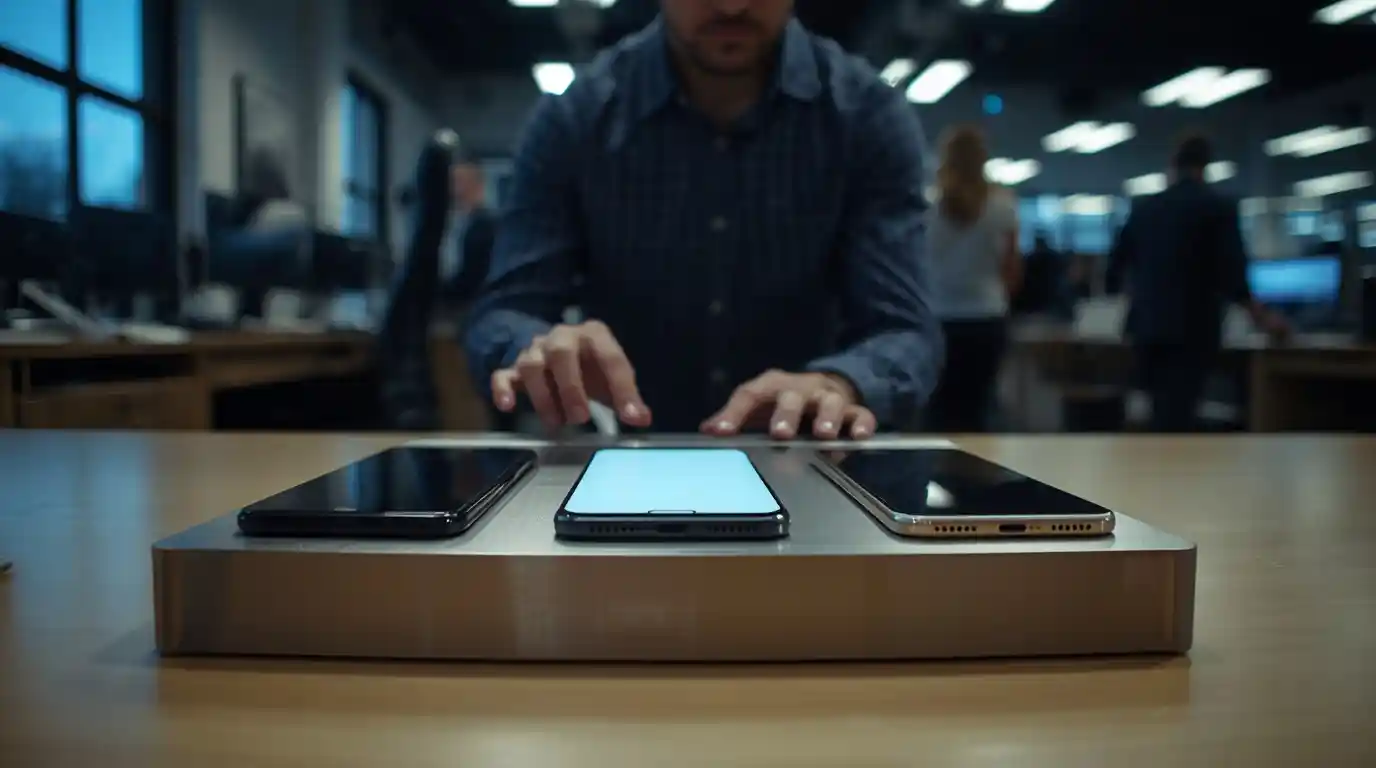
The Pixel 11 price starts at $899 in the US, a hundred dollars more than the phone it replaces, and Google is betting almost nobody will walk away over it. The company introduced the Pixel 11, Pixel 11 Pro and Pixel 11 Pro XL on August 12, opened preorders three days later, and put them on shelves August 20. The Pro runs $1,099. The Pro XL runs $1,299.
So where does the extra hundred bucks go? Part of the answer is genuinely good news: the base model now starts at 256GB instead of 128GB, with a 512GB tier above it. You're paying more and getting twice the storage. The part that didn't move is the processor. The Tensor G6 was widely expected to jump to TSMC's 2nm manufacturing process this year. It didn't — it sits on the same 3nm class of process as last year's Tensor G5.
That matters more on a Pixel than on almost any other phone, because Google promises seven years of operating system, security and feature updates. You can buy cloud storage later. You can replace a battery, or a cracked screen. You cannot replace the chip, and this one has to carry a phone into the 2030s.
What the Pixel 11 Price Buys You
The $899 model has a 6.3-inch OLED panel at 2424 by 1080, up to 3,000 nits of peak brightness and a 60–120Hz refresh rate. Inside there's 12GB of RAM and a 4,985mAh battery, with 30W wired charging and 25W wireless over Qi2.2 — the magnetic standard Google markets as Pixelsnap. There's still no charger in the box.
Cameras are where Google keeps its lead. The main sensor is 48MP and physically larger than the Pixel 10's, joined by a 13MP ultrawide and a 10.8MP 5x telephoto. Super Zoom now stretches to 30x, up from 20x last year. Engadget scored the base phone 9.2 out of 10 and reported getting close to two days of ordinary use between charges.
One practical wrinkle for US buyers: HotHardware reports the American models are eSIM-only, with no physical SIM tray. If you swap prepaid carriers often or rely on cheap local SIMs when you travel, check that your provider supports eSIM transfers before you order.
Why the Tensor G6 Feels Familiar
Google's silicon has always been a strange flagship part — brilliant at the narrow jobs Google cares about, ordinary everywhere else. The G6 leans harder into that than any Tensor before it.
The Manufacturing Leap That Didn't Happen
Smaller process nodes are how chips get faster without getting hotter. Staying on 3nm means Google had to find its gains elsewhere, mostly by pushing clock speeds up. PhoneArena reported that a Google hardware executive confirmed the 3nm-class process publicly, which ended months of speculation that a 2nm part was coming.
The Tensor G6 is "less like an all-around flagship processor and more like another highly specialized Pixel chip — one that prioritizes Google's software ambitions over outright performance," Android Authority concluded in its analysis of the chip.
Seven Cores Instead of Eight
The G6 drops to seven CPU cores: one Arm C1-Ultra at 4.11GHz, four C1-Pro at 3.38GHz and two more at 2.65GHz. The G5 had eight, all clocked lower. Fewer, faster cores is a defensible trade for a phone that mostly does short bursts of work, but it's a rearrangement, not a leap.
Where Google Actually Spent the Silicon
The TPU — the AI block — is the real upgrade, running up to 50% faster, with Google claiming on-device AI tasks up to 3.5 times quicker than the G5 on some workloads. It also cites 25% faster web browsing, 15% faster app launches and 20% better energy efficiency. Graphics remain the weak spot; PhoneArena pegs Qualcomm's current Adreno GPU at roughly three times the raw performance.

The Features Google Wants You to Notice
All that TPU headroom feeds a new batch of software: Rambler, a natural-language voice-to-text tool; Proactive Intelligence, which surfaces Gemini suggestions inside Messages; Camera Looks, essentially saved filter presets; and Magic Capture, which pulls edited stills out of video. The Pro models add HiLight, a notification light that so far does very little. Whether these justify $899 depends entirely on how much you talk to your phone.
Do the Pro Models Justify $200 More?
The Pro and Pro XL get LTPO panels at 3,600 nits, a 50MP main sensor, 48MP ultrawide and 48MP 5x telephoto, plus Pro Zoom up to 120x and an optional 16GB of RAM. But the $1,099 Pro ships with a 4,850mAh battery — smaller than the $899 model's. Only the 6.8-inch Pro XL gets 45W charging and a 5,115mAh cell.
Should You Upgrade or Sit This One Out?
If you're on a Pixel 9 or 10, skip it. Nothing here fixes a problem you have, and the seven-year support promise means your current phone is still getting new features. If you're coming from a Pixel 7 or older, the Pixel 11 price is easier to swallow once trade-in and carrier credits land, and the storage bump is worth real money.
Watch for two things over the next few weeks: independent battery and thermal testing on the Pro XL, since Google trimmed capacity on the smaller Pro, and the first carrier promotions, which historically knock the effective cost down sharply by October. There's no reason to preorder at full sticker.




Comments 0