

A Sicily Museum Heist Pulled Off While the City Celebrated
Four panels attributed to Antonello da Messina vanished from a Sicilian museum on Ferragosto night — a day after Italian police announced they had cracked the last big museum theft.

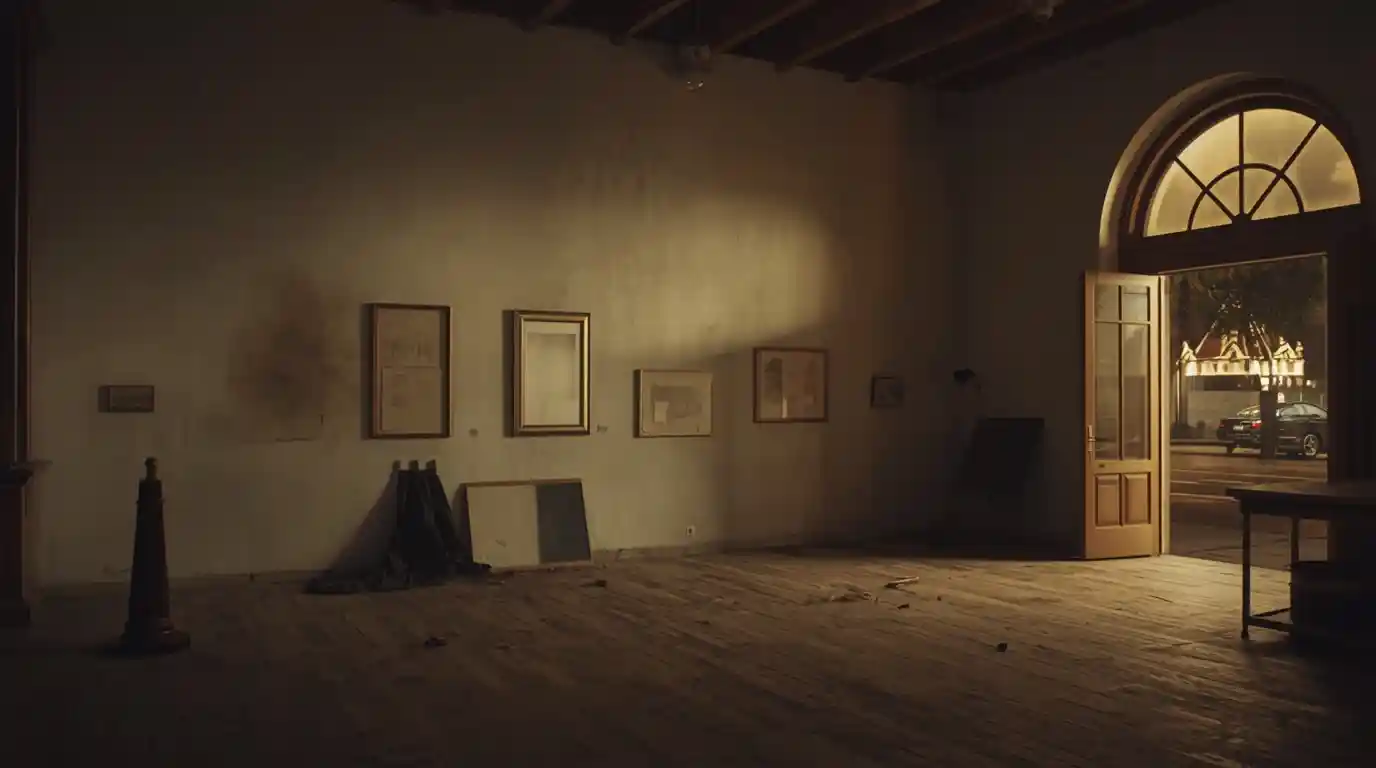
The Sicily museum heist that stripped four Renaissance panels off a wall in Messina happened just before 10 p.m. on Saturday, Aug. 15 — Ferragosto, the day Italy essentially closes. Outside, the city was deep into its biggest religious festival of the year, the procession honoring the Virgin Mary. Inside the Regional Interdisciplinary Museum, known locally as MuMe, someone got past the alarm and security systems and walked out with four paintings.
What's missing: three of the five surviving panels of the San Gregorio Polyptych, painted in 1473, plus a double-sided panel showing the Madonna and Child on one face and the Virgin holding the dead Christ on the other. That second piece was pulled out of an armored display case. All four are attributed to Antonello da Messina, the painter who carried the city's name across Europe and died there in 1479.
Nobody has attached a price tag yet. But in March, the Italian state paid $14.9 million at a New York auction for a single small Antonello panel, "Ecce Homo," specifically to keep it in the country — which tells you the order of magnitude here. Museum director Marisa Mercurio called the theft a tremendous loss for the museum, the city, the community and the art world. The museum stayed shut Sunday while investigators worked the rooms.
What the Sicily Museum Heist Actually Took
The San Gregorio Polyptych isn't a painting in the way most Americans picture one. It's an altarpiece — joined wooden panels, tempera on wood, roughly six and a half feet on a side when whole, made in 1473 for a Messina convent. It was already a survivor. The work originally had at least five sections, and the 1908 earthquake that leveled Messina left it damaged. Five panels made it to 2026. Three of those five are now gone.
The Painter Sicily Never Stopped Claiming
Antonello was born in Messina around 1425 and trained in Naples, where Flemish painting was filtering down from the north. He picked up the oil technique associated with Jan van Eyck's circle. Giorgio Vasari later credited him with introducing oil painting to Italy — historians now say that's wrong, but the legend stuck. When he worked in Venice in the mid-1470s, he changed how Venetian painters handled light and skin, and he's often described as the first Italian painter to treat the individual portrait as an art form on its own terms.
His surviving body of work is small, which is exactly why the numbers around it run high. CBS News reported that a Madonna and Child sold at Christie's for more than $300,000 back in 2003. Two decades later, the state was writing an eight-figure check for one panel rather than let it leave Italy.
Why These Panels Are Almost Impossible to Sell
This is the strange arithmetic of major art theft: the more valuable the object, the harder it is to convert into cash. A Sicily museum heist of this profile puts four instantly identifiable works into a market where identifiability is fatal.
Too Famous to Hang Anywhere
Every reputable auction house, dealer and insurer will have these images within days. No legitimate buyer can take title. The panels can't be shown, lent, insured or resold openly for generations, which strips out roughly all of the stated value.
Stealing an Antonello may be far easier than selling one.
Stolen Art as Criminal Currency
That line is from Lynda Albertson of the Association for Research into Crimes against Art, who notes that famous stolen works tend to circulate among criminals as collateral for other business — drugs, weapons, debts — rather than getting sold to a mythical private collector. The paintings become a chip, not a payday.
Italy Has the Best Odds in the World Here
Italy's Carabinieri command for cultural heritage protection has existed since 1969 and says it has recovered more than three million stolen artworks and artifacts. That's not a boast other countries can match. It also runs the world's largest stolen-art database, which is what makes fencing an Antonello a losing proposition.
Two Italian Museums Robbed in Five Months
The timing stings. On Aug. 14 — one day before Messina — Italian police announced they'd recovered three works taken from the Magnani-Rocca Foundation near Parma in a three-minute break-in on the night of March 22-23. Their stated values:
- Cézanne watercolor, "Still Life with Cherries" — €6 million, about $7 million
- Renoir oil, "Fish" — €3 million, about $3.5 million
- Matisse aquatint, "Odalisque on the Terrace" — €20,000, about $23,000
Five months from theft to recovery is fast by art-crime standards. The counterexample Americans know: Boston's Isabella Stewart Gardner Museum lost 13 works in 1990, and not one has come home in 36 years.
What to Watch Over the Next Few Weeks
The first move is administrative and boring and matters enormously — getting the four panels logged into the Carabinieri and Interpol stolen-art databases with good photographs, which closes the legitimate market permanently. After that, watch for two signals: an approach to the museum or its insurer offering a "recovery fee," which is how a lot of these end, and any arrest tied to organized crime in eastern Sicily. If you buy or appraise Old Master work in the US, run provenance checks against the Interpol and Art Loss Register listings before money moves. Panels this recognizable don't get laundered by accident — they get laundered by someone not bothering to look.

Comments 0