

Costlier Memory, Not Weak Demand, Drove the Cisco Stock Drop
Cisco posted its best quarter in years and still lost roughly $40 billion in market value, because the AI gear driving the growth costs more to build.

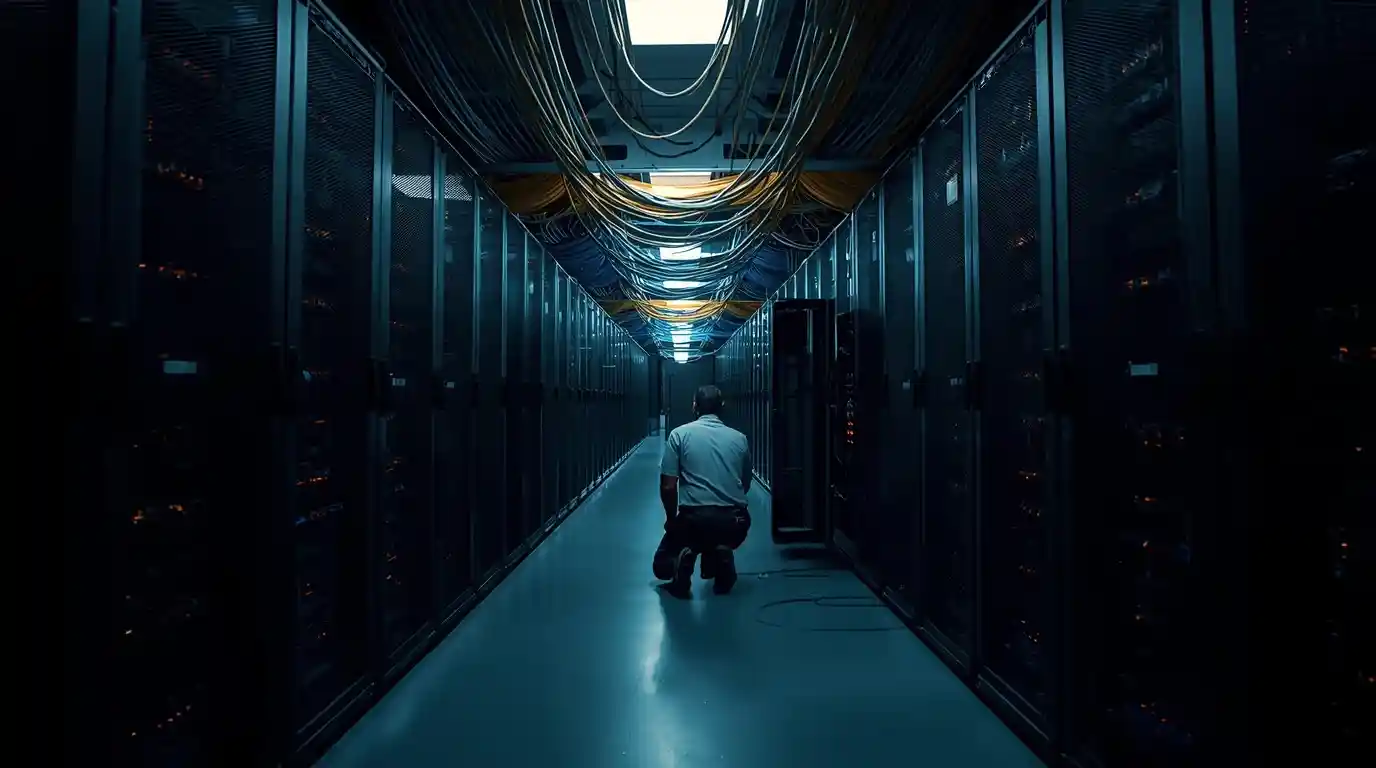
The Cisco stock drop that followed the company's best quarter in years had almost nothing to do with weak demand. Cisco beat on revenue, beat on profit, and told investors fiscal 2027 would come in billions above what Wall Street had penciled in. Shares still closed down about 8.4% on Thursday at $113.47, after finishing the prior session at $123.88.
The problem sat one line down the income statement. Adjusted gross margin slipped to 66.3% from 68.4% a year earlier, and product gross margin fell harder, to 64.8% from 67.5%. Cisco pointed at the cost of components going into AI hardware — memory chips in particular — and at the simple fact that racks of switches carry thinner margins than software subscriptions.
For anyone holding Cisco in a 401(k) or an index fund, that trade-off is the whole story: the company is buying enormous revenue growth with a slice of its profitability. Jim Cramer told CNBC viewers the selloff was overdone. Plenty of analysts agreed, and several raised their price targets on a day the stock fell.
What Actually Caused the Cisco Stock Drop
Revenue hit $17.3 billion for the quarter ended July 25, up 18% and past the roughly $16.8 billion consensus. Adjusted earnings came in at $1.22 a share against $1.17 expected. Those are the numbers that usually send a stock higher. Instead, traders fixated on guidance that put first-quarter gross margin at 65% to 66% — another step down, and a signal the squeeze isn't finished.
Inventory told the same story. Cisco's stockpile swelled to $5.69 billion from $3.16 billion a year earlier, the kind of build a company does when it's stacking up parts for orders it has already booked. Bulls read that as confidence. Bears read it as capital tied up in hardware bought at inflated component prices.
The AI Orders Nobody Is Arguing About
Cisco booked $4 billion in AI infrastructure orders from hyperscalers in the quarter alone and $9.3 billion across fiscal 2026 — roughly 4.5 times the prior year's total. About 60% went to systems built on its Silicon One chips, with the rest in optics. Another $400 million-plus came from smaller cloud providers, sovereign projects and enterprises, topping $1 billion for the year.
Product revenue climbed 24% and networking rose 28%. Services were the soft spot, flat at $3.79 billion and a hair under estimates. Management expects AI infrastructure revenue of roughly $7.5 billion in fiscal 2027, nearly double the $4 billion booked in fiscal 2026.

Why Cramer Says the Selloff Is a Gift
Cramer's argument is less about this quarter than about how Cisco's management team talks. The company has a long habit of setting a low bar in the first quarter of a fiscal year and stepping over it four times.
Guidance That Was Already Above the Street
Cisco pointed to fiscal 2027 revenue of $72.2 billion to $73.4 billion, against a consensus near $68.7 billion, and adjusted earnings of $5.05 to $5.11 versus about $4.80 expected. First-quarter revenue guidance of $18.0 billion to $18.2 billion sat more than a billion above estimates. Cramer's read is that this is the conservative version.
It's giving you a great buying opportunity, and I think Cisco's absolutely worth buying as a play on artificial intelligence via networking within and among data centers.
Five Firms Raised Targets on a Down Day
Rosenblatt lifted its target to $165 from $150 with a buy rating. Wells Fargo went to $150 from $130. Morgan Stanley and KeyBanc each moved to $135 from $130. Even Barclays, which stayed neutral, nudged to $123 from $121. Every one of those sits above Thursday's $113.47 close.
How It Stacks Up Against the Rest of the AI Trade
This wasn't a bad tape. The S&P 500 rose 0.65% that day and the Nasdaq added 0.81%. Arista Networks slid 3.27% in sympathy, while Ciena gained. Volume in Cisco hit 61.6 million shares, about 137% above its three-month average — a sign institutions were repositioning, not panicking retail sellers.
Context matters on the price too. Cisco entered earnings up roughly 63% for 2026 and still holds a gain near 50%, with a market value around $447 billion and a dividend yield of about 1.46%. A stock that has already run that far needs more than a beat to keep running. Rivals show the same pattern: Ciena is up about 85% this year, F5 about 66%.
What to Watch Before You Buy the Dip
Three things will settle this argument, and none of them requires a forecast:
- Whether gross margin holds the 65% to 66% guided range or slips below it
- Whether those $9.3 billion in orders convert into the promised $7.5 billion of AI revenue
- Whether services revenue starts growing again instead of sitting flat
If you already own Cisco, this is a margin story, not a demand story, and demand stories are the ones worth panicking over. If you're looking to start a position, the fiscal first-quarter report this fall is the first real test of whether the low bar gets cleared again. Watch memory prices between now and then — they're driving more of this than anything Cisco said on the call.




Comments 0