

The $80 Billion Lie That Put the Evergrande Founder in Jail
A Shenzhen court handed Hui Ka Yan a life sentence and stripped his assets, but the families still waiting on unfinished apartments get nothing back.

A Chinese court sentenced Evergrande founder Hui Ka Yan to life in prison on Thursday, then took everything he owned. The Shenzhen Intermediate People's Court also fined two Evergrande entities a combined 15.82 billion yuan, roughly $2.4 billion, and ordered all of Hui's personal property confiscated. He had pleaded guilty in April to charges including fundraising fraud and bribery, so the verdict was expected. The size of the accounting hole underneath it was not.
Investigators concluded the company overstated its revenue by about $80 billion across 2019 and 2020, largely by booking apartment sales before the apartments were handed to buyers. That invented income made the balance sheet look strong enough to keep borrowing. In 2021 the borrowing stopped working, Evergrande defaulted, and the company went down with more than $300 billion in liabilities — the largest corporate failure China has ever produced.
For American readers this is not a distant story. About $23 billion of that debt was offshore, held largely by funds in New York, London and Hong Kong, and the collapse kicked off a property slump that has dragged on the world's second-largest economy ever since. Put the punishment next to the damage and the math is bleak: the $2.4 billion in fines equals well under one percent of what Evergrande owes.
How the Evergrande Founder Faked $80 Billion in Sales
The mechanics were dull, which is why they worked for years. Evergrande recognized revenue on homes that were sold but not delivered, inflating assets and hiding liabilities. China's securities regulator, in its March 2024 findings, put the overstatement in the 2019 and 2020 annual reports at 564 billion yuan and said bonds were then issued off those false numbers. The regulator banned Hui from the securities market for life and fined him 47 million yuan personally.
Thursday's ruling went further than accounting. The court convicted the Evergrande founder of abusing his position to run the fraud and of misappropriating company assets. Several other senior executives were sentenced too, with terms reaching 18 years on charges that included illegally taking public deposits.
Who Actually Loses Money Here
A life sentence is not a refund. The people carrying the real losses sit in three separate lines, and they are not being paid in the same order or at the same speed.
Families who prepaid for apartments that were never built
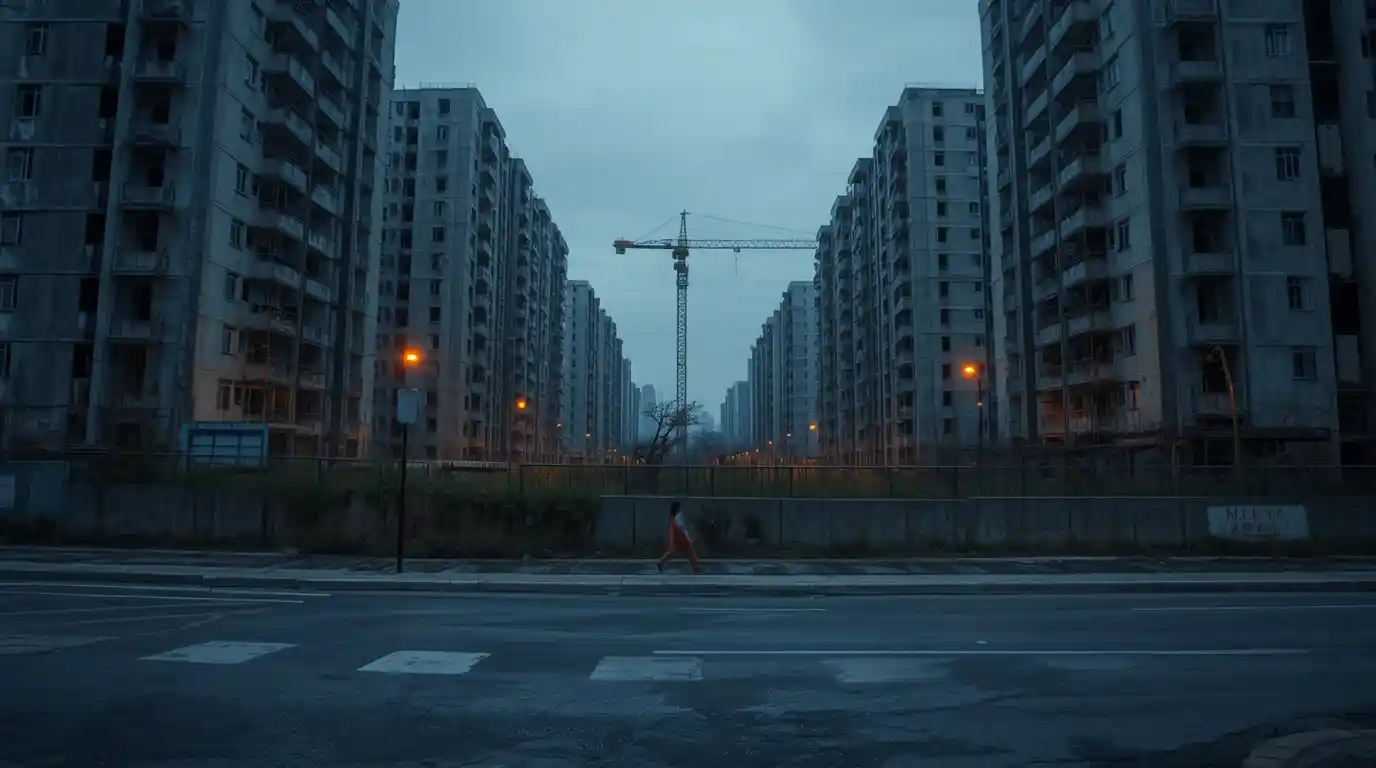
Chinese buyers typically pay for a home before construction finishes, which is exactly what let Evergrande book the revenue early. Hundreds of unfinished projects remain scattered across the country, with hundreds of thousands of buyers still waiting on keys. Industry estimates put the nationwide backlog of unfinished units at roughly 20 million. Those buyers were often paying mortgages on empty shells.
Suppliers and construction crews on the mainland
Behind every stalled tower is a cement supplier, a steel trader and a contractor who fronted labor and materials on credit. Chinese authorities have consistently prioritized finishing homes over repaying investors, so these domestic creditors sit ahead of foreign bondholders in practice, if not always on paper.
Bondholders sitting in New York and London
The Hong Kong High Court ordered Evergrande liquidated in January 2024 after the company failed to produce a workable restructuring plan for its offshore debt. Liquidators Edward Middleton and Tiffany Wong of Alvarez & Marsal have been trying to claw back roughly $6 billion in dividends and pay handed to insiders, and have taken legal action against auditor PricewaterhouseCoopers and property services firm CBRE. The catch is jurisdictional: the Hong Kong order does not reach the mainland subsidiaries that make up about 90 percent of the business. Overseas creditors have recovered a sliver.

Why the Sentence Took Five Years to Arrive
Trace the timeline and the delay tells you something. Evergrande defaulted in late 2021. Hui was detained in September 2023. The securities regulator's penalties landed in March 2024, the Hong Kong liquidation order in January 2024, the delisting from the Hong Kong exchange in August 2025, the guilty plea in April 2026. Beijing moved carefully, apparently more worried about triggering a wider panic than about speed. The criminal case closed only once the corpse was fully picked over.
How This Compares With Big U.S. Fraud Cases
American white-collar sentences run long but finite. Enron's Jeffrey Skilling got 24 years, later cut. Elizabeth Holmes received just over 11. Sam Bankman-Fried drew 25. China's range is wider at both ends: life sentences are frequently commuted to fixed terms for good behavior, but Beijing has also executed financial criminals, as it did with former Huarong chairman Lai Xiaomin in January 2021. Read that way, life plus total confiscation is severe without being the maximum available.
What to Watch for Next
If you hold a broad emerging-markets fund, check its China weighting — the property sector's slow bleed is a drag that headlines about a jailed tycoon won't fix. Watch two things specifically over the next year: whether the liquidators win any of their clawback claims against Evergrande insiders and advisers, and whether Chinese authorities keep funding home completions. The first decides what foreign creditors recover. The second decides whether China's consumers start spending again, which matters far more to global markets than one man's cell.




Comments 0