

Five Ate Dinner, One Died: The Surat Food Poisoning Case
A five-year-old is dead and four of her family are in hospital after a takeaway kaju-paneer dinner in Surat — and the answer now sits with a food testing lab.

A Surat food poisoning case has left a five-year-old girl dead and four of her relatives in hospital, after a family of five shared a takeaway dinner on the evening of August 15. The girl, Arya Kalsaria, died two days later at Sadvichar Hospital. Her father, Ashok Kalsariya, who works in one of the city's diamond units, had carried the food home to their flat in the Puna area.
The family says the meal came from Sheetal Restaurant in the Varachha–Matavadi belt, and included a kaju-paneer curry along with other cashew-based gravies and pouches of buttermilk. Some dishes were cooked at home that night too. By the morning of August 16 all five were vomiting, with stomach pain severe enough to send them to a local doctor. On August 17, Arya lost consciousness and could not be revived.
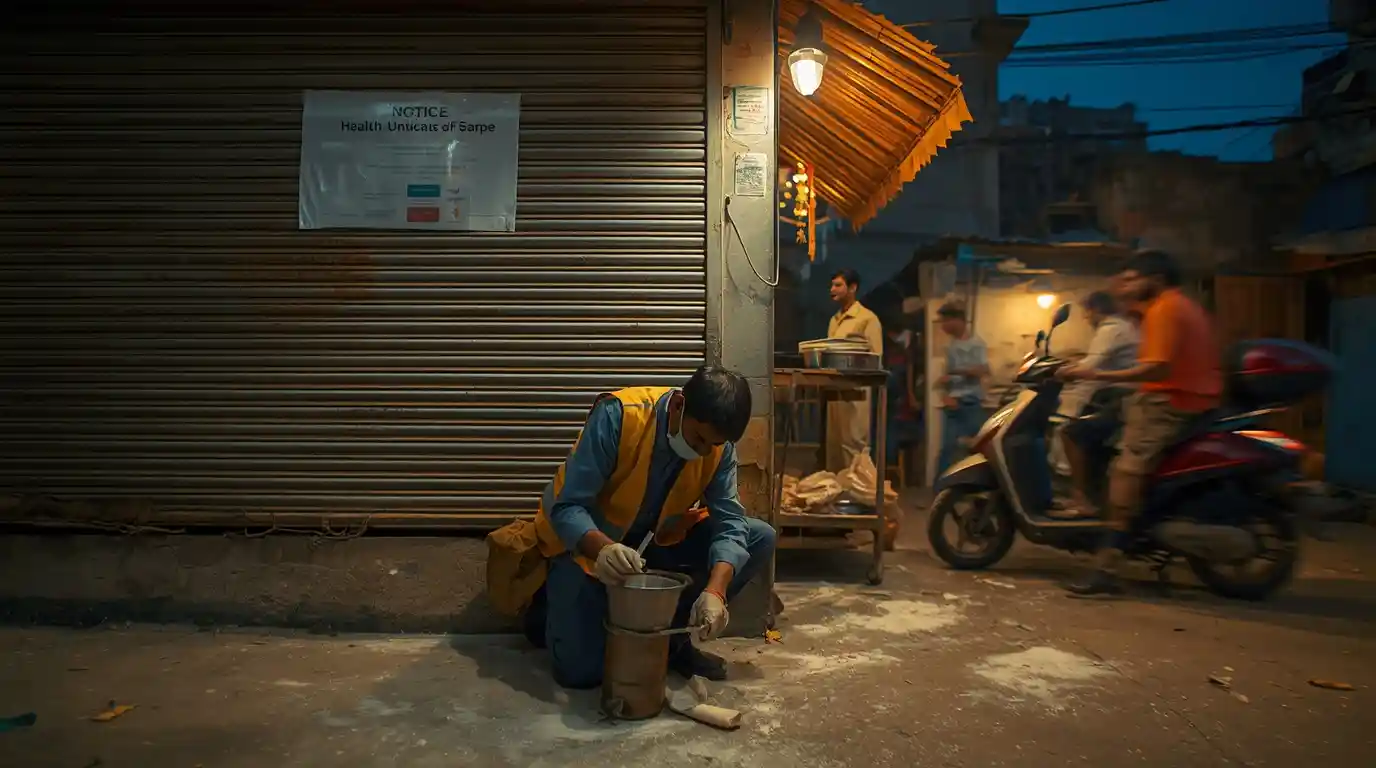
Surat Municipal Corporation sealed the restaurant on August 18 and issued an improvement notice, saying its officers found lapses in cleanliness and hygiene. That is fast by Indian civic standards. But sealing a kitchen is not the same as proving what killed a child, and the family has done something quietly smart in the meantime: it kept the digital payment record from that night and asked that the restaurant's CCTV footage be preserved.
How a Friday Takeaway Turned Into a Funeral
The timeline is unusually tight, which is part of why officials moved quickly. Meal on Friday night. Symptoms across all five people by Saturday morning. A GP visit the same day. Hospital admission and a death on Sunday. Ashok Kalsariya was later discharged, while his wife and their two other children stayed in hospital — described in early reports as critical, and in later updates as stable.
A panel post-mortem has been ordered, meaning more than one doctor signs off on the findings. That matters in cases likely to end up in court. Gujarat's health minister Praful Pansheriya has pushed the civic body to widen its checks, and SMC has since launched a special inspection drive across all zones of the city, covering restaurants on hygiene and food-safety compliance.
Why the Surat Food Poisoning Inquiry Starts in a Lab
Nobody has established a cause yet, and the family's account of a specific dish is an allegation, not a finding. The real answer will come from food samples lifted by the health department and sent for laboratory analysis, alongside the autopsy report. Investigators will be looking for bacterial contamination, toxins produced by bacteria, and the possibility of a chemical or adulterant. Those tests usually take days to a few weeks.
Our team arrived here early this morning in response to a complaint regarding food poisoning. — Sejal Vyas, food safety officer, Surat Municipal Corporation
What Makes Paneer and Cashew Gravy Risky
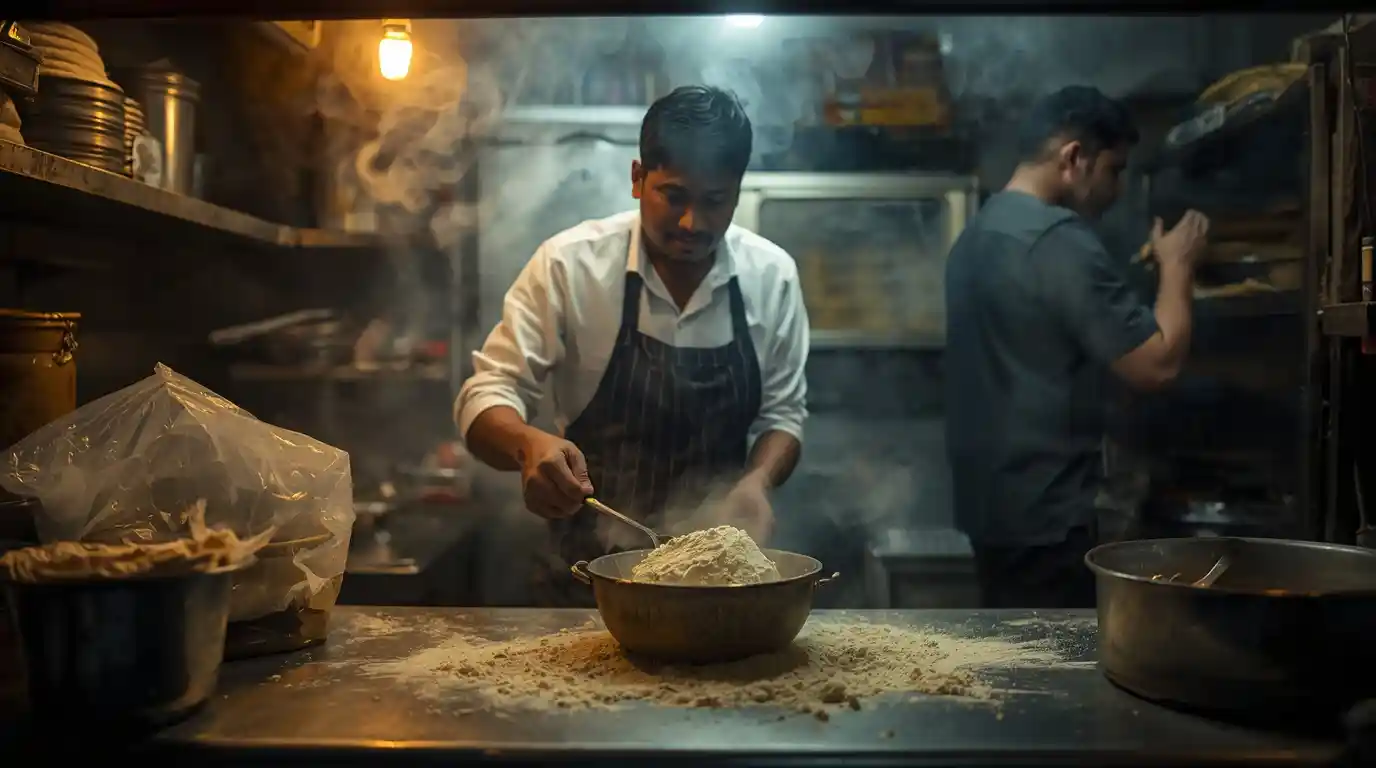
Nothing about kaju-paneer is inherently dangerous, and thousands of plates go out safely every day in Surat alone. But food safety officers pay close attention to this style of dish for a simple reason: it is high in protein, low in acid, cooked in bulk, and often held warm in a bain-marie for hours. Bacteria multiply fastest between roughly 5°C and 60°C, and some leave behind toxins that reheating does not destroy.
Cashew paste behaves the same way. It is rich, mildly sweet and holds moisture, which makes it a comfortable medium for organisms if the gravy sits out. The August heat and humidity of south Gujarat do the rest. This is general food science, not a verdict on any one kitchen — but it explains why the first thing inspectors check is a fridge thermometer, not a menu.
If a Restaurant Meal Makes Your Family Ill
Most people throw away the evidence within an hour of falling sick. That single reflex is why so many complaints in India go nowhere. If several people who shared a meal fall ill together, treat it as a possible outbreak from the start.
Keep the Receipt and the Leftovers
Save the bill or the UPI transaction record — it proves where and when you bought the food. Put any leftovers in a sealed container in the fridge rather than binning them; a lab can test them. Photograph the packaging. Note the exact time you ate and the time symptoms began, because that gap helps narrow down the likely organism.
Where to Report It in Gujarat
Complaints go to the food safety officer of your municipal corporation, and in Surat that is the SMC health department. Nationally, FSSAI runs the Food Safety Connect app and a consumer helpline for reporting unsafe food. A written complaint creates a paper trail; a phone call to a restaurant does not.
Watch Children for Dehydration
Small children can decline far faster than adults because they lose fluid quickly relative to their body weight. Sunken eyes, no urine for eight hours, unusual drowsiness, or an inability to keep down even sips of ORS are reasons to go to a hospital immediately rather than waiting out the night.
What to Watch Over the Next Fortnight
Two things will decide where this goes: the lab result on the food samples and the panel autopsy. If unsafe food is established as the cause, the Food Safety and Standards Act, 2006 allows for prison terms that can extend to life where death results, plus compensation to the victim's family — penalties far heavier than the routine fines most eateries face. Enforcement, though, is the weak link. FSSAI data for 2023-24 showed over 1.5 lakh samples tested nationwide, with roughly one in five falling short on quality, labelling or safety.
Keep an eye on whether SMC's city-wide drive outlasts the news cycle, and whether the sample results are made public. If you eat out this week, the useful habit is unglamorous: prefer food cooked to order over gravies sitting in a warmer, and hold on to your bill until the next morning.



Comments 0