

Geography Took 100 of 250 Marks in UPSC Mains 2026
Eight geography questions, a law amended this year, and 8,000 words of handwriting in six hours — the 22 August papers tested selection, not storage.
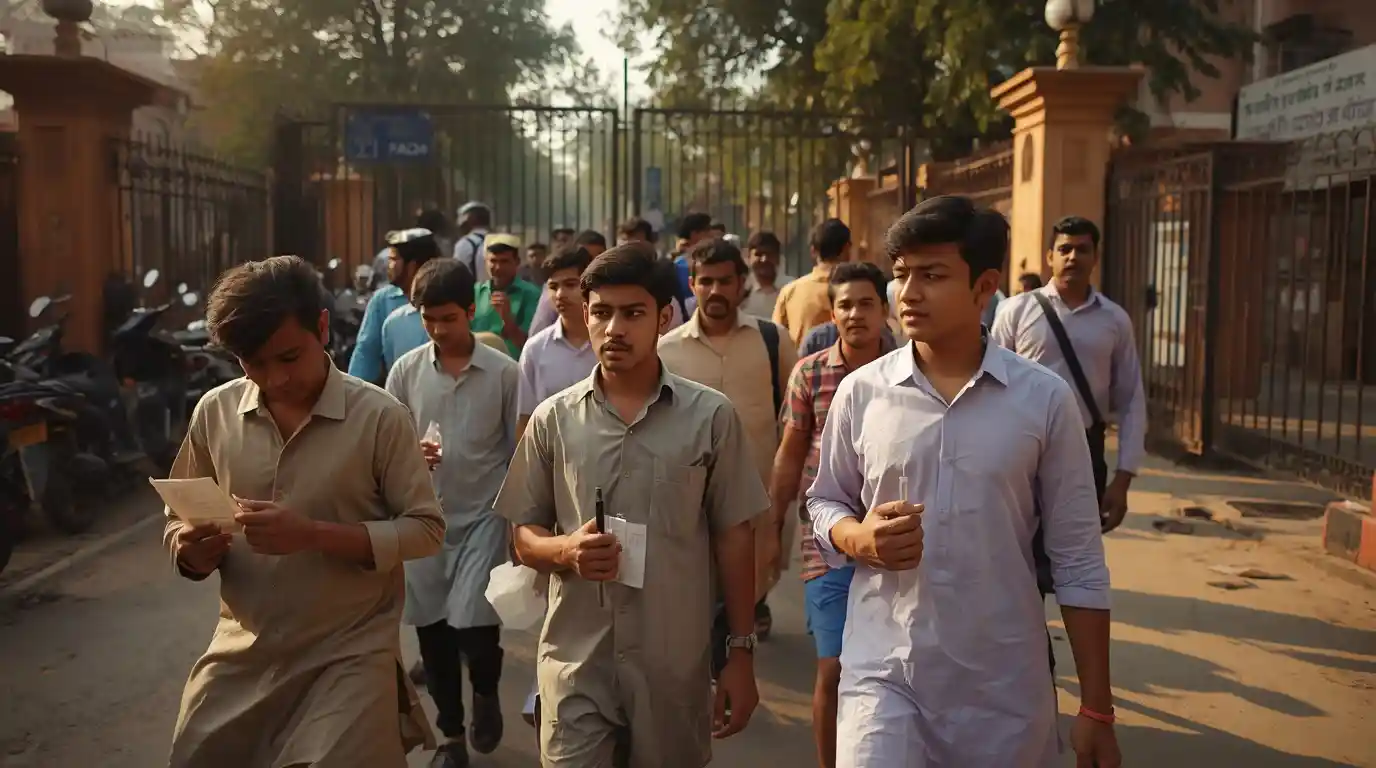
Geography quietly took 100 of the 250 marks in the General Studies Paper 1 of UPSC Mains 2026, and that one number explains most of the long faces outside exam centres on 22 August. Eight of the twenty questions came from physical geography, regional geography and resources, according to the subject-wise count published by Legacy IAS. History, the subject most candidates spend the longest on, got four questions across ancient, modern and post-independence India. World history did not appear as a standalone question at all.
Put that against what the day actually demanded. Around 13,343 candidates cleared the Prelims held on 24 May, with results out on 15 June, and they are competing for 933 notified vacancies, 33 of them reserved for persons with benchmark disabilities. That's roughly fourteen serious contenders per post. On 22 August they wrote GS Paper 1 from 9 am to noon and GS Paper 2 from 2:30 pm to 5:30 pm — forty compulsory questions, 500 marks, close to 8,000 words of longhand in six hours. Under nine minutes per answer, including thinking time.
The complaint doing the rounds isn't that the paper was out of syllabus. It's that knowing the material didn't automatically convert into marks. Questions asked candidates to compare, examine and evaluate rather than describe, and the word limits punished anyone who tried to write everything they knew.
Where the Marks Actually Went in Paper 1
Indian Society was the single largest block at six questions and 75 marks, covering disability inclusion, caste in urban settings, demographic transition and how globalisation is reshaping young Indians. Post-independence India carried 30 marks across two questions, including linguistic reorganisation and the planned economy. Art and culture got one 15-mark question on Vijayanagara architecture. Ancient and medieval India got a single 10-mark question, on Ashokan inscriptions.
The geography set is where the technical difficulty sat. Candidates faced the Fujiwhara effect, tundra ecology, aeolian processes and a comparison of the Loo, Chinook and Foehn winds. None of those have a current-affairs entry point. You either studied the mechanism or you wrote around it, and examiners can tell the difference in about four lines.
Why UPSC Mains 2026 Rewarded Judgement Over Recall
Section A allowed roughly 150 words for 10 marks; Section B, 250 words for 15. That is not enough space to empty your notes. The real skill on test was triage — deciding which two or three dimensions of a question deserved ink and which ones you could afford to drop. Aspirants who wrote fuller, more complete answers often finished fewer questions, and an unattempted 15-marker costs far more than a thin one.
Legacy IAS summed the paper up in two words in its analysis: compression wins marks.
What GS Paper 2 Asked, Block by Block
The afternoon paper covered polity, governance, social justice and international relations, and it was noticeably more current than Paper 1. Answers needed anchoring to a specific article, judgment or commission report. Generic constitutional theory would have read as padding.
Rights and Welfare Carried the Heaviest Load
Social justice and welfare formed the biggest chunk of the paper. One question turned on the amendment made this year to the Transgender Persons (Protection of Rights) Act, 2019, and its relationship with Article 21. Anyone who stopped following legislative news after last winter simply had nothing to say. Tribal development, malnutrition governance and whether education is a state obligation or an investment also came up.
Speaker, Governor and the Anti-Defection Question
Institutions took a hard look. One question asked whether the Speaker's office has become vulnerable to partisan pressure under the present anti-defection framework. Others covered the Governor's powers over assent to bills, judicial rulings on euthanasia, revision of electoral rolls, and the reach of the NCSC and NCST.
BRICS, the Diaspora and China's Belt and Road
International relations accounted for around 50 marks. Candidates were asked about IPMDA, BRICS, the geopolitical weight of the Indian diaspora and China's Belt and Road footprint in South Asia. There was also a comparative question on separation of powers in India and the United States — a classic that rewards structure, not opinion.
How This Fits the Recent Trend
This is not a sudden swerve. Mains papers have been drifting toward application for several cycles now, with fewer questions that can be answered from a standard textbook paragraph. What 2026 confirms is that coaching material has a shelf life measured in months, not years. A question built on a law amended in 2026 cannot be answered from notes bought in 2024.
What Aspirants Should Watch Next
The exam isn't over. Sessions continue on 23 August and resume on 29 and 30 August, with the remaining General Studies papers and the optional subject still to be written. The single most useful thing to do now is stop the post-mortem. Marking is relative — if geography felt brutal to you, it felt brutal to most of the other 13,000 candidates in the hall. Save your energy for the papers left, and keep a running file of legislative changes from the past twelve months, because that is clearly where the examiner is now shopping.

Comments 0