

Hurricane Lala Never Landed. Hawaii Flooded Anyway.
The Category 1 storm's center stayed over open water off Hawaii's southern coast, but its eyewall and rain bands still killed one person, swept homes off their foundations and blacked out most of Hawaii County.

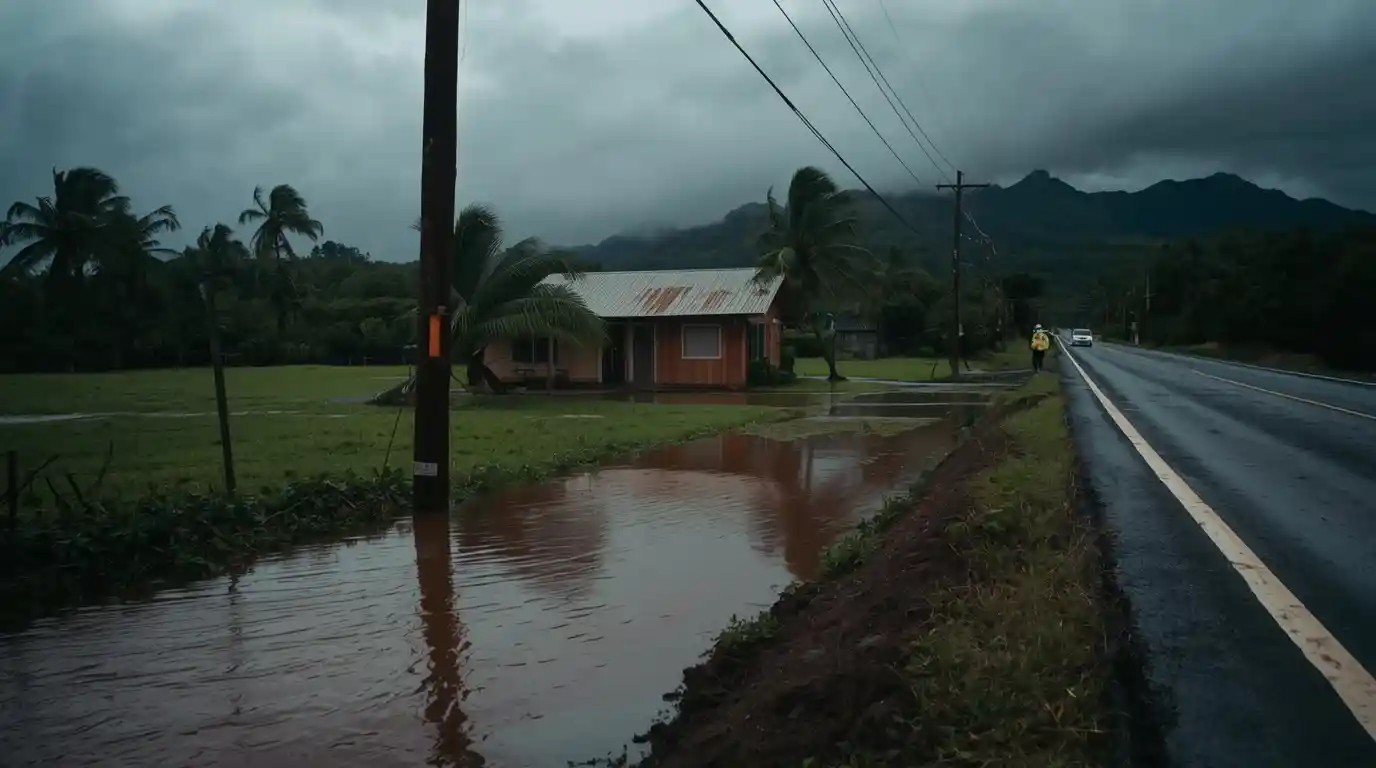
Hurricane Lala did almost everything a landfalling storm does to Hawaii's Big Island this weekend — except actually land. The Category 1 system, packing sustained winds near 75 to 80 mph, tracked about 30 miles south-southeast of South Point late Saturday with its eyewall scraping the island's southern shoreline, then turned northwest over open water without the center ever crossing the coast.
The damage stayed onshore anyway. More than 126,000 customers across the state lost electricity by early Sunday, the overwhelming majority of them in Hawaii County, according to ABC News. One person died in a car crash near the island's southern tip. Two homes in the town of Naalehu were swept off their foundations by floodwater, and at least 19 buildings lost their roofs.
For mainland readers, the reason this matters goes beyond one bad weekend in the Pacific. Hawaii has not taken a direct hurricane landfall since Iniki in 1992 — 34 years — and the near miss stranded travelers on both ends of a 2,400-mile flight, with more than 200 departures canceled Saturday and the state's two Big Island airports shut down.
A Near Miss That Didn't Feel Like One
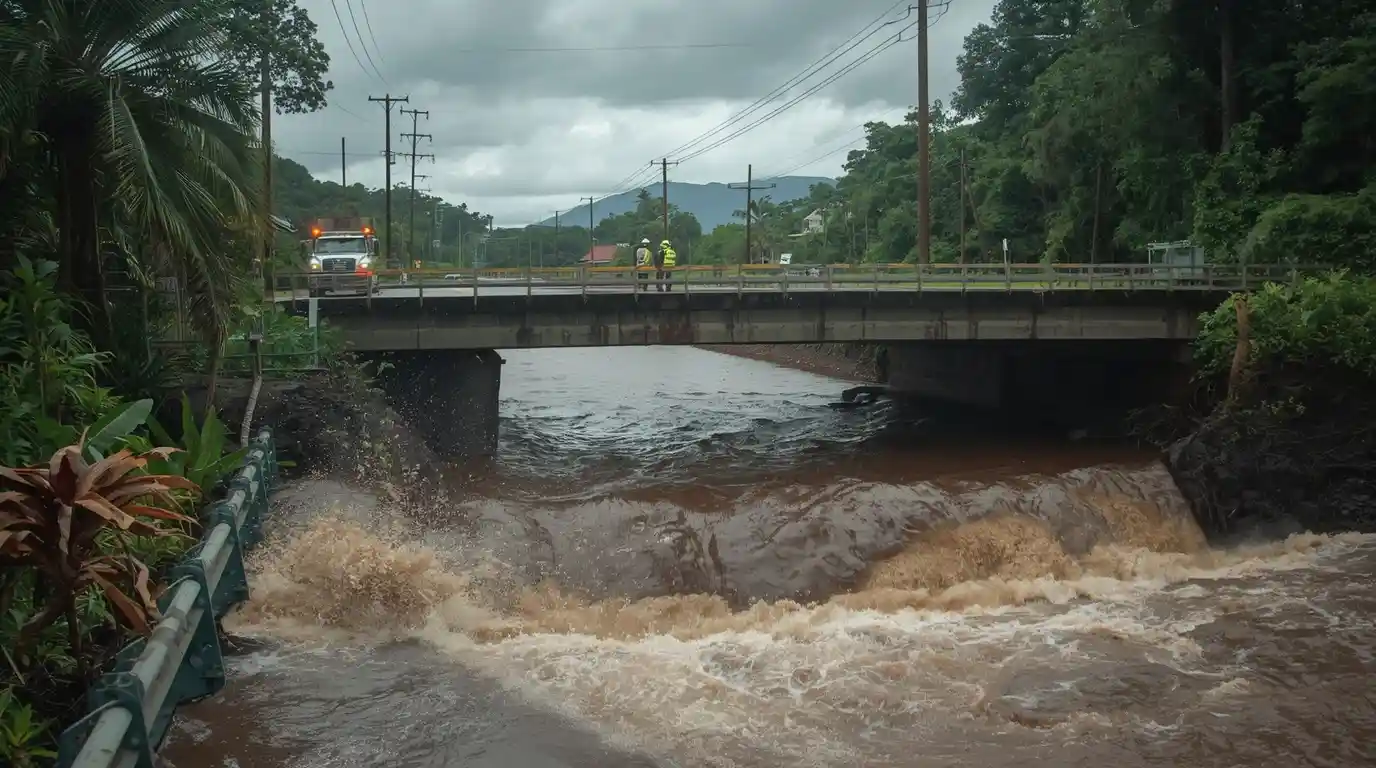
The word "landfall" does a lot of misleading work in storm coverage. A hurricane's most punishing winds and rain sit in the eyewall and the bands spiraling out from it, and those can rake a coastline for hours while the center stays 20 or 30 miles offshore. That's exactly what happened in the Kau district, where rain fell at rates of three to five inches an hour and the National Weather Service issued a flash flood emergency — its most serious flood alert — for Naalehu, Pahala and Hawaiian Ocean View.
Terrain made it worse. Big Island's volcanic slopes force wet tropical air upward, wringing it out over the same drainages again and again. One gauge at Keanakolu logged more than 12 inches in 24 hours, and isolated stations recorded totals around 35 inches over roughly a day and a half.
What Hurricane Lala Left Behind
The damage clustered on the island's southern and eastern flanks, where the storm's circulation had the longest fetch over land. Officials were still counting Sunday, and the picture is likely to get worse as crews reach cut-off roads.
Homes Off Their Foundations in Naalehu
Local law enforcement reported two houses carried away by floodwater in Naalehu, in the Kau district on the island's southern end. It is one of the most remote populated stretches in the state, served by a single highway, which is precisely why flash flooding there is dangerous: there is no second route out once a gulch overtops.
Most of Hawaii County in the Dark
Outages climbed from roughly 44,000 customers midday Saturday to more than 126,000 by early Sunday, with utility poles down across the island. Restoration in rural districts typically runs days, not hours, because crews have to clear debris before they can reset poles.
Airports Closed and Ports Shut
Hilo International and Ellison Onizuka Kona International both closed, commercial ports on the Big Island and in Maui County shut, and schools and government offices on Hawaii Island, Maui, Lanai and Molokai were told to stay closed. Shelters opened across Hawaii County and, per Mayor Kimo Alameda, accepted pets.
Why Hawaii Almost Never Takes a Direct Hit
Storms approaching the islands usually run into cooler ocean water and stronger upper-level winds that tear them apart before they arrive. Hurricane Iniki, which struck Kauai in September 1992 as a Category 4, killed six people and caused billions of dollars in damage, and it remains the benchmark precisely because nothing has matched it since. Lala fits the more common pattern: a storm that weakens on approach, sideswipes an island and still does real harm.

How the Rain Stacks Up Against Lane
Put the totals in perspective. In 2018, Hurricane Lane parked off the Big Island and dropped more than 50 inches of rain at Mountain View — one of the largest tropical cyclone rainfall totals ever recorded in the United States, behind only Harvey. Lala's isolated 35-inch readings are well short of that, but they landed faster and in steeper, less forgiving country. Rain rate, not just total, is what sweeps a house away.
Please be safe. You definitely want to be home, do not be out on the roads. — Gov. Josh Green
Where the Storm Goes Next
Lala weakened to a tropical storm with winds near 70 mph early Sunday and continued northwest at about 15 mph, passing south of Oahu and Kauai with tropical storm warnings still up for Maui, Oahu and Kauai counties. Forecasters expect steady weakening into Monday, though there's a chance the system restrengthens midweek once it's well clear of the islands and back over open ocean.
If You're Flying to Hawaii This Week
Check your airline's waiver page before you head to the airport — carriers usually let you rebook without a change fee for several days after a storm, and that window can close quietly. Assume interisland service recovers before long-haul mainland flights do. If you're already on the island, the practical rule is simple: don't drive through moving water. Six inches will take your feet out from under you, and about a foot will float a small car.
Watch two things over the next few days: the outage count in Hawaii County, which is the honest measure of how long recovery takes, and the National Hurricane Center's midweek advisories to see whether Lala rebuilds into a hurricane out at sea. If you have travel booked through Wednesday, call now rather than at the gate.



Comments 0