

In This Ocean Photography Contest, Wonder Comes With a Warning
The 2026 Ocean Photographer of the Year shortlist is out, and its most beautiful frames double as documentation of what people are doing to the sea.

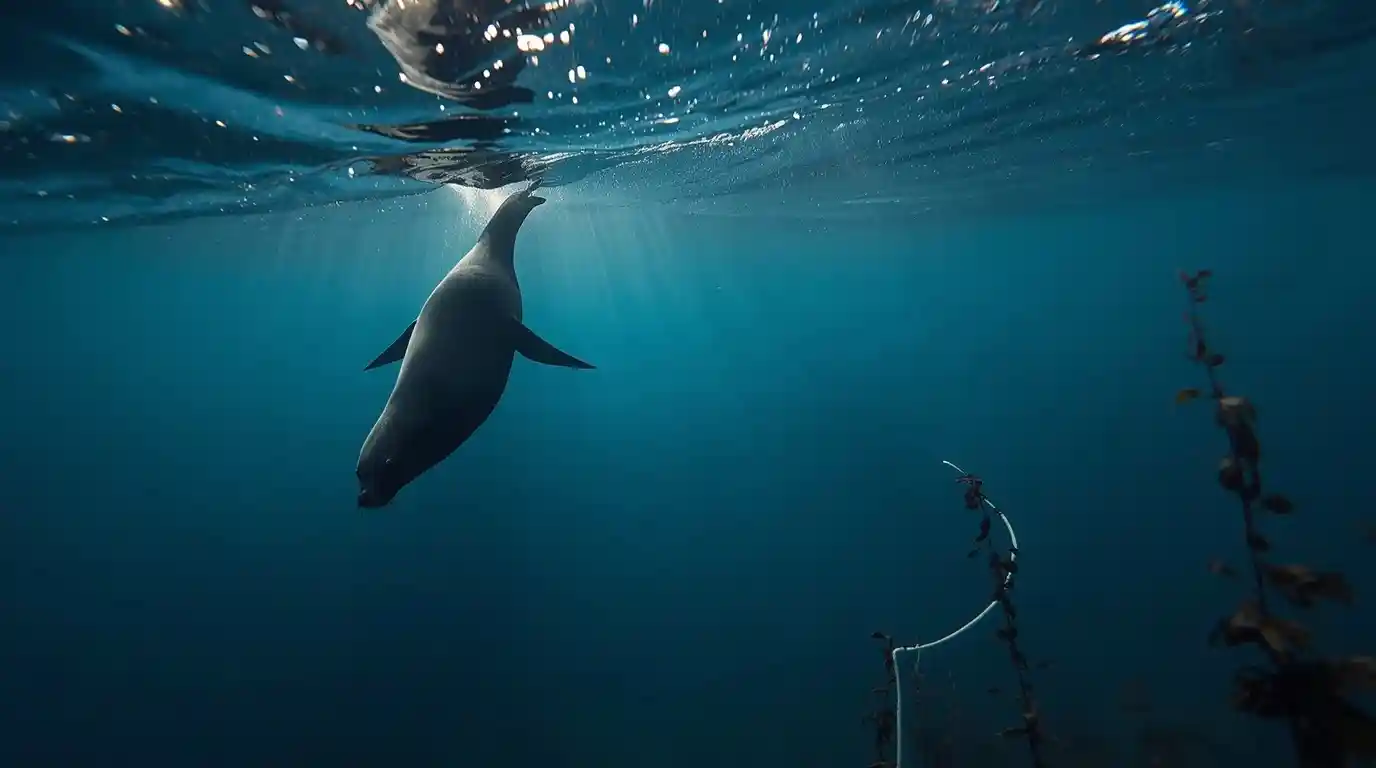
The world's biggest ocean photography contest released its 2026 shortlist on August 13, and the pictures that stay with you aren't the prettiest ones. Judges cut a field of more than 15,000 entries down to a small group of finalists, shot everywhere from a sheltered sea cave off Maui to the ice-cold water around Deception Island. A lot of the frames are stunning. A surprising number are closer to documentation.
One thing worth clearing up, because most coverage blurred it: nobody has won anything yet. The awards, run by Oceanographic magazine alongside Swiss watchmaker Blancpain, reveal winners on September 10. What dropped this week is the shortlist — the pool that the nine category titles and the overall Ocean Photographer of the Year prize get drawn from. Around 118 images earn recognition across the awards each year.
That distance between wonder and warning is the real story. A California sea lion wrapped in discarded plastic netting sits on the same list as three surfers dropping into a wave at Teahupo'o. So does a silky shark hooked on an illegal longline off Baja California, and a colony of gentoo penguins nesting in the ruins of an old whaling station at Whalers Bay.
How 15,000 Entries Get Cut Down
The schedule is tighter than you'd guess. Submissions opened April 1 and closed June 30. Judging started the next day, and the panel met in person on July 8 to argue it out face to face rather than by spreadsheet. Six weeks later the shortlist went public. Categories span Wildlife, Adventure, Fine Art, Human Connection, Young Photographer, a portfolio award, and Conservation split into two halves — Hope and Impact.
That Conservation split does a lot of quiet work. Hope collects the recoveries: Hawaiian green sea turtles resting in a Maui cave, a great hammerhead cruising Rangiroa's Tiputa Pass. Impact collects the bill. Putting them in the same competition, judged by the same people, stops the awards from becoming either a disaster reel or a screensaver.
The New Category That Rewards the Overlooked
New for 2026 is Ocean Unseen: Hidden Worlds, a category built for the small stuff — the animals you'd swim past without noticing. It's the most interesting addition the awards have made in years, because it shifts the reward away from the big charismatic encounter and toward patience. According to CNN, it's the first new category the competition has introduced this cycle.
A Father With a Mouth Full of Young
Suliman Alatiqi's finalist shows a male Banggai cardinalfish holding his juveniles inside his mouth. It's a real behavior — the males brood the young there until they can swim — and it means the fish stops eating for the duration. Shooting it requires getting close enough to a stressed animal to fill the frame without making him spit.
A Crab in a Sponge's Doorway
Andrea Michelutti's entry catches a harlequin crab sitting at the mouth of a tubular sponge, a subject maybe an inch across. Lale Alev Ozten Low went further into the dark for a chocolate-lined top snail mid-spawn on a night dive. None of these animals is rare. They're just easy to ignore, which is exactly the point of the category.
When a Beautiful Photo Is Really a Receipt
Daniel Taylor's silky shark on an illegal longline off Baja California isn't a nature portrait; it's a record of a crime scene. Celia Kujala's sea lion in plastic netting works the same way. Romain Barats photographed gentoo penguins living in the collapsed buildings of a whaling station — animals nesting inside the infrastructure built to kill their neighbors a century ago.
These photographs don't just capture what's beneath the surface; they surface the stories our planet most needs us to hear.
That's Will Harrison, the competition's founder and director. It reads like awards-night language until you line it up against the shortlist, where a decent share of the frames are things a fisheries observer or a stranding volunteer would recognize instantly.
Why This Ocean Photography Contest Lands Close to Home
For American readers, this isn't distant. Leighton Lum's turtles are Hawaiian honu. Kujala's sea lion is a California species. The Baja longline shot sits in water that feeds directly into US fisheries policy and US seafood supply. Rafael Fernandez Caballero's image of two orcas carrying a humpback calf they'd hunted came out of the Pacific off Mexico, in a region NOAA-tracked whales pass through.
There's also a viewing angle. The awards tour physically — past exhibitions have run in London, Sydney and Cape Town, and the 2025 run included a San Francisco Bay Area stop. If you want to see these at scale rather than on a phone, watching for a US exhibition date is worth more than scrolling the gallery.
What to Watch for on September 10
Two things will tell you where the awards are heading. First, whether the grand title goes to a spectacle image or a conservation one — that choice sets the tone for what thousands of photographers shoot next season. Second, whether Ocean Unseen produces a genuine surprise, which would prove small-subject work can compete with orcas and Teahupo'o. Mark September 10, check the Oceanographic gallery then, and watch for a US tour stop announcement after.
Comments 0