

It Looked Like Turbulence. Then Came the Air India Dope Test
A 300-foot drop on a flight home from Phuket ended with a captain testing positive for marijuana — and every pilot at two Tata-owned airlines now queuing for a sample cup.

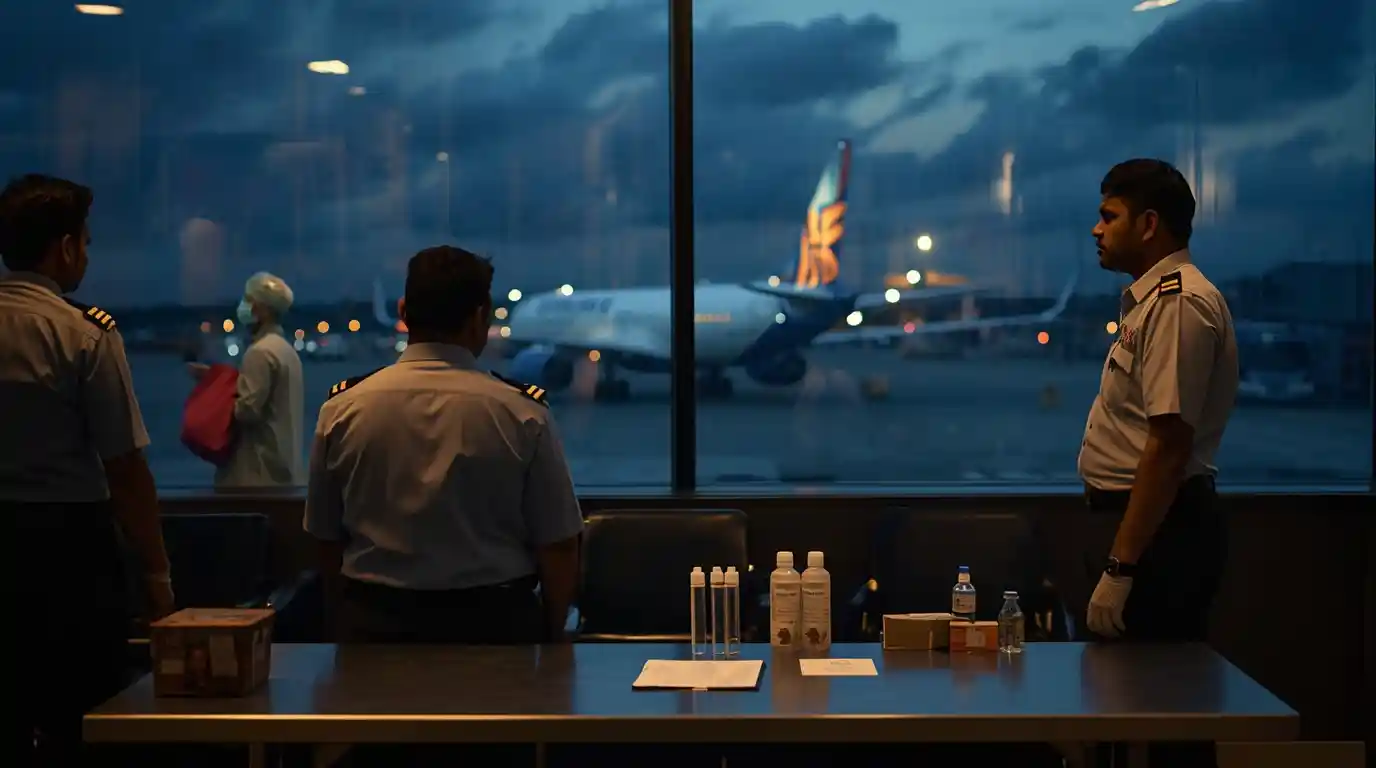
The Air India dope test that more than 5,000 pilots must now clear did not start as a policy decision. It started with a plane falling. On 4 August, flight AI2379 was cruising from Phuket to Delhi when the Airbus A320 lost roughly 300 feet of altitude in a matter of seconds. At least 17 people on board were injured, four of them cabin crew. The aircraft steadied itself, kept flying, and landed safely in Delhi.
What happened afterwards is what turned an in-flight scare into a national aviation story. Both pilots were put through psychoactive substance screening once the aircraft was on the ground. The pilot-in-command's confirmatory test came back positive for marijuana, and the Directorate General of Civil Aviation took the crew off the roster while the matter is examined.
Then, on 13 August, Air India and Air India Express told their cockpit crews that screening would no longer be a matter of chance. Every pilot across both Tata Group airlines — a combined figure of over 5,000 — will be tested once, as a one-off exercise on top of the random checks the regulator already requires. That is the part worth pausing on. India's drug-testing regime for aviation staff has always worked by sampling a slice of the workforce. This sweeps the whole thing.
What Happened Between Phuket and Delhi
Three hundred feet is not a number that means much on its own, so put it against something familiar: it is more than the height of the Qutub Minar. Passengers who were not belted in at that moment had nothing holding them down. That is how a sudden altitude loss produces broken bones and head injuries without the aircraft ever being in danger of coming apart.
The Aircraft Accident Investigation Bureau has taken over the probe under ICAO's Annexure 13 framework, with France's BEA and Airbus expected to assist — standard practice when the aircraft is European-built. That investigation is about the flight, not the pilot's test result. The two threads are running in parallel and are likely to be reported separately.
Why the Air India Dope Test Now Covers Everyone
Airlines rarely test everybody. It is expensive, it eats into rostering, and it implies a problem across the fleet rather than with one person. Air India has framed this as a proactive safety step — a way of establishing, in one pass, that nobody else is flying while using substances or medication barred under aviation rules.
Practically, the exercise is being folded into places pilots already have to be. Crew passing through the Gurugram training academy are being screened during their course. Others are giving samples after landing, at flight briefing centres and airline offices. That design matters, because a post-flight sample is far more awkward to explain away than one collected on a scheduled day off.
What India's Drug Rules Say About Pilots
Most passengers assume the only pre-flight check on a cockpit crew is the breathalyser. Alcohol testing is the visible part, but the drug rules have been running quietly alongside it for a few years now, and they are stricter than most people realise.
The 12-Hour Rule Has a Blind Spot
The regulation is blunt about timing. Crew are barred from taking, in the DGCA's own wording:
alcoholic drinks, sedatives, narcotic or stimulant drug preparations within 12 hours before the commencement of a flight
The catch is that 12 hours is a floor, not a clearance. Cannabis metabolites linger in the body for days, sometimes weeks in regular users, long after any subjective effect has gone. So a pilot can honestly say they had nothing in the preceding half-day and still fail. Separately, the rules bar reporting for duty under the influence of anything that could dull performance.
What a Positive Result Actually Costs
A confirmed positive does not automatically end a career. Under the framework, a first confirmed result generally routes the person into a de-addiction or rehabilitation programme; flying rights come back only after the programme is completed, a fresh test is passed and clearances are issued. A second positive is where the hammer falls — a licence suspension running to three years. The random-testing net covers cannabis, cocaine, amphetamine-type stimulants, opiates and certain sedatives, with a screening test first and a confirmatory test before any finding sticks.
The Warnings the Aircraft Threw Up
Lost in the headline is the machine's side of the story. The post-flight maintenance record on VT-EXO was not clean. It carried hydraulic system alerts, autopilot disconnections, elevator control faults and engine anti-ice messages, and reports describe a flight control stall message appearing after the co-pilot took over manually.
None of that excuses a positive drug test. But it does mean the AAIB has two very different questions to separate: what the aeroplane did, and what the people flying it were capable of doing about it. Resolving one does not resolve the other, and a report that answers only the easier question will not settle much.
Should You Worry About Your Next Flight?
Not particularly — and the sweep is part of the reason why. Positive results under this regime have surfaced before; a Delhi air traffic controller and an airline pilot have previously been pulled off duty after failing such tests, which suggests the checks catch people rather than merely existing on paper. A system that finds a captain and grounds him within days is doing roughly what it was built to do.
The thing to watch over the next few weeks is whether the one-off Air India dope test turns up anyone else, and whether the DGCA responds by raising the random sampling rate across all Indian carriers rather than leaving it to individual airlines. If you are flying this month, expect nothing visible to change at the gate. The practical takeaway is duller and more useful: keep your seatbelt loosely fastened whenever you are seated, even with the sign off. Everyone injured on AI2379 was hurt in a drop that lasted seconds.



Comments 0