

The Bay of Bengal Cargo Ship That Sent No Distress Call
MV Ocean Winner went down 240 nautical miles off Paradip with 24 crew on board, and the first warning came from a shipping office rather than from the ship itself.

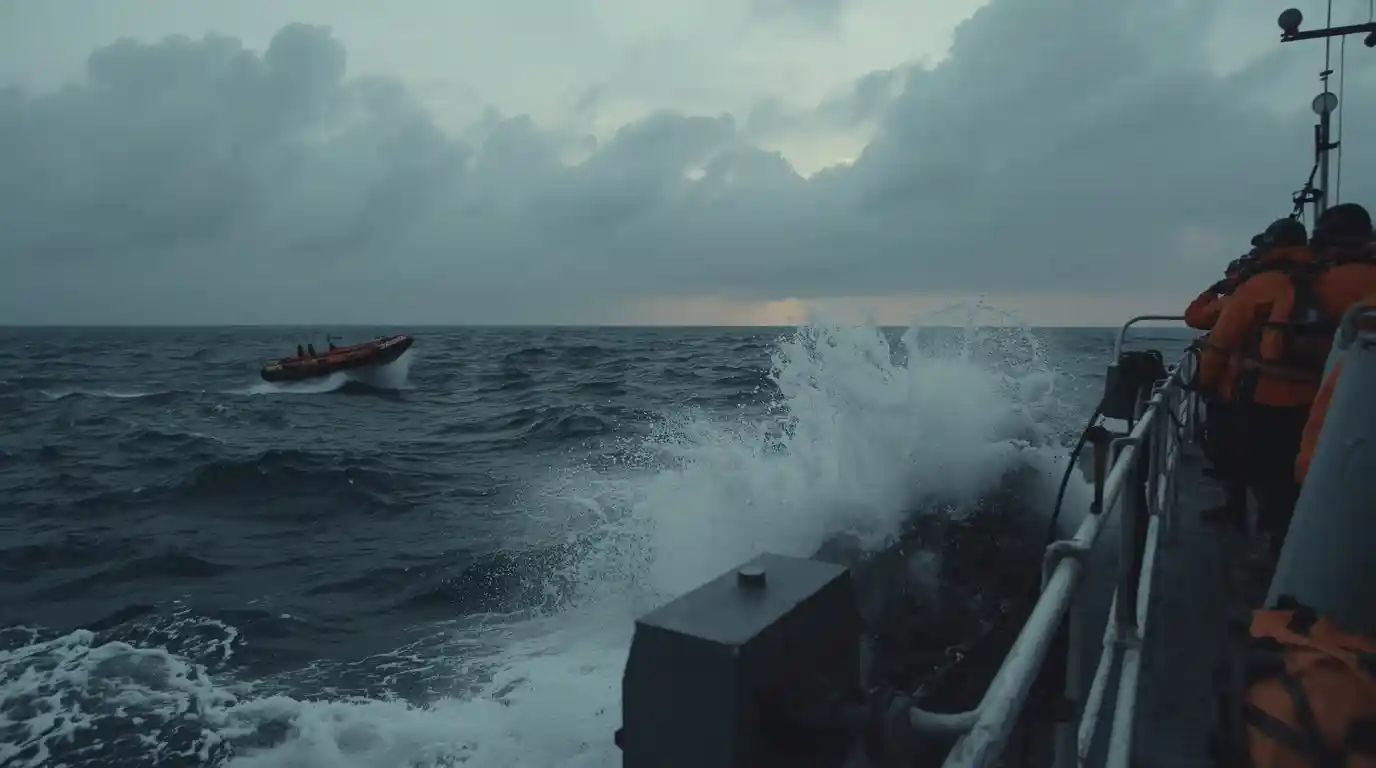
The Bay of Bengal cargo ship that sank roughly 240 nautical miles off Odisha never sent a distress call of its own. The alarm came from an office, not from the bridge. On Saturday morning the vessel's operator told India's Maritime Rescue Coordination Centre that it had lost contact with MV Ocean Winner and asked for a search to begin. Twenty-four people were on board. By nightfall, rescuers had found two of them.
The Panama-flagged bulk carrier had sailed from Paradip Port late on 20 August, loaded with iron ore fines and headed for Singapore. Its crew list was 20 Chinese nationals, three from Myanmar and one from Bangladesh — no Indians on board. The alert reached the rescue centre at Sri Vijaya Puram, the Andaman capital that used to be called Port Blair, at around 11.48 am on 22 August.
About eight hours later, a merchant tanker diverted to the area, MT Aisopos, recovered two survivors from two separate liferafts. Twenty-two crew members remain unaccounted for. The Indian Coast Guard pushed ICGS Varad and ICGS Anmol out first, with ICGS Vijit sailing from Sri Vijaya Puram to reinforce them, and the Navy joined the same coordinated effort.
How the Bay of Bengal Cargo Ship Alert Reached India
A ship sinking in international waters is still India's problem if it goes down inside the search-and-rescue region New Delhi is responsible for, and this one did. Flag state matters for regulation and investigation; it does not decide who launches the boats. That is why a Panamanian-registered vessel with a mostly Chinese crew ended up being searched for by Indian Coast Guard cutters and an Indian Navy aircraft.
The rescue centre received information regarding loss of communication with MV Ocean Winner and a request for search and rescue assistance, an Indian Coast Guard spokesperson said.
That phrasing is doing quiet work. "Loss of communication" is not the same as a mayday. It means the shore side noticed silence, waited, and then escalated — a chain that can burn hours before anyone starts moving toward the actual position.
Why 240 Nautical Miles Is the Whole Problem
Two hundred and forty nautical miles is about 445 km of open water — roughly a Bhubaneswar-to-Kolkata road trip, except with nothing solid in between. Distance is not a detail in this story. It shapes who can reach the site, how fast, and what they can do once they get there.
Too Far for a Quick Helicopter Lift
Coast Guard helicopters are the fastest way to pluck people out of water, but they are range-limited and must keep fuel in hand to get home. At this distance a helicopter has very little time on scene, if it can operate at all. That pushes the job onto fixed-wing aircraft for spotting and onto surface ships for the actual recovery — and ships move at maybe 20 knots, meaning a half-day transit.
Why a Passing Tanker Got There First
Under long-standing maritime law, any vessel that hears a distress alert and can help is obliged to divert. In practice, merchant ships are often the nearest hulls to a mid-ocean casualty, and they arrive before any state asset. Both survivors here were recovered by a commercial tanker, not by a rescue vessel. That is normal, and it is a large part of why anyone survived at all.
The Cargo Question Investigators Will Ask
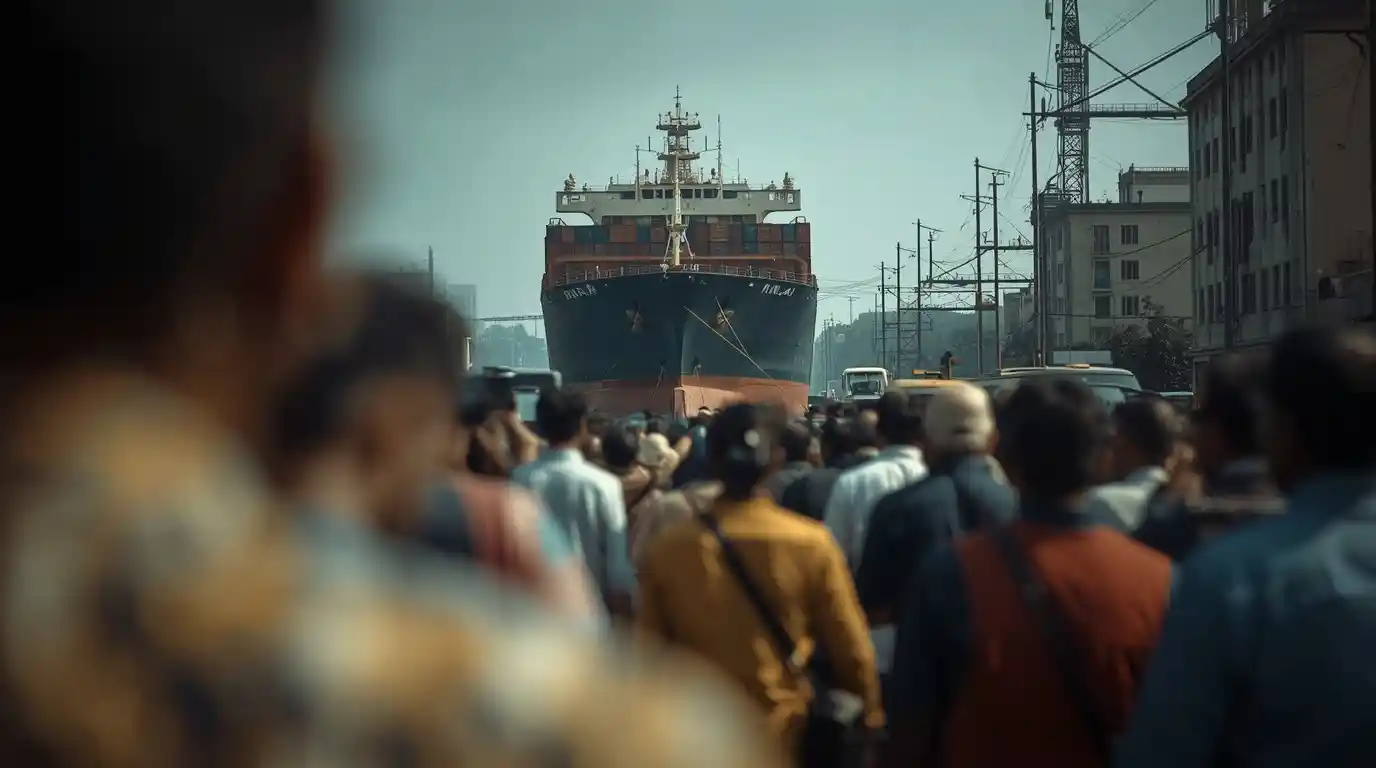
The cause has not been established, and nobody official has blamed the load. But iron ore fines are a cargo the industry treats with real caution. Fines carrying too much moisture can behave like a liquid when a hull vibrates and rolls — the mass shifts, the ship lists, and a stable vessel can capsize with very little warning. International bulk cargo rules classify such cargoes accordingly and require moisture testing before loading. In late August the Bay is in the thick of the southwest monsoon, with heavy swell and poor visibility. Reported tonnage figures have varied widely across outlets, and the exact load has not been officially confirmed.
What This Means for Paradip and Odisha
Paradip is one of India's biggest cargo ports by volume and a major outlet for iron ore heading east to Asian buyers. A loading-port link in a total loss draws attention fast: cargo declarations, moisture certificates, draft surveys and the vessel's own age and condition all become part of the file. Odisha's export trade is unlikely to be disrupted, but scrutiny of ore-fines shipments out of the east coast is now a live possibility.
What to Watch in the Next Few Days
Three things will tell you which way this goes. Whether more liferafts or lifeboats are located — an empty raft is very different news from a launched, occupied one. Whether the Directorate General of Shipping or Panama's maritime administration announces a formal investigation. And whether any wreck position or EPIRB signal is confirmed, which would narrow the drift model the searchers are working from.
For readers following this from India: treat the crew numbers as provisional until the Coast Guard issues a consolidated statement, and be sceptical of the cargo tonnage figures circulating on social media, which already contradict each other by a factor of forty. If the search continues past 72 hours without further recoveries, expect the operation to shift from rescue to recovery — and expect the harder questions about how a loaded bulk carrier went down without a single call for help.



Comments 0