

NEET Paper Leak: 'Foolproof' on Paper, Cancelled in May
The Supreme Court told the Centre that exam integrity can't be policed from a courtroom — it needs a permanent, scientifically equipped body like the UPSC.
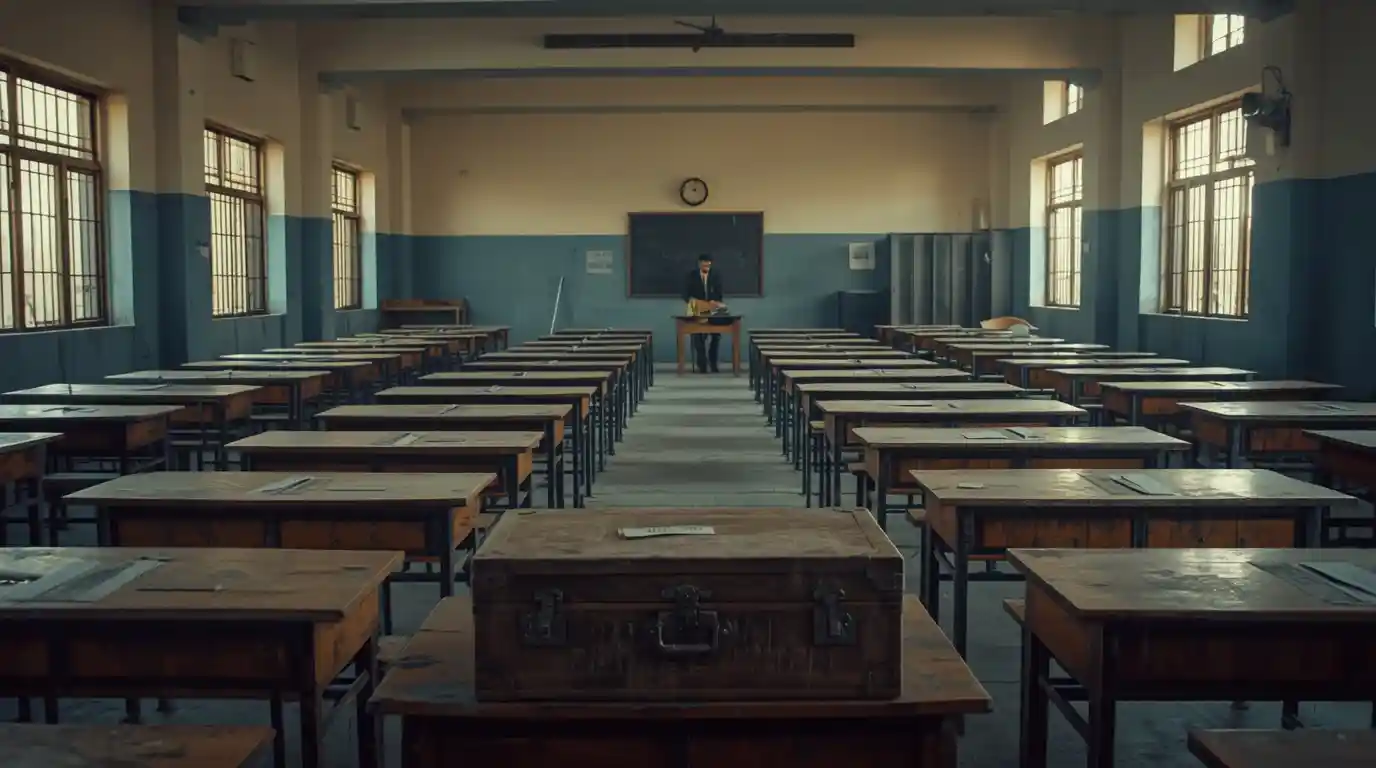
The NEET paper leak case came back before the Supreme Court on Wednesday, 19 August, and the bench spent most of the hearing on a question much bigger than one exam: is the National Testing Agency actually built to run a test this size? Justices PS Narasimha and Alok Aradhe said questions of exam integrity are not for judges to supervise, and that the job belongs to a permanent, scientifically equipped body — the kind of institution the UPSC has been for decades.
The numbers explain why the court is impatient. Around 23 lakh candidates registered for NEET-UG 2026, which was held on 3 May across 551 cities in India and 14 centres abroad. Nine days later, on 12 May, the NTA cancelled the exam over leak allegations, and a re-test was scheduled for 21 June. In court, Solicitor General Tushar Mehta set out the agency's existing safeguards and called the system foolproof, while accepting that wherever humans are involved, error remains possible.
That gap — a process described as foolproof that had to be scrapped inside a fortnight — is what the judges kept returning to. Their response was not a fresh probe or a one-off direction. Instead, the Union Education Secretary has been asked to file an affidavit within three weeks, with indicative timelines, showing exactly how the government is implementing the Radhakrishnan Committee's recommendations as refined by the Nandan Nilekani Committee.
What the Judges Said About Fixing the System
Justice Narasimha's framing was blunt. He pointed out that safeguards for printing, transporting and distributing question papers had already been examined by an expert panel, and that a courtroom is the wrong place to audit them.
These integrity issues are not for us to see. You will have to entrust them to a body which is scientifically equipped.
He also named a problem that rarely makes headlines: staff churn. If the agency is not institutionalised, he observed, experienced people simply get transferred out — and the hard-won knowledge of how to move sealed papers safely across 551 cities walks out with them. Bar and Bench reported the bench saying the NTA has to be made robust, with technological changes brought in so entrance exams run smoothly.
What the NEET Paper Leak Hearing Actually Ordered
No order was passed dissolving or replacing the NTA. The case, filed as FAIMA versus National Testing Agency and others, remains alive, and the court's immediate demand is documentary: a signed affidavit from the education ministry's top bureaucrat, due in about three weeks, listing what has been done and by when the rest will follow. Deadlines on paper are what makes the next hearing checkable rather than rhetorical.
Who Took the NTA to Court
Two doctors' bodies are driving the litigation, and they want different remedies — one technical, one constitutional.
FAIMA wants digital locks and computer-based tests
The Federation of All India Medical Association, represented by advocate Tanvi Dubey, has asked for the NTA to be restructured or replaced. Its plea seeks digital locking of question papers so no physical bundle can be opened early, a shift to a computer-based test format, and publication of centre-wise results so that a single suspicious centre shows up as a statistical outlier instead of hiding inside a national average.
United Doctors Front wants a law, not an office order
The United Doctors Front, through advocates Ritu Reniwal and Charu Mathur, has taken the institutional route. It wants a statutory national testing body created by Parliament, with defined oversight and direct accountability to legislators. The logic is simple: an agency set up by executive decision can be reorganised or starved quietly, while a body created by statute has to answer in public.
Hasn't This Already Been Fixed Once?
This is the second round. After the 2024 NEET-UG leak, the education ministry set up a high-level panel under former ISRO chairman K Radhakrishnan, which gathered more than 37,000 responses from students and parents and delivered 101 recommendations. Among them: at least 1,000 secure testing centres in government institutions, with 500 Kendriya Vidyalayas and Jawahar Navodaya Vidyalayas pressed into service within a year, plus a DIGI-EXAM system using biometrics and AI to verify candidates at multiple stages. Parliament separately moved to sharpen the anti-cheating law.
In May this year, Radhakrishnan told the Supreme Court that most of his panel's suggestions had been implemented or were under execution. Weeks earlier, the 2026 exam had been cancelled anyway. In 2024 the court declined to scrap the entire test, holding that no systemic leak had been established; two years on, the same court is asking whether the machinery itself was ever rebuilt.
What Aspirants Should Watch Now
If you or someone at home is preparing for NEET, the practical signals over the next month are narrow and specific:
- The education ministry's affidavit and the dates it commits to — that is the first real test of intent.
- Any move toward a computer-based format, which would change how you practise, not just where you sit.
- Whether centre-wise results start being published, the cheapest anti-fraud measure on the table.
Keep every document from the cancelled attempt and the re-test — admit cards, receipts, centre allotment slips — because refund and grievance windows in this case have already shifted once. And treat the three-week deadline as the date to check back on. The judges have made clear they want a system that survives a transfer order, not another round of assurances.


Comments 0