

No BJP Chief Minister at Amit Shah's Southern Zonal Council
Six southern chief ministers sat down with the Union home minister at Mamallapuram — and none of them belongs to the party that called the meeting.
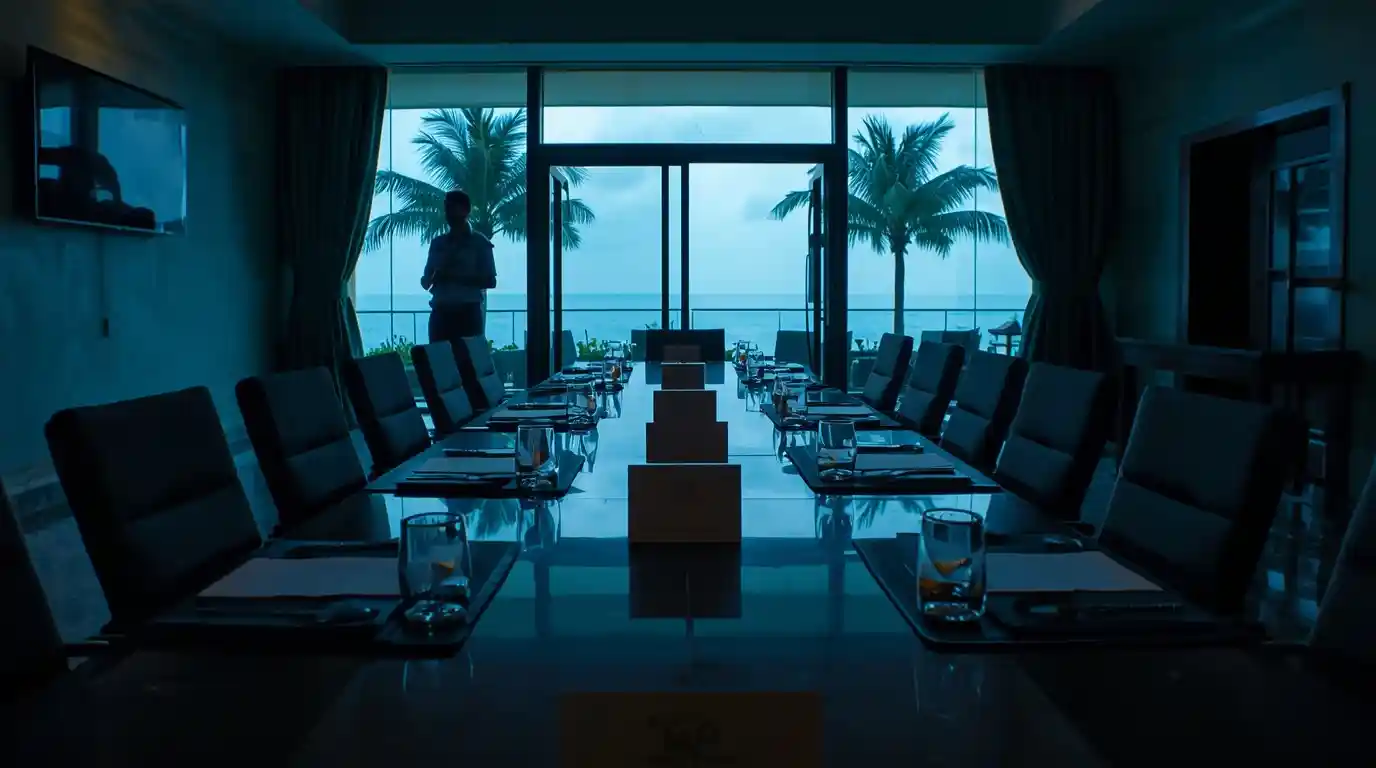
The 31st Southern Zonal Council meeting put six chief ministers around one table at a beach resort near Mamallapuram on Thursday, and the seating plan turned out to be more interesting than the agenda paper. Union Home Minister Amit Shah chaired it. Tamil Nadu Chief Minister C. Joseph Vijay sat as vice-chairman, the post that goes to the host state. Karnataka's D.K. Shivakumar, Kerala's V.D. Satheesan, Telangana's A. Revanth Reddy, Andhra Pradesh's N. Chandrababu Naidu and Puducherry's N. Rangasamy filled the rest of the chairs.
Not one of those six is a BJP chief minister. Naidu's TDP and Rangasamy's AINRC are NDA partners, and the other four govern in open opposition to the Centre. So for roughly four hours from 10 am, the Union home minister ran a meeting of a region where his own party still does not hold a single chief minister's office. That is the plain political fact sitting underneath the handshake photographs.
The business was not symbolic, though. Cauvery water, Karnataka's proposed Mekedatu dam, coastal drug smuggling, border friction and the long-delayed redrawing of Lok Sabha constituencies were all on the list. Shah reached Chennai on Wednesday evening for a two-day visit and was received by state minister B. Rajkumar, Tamil Nadu BJP president Nainar Nagenthran and former state unit chief Pon Radhakrishnan.
Who turned up, and why that is the news
Attendance is the story here. When Shah chaired the 29th meeting of the Southern Zonal Council at Tirupati in November 2021, the chief ministers of Tamil Nadu, Kerala and Telangana all stayed away, leaving Andhra's Y.S. Jagan Mohan Reddy, Karnataka's Basavaraj Bommai and Rangasamy to represent the south. A full house this time — including two chief ministers currently trading letters over river water — is a real shift in tone, whatever comes of it.
What the Southern Zonal Council was asked to fix
The council handles the unglamorous work that two state governments cannot settle between themselves: shared rivers, disputed boundaries, split institutions, policing across state lines. Items are filtered through a standing committee of chief secretaries before they reach the chief ministers. By the time something is formally tabled at this level, it has usually been stuck for years.
Cauvery water and the Mekedatu dam
Tamil Nadu and Karnataka walked in from opposite corners. Chennai wants Bengaluru to drop the Mekedatu reservoir plan; Karnataka insists it is a drinking-water project, nothing more. Sitting on top of that is a rawer wound — three Tamils were shot dead in a firing incident at the Cauvery Wildlife Sanctuary in Chamarajanagar's Hanur taluk, a case Tamil Nadu wanted raised directly with Shivakumar.
6,016 kg of meth and a nervous coastline
Maritime security came with hard numbers attached. Investigators are still unpicking the network behind 6,016 kg of methamphetamine seized from a Myanmarese boat near the Barren Islands in the Bay of Bengal in November 2024. Follow-up searches on 12 August covered five locations in Mizoram and eight in Tamil Nadu, turning up digital devices, ₹71 lakh in cash, $53,500 and 1,50,000 Myanmar kyat.
Andhra Pradesh's unfinished bifurcation file
Naidu arrived with a list twelve years old. He planned to press the Centre on pending provisions of the Andhra Pradesh Reorganisation Act — the division of institutions under Schedules 9 and 10, the apportionment of assets and liabilities with Telangana, revenue-gap and taxation questions — plus faster movement on Dugarajapatnam Port, the Visakhapatnam–Vijayawada metro, rail links, airports and industrial corridors.
Why delimitation is the fight beneath the fight
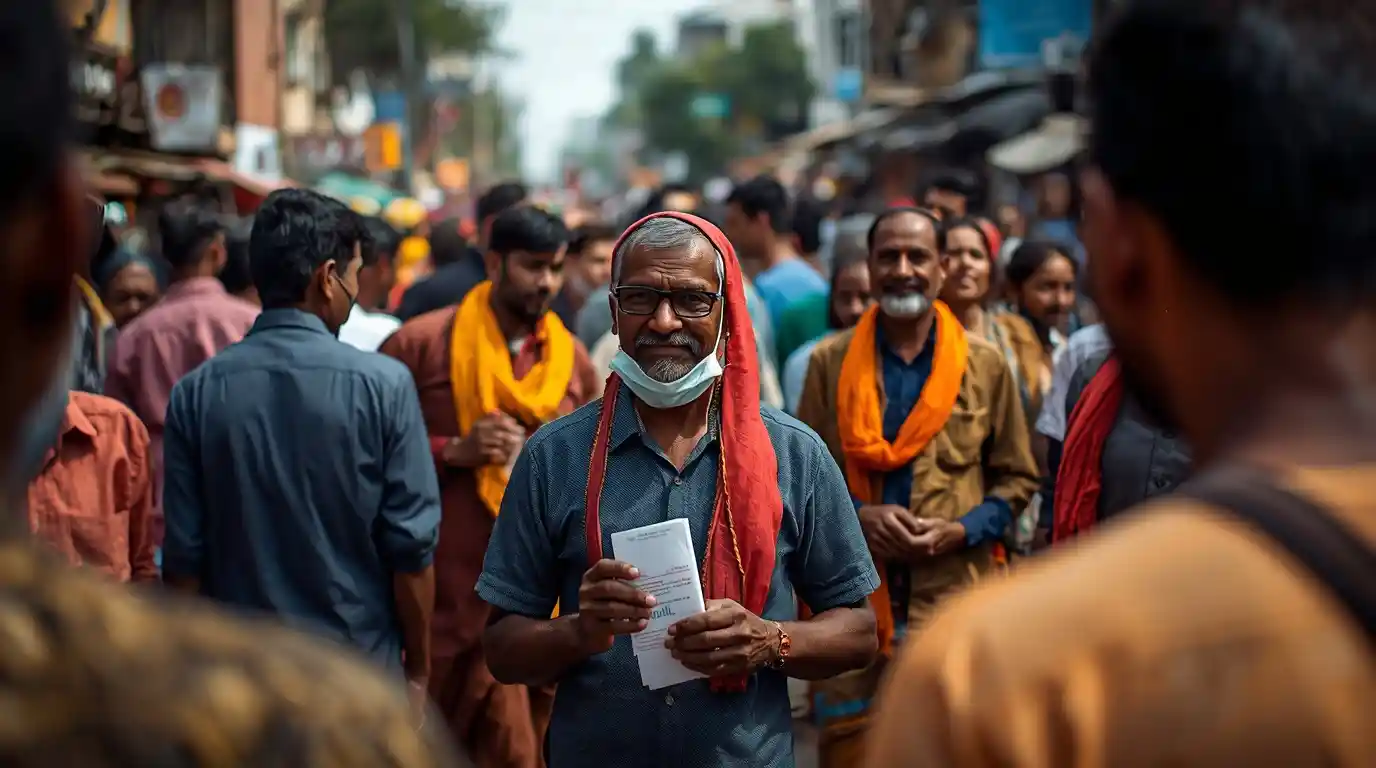
Every government in that room shares one worry, and it has nothing to do with rivers. Lok Sabha seats have been frozen on 1971 population figures since the 1970s, with the freeze extended until the first census after 2026 — which is now. If seats are redistributed purely by headcount, states that curbed population growth stand to lose parliamentary weight to the north. Tamil Nadu, with 39 seats, has been loudest, but Kerala, Karnataka, Telangana and Andhra Pradesh face the same arithmetic.
Do these meetings actually settle anything?
Sometimes, within limits. The Southern Zonal Council can only recommend; it cannot overrule a state government or a court order. What it is genuinely good at is clearing administrative debris. At Tirupati in 2021, 40 of the 51 pending issues on the list were reported closed. Nobody expects the Cauvery to be solved over coffee near Kovalam, but stalled asset transfers and unsigned formulas do tend to move when chief secretaries know their boss will be questioned about them.
What to watch over the next few weeks
Three things are worth tracking. First, whether any written record of the delimitation discussion emerges, or whether it stays at the level of verbal assurances. Second, whether Karnataka files a fresh detailed project report on Mekedatu, which would reignite the row within days. Third, whether the Andhra–Telangana asset committee actually sits down. The Southern Zonal Council does not make law, so treat Thursday's warmth as a starting position, not a settlement — and judge it by which of those files move before the next meeting.


Comments 0