

Nurses Went 3 Months Unpaid in the Congo Ebola Outbreak
Health workers at the center of the world's second-largest Ebola epidemic abandoned their posts over unpaid wages, just as the virus outran contact tracing.

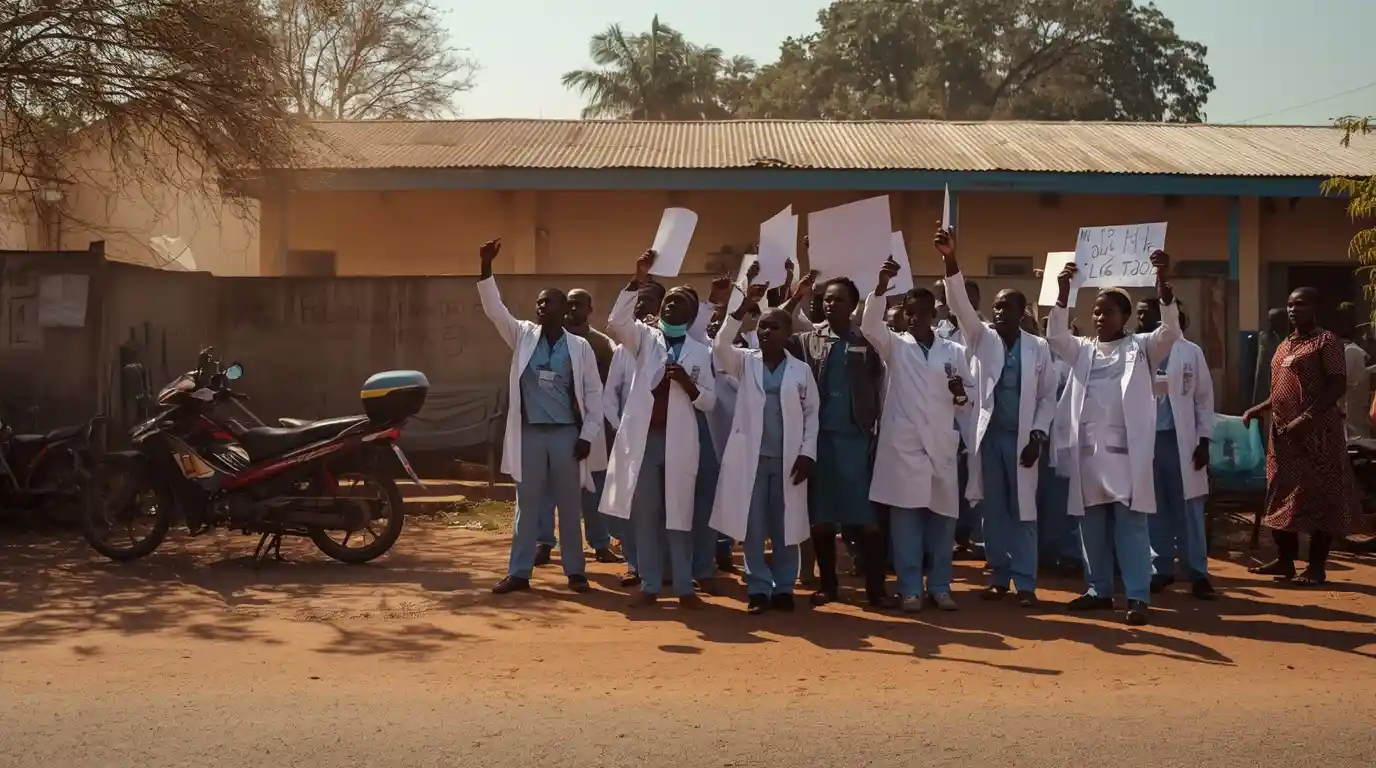
The Congo Ebola outbreak is now the second-largest ever recorded, and the nurses fighting it say they have gone months without a paycheck. On August 6, dozens of health workers walked off the job in Bunia, the capital of Ituri province and the epicenter of the epidemic, and marched on the provincial governor's office. Several said they had not been paid since the outbreak was declared in mid-May. Some facilities sat empty while they protested.
The numbers behind that walkout are brutal. The World Health Organization counted 4,686 cases and 2,186 deaths as of August 12, almost all in the Democratic Republic of the Congo, with a confirmed case fatality rate of 46.8 percent. Tallies built from WHO reporting pushed past 5,200 cases and 2,500 deaths by August 20. Roughly one in every two people who catch this virus dies of it.
So why should a reader in Ohio or Texas care about a payroll dispute 7,000 miles away? Because unpaid staff eventually stop showing up, and when they stop showing up, contact tracing falls apart. WHO's tally already includes 20 cases in Uganda and one in France. That is exactly the pattern that carried Ebola to Dallas and New York in 2014 — an epidemic that outruns its trackers starts exporting patients.
How the Congo Ebola outbreak got this big
This is the DRC's 17th Ebola epidemic, declared on May 14 in Ituri. It has since reached 54 health zones across six provinces: Ituri, North Kivu, South Kivu, Haut-Uélé, Tshopo and Bas-Uélé. Ituri alone accounts for close to 90 percent of cases. Doctors Without Borders has called the spread alarming and unprecedented. Somewhere between 60 and 80 percent of new cases are appearing outside known contact lists — the virus is moving faster than anyone can map it.
Why unpaid nurses break the whole response
An Ebola response is not mostly doctors. It's burial teams, ambulance drivers, sprayers, cleaners, contact tracers and nurses sweating inside sealed suits in 90-degree heat. It only works if every one of them turns up, every single day, in the same villages, for months. Remove the least glamorous half of that workforce and the surveillance network goes dark within days.
Three months of work, no wages
Workers in Bunia said salaries and hazard bonuses had not arrived since the outbreak began. Patrick Muyaya Katembwe, the DRC's communications minister, told CNN the outstanding money was being processed and blamed the delay on verifying which staff had actually been deployed to the response. That paperwork takes weeks. An Ebola chain of transmission doubles in days.
With this way of managing things, Ebola will not end in this province.
The people treating patients are dying too
WHO has confirmed 155 infections among health workers in this epidemic, including 45 deaths and 68 recoveries. Put plainly: the job carries roughly the same odds as the disease itself, and the people taking it on were asked to do it for free. About 674 patients were in isolation in early August, with three-quarters of listed contacts being followed — a figure that only holds if staffing does.

The vaccine problem almost nobody expected
Most Americans assume Ebola became a vaccine-preventable disease years ago. That's only half right. This epidemic is caused by Bundibugyo ebolavirus, a different species from the Zaire strain, and no licensed vaccine exists for it. Ervebo, the approved Zaire vaccine, is being deployed through a randomized clinical trial rather than a blanket ring-vaccination campaign. The PARTNERS trial began enrolling on July 2 and has signed up more than 100 patients.
How it compares with the last two big epidemics
The 2014–16 West Africa epidemic infected about 28,600 people and killed roughly 11,300 — still the worst on record by a wide margin. The 2018–20 epidemic in eastern DRC logged 3,470 cases and around 2,280 deaths, and held second place until this year. The current outbreak passed that total in under three months. Wage fights are not new either: Liberian health workers threatened to strike over hazard pay in October 2014, at the peak of that crisis.
What to watch over the next few weeks
Four signals will tell you whether this turns a corner or keeps climbing:
- Whether back pay actually lands in workers' hands, not just "in processing"
- Whether the share of cases arising outside contact lists drops below 50 percent
- Whether Uganda's case count stays sporadic or starts chaining locally
- Early readouts from the Ervebo trial on cross-protection against Bundibugyo
For now, the practical advice is narrow and boring, which is usually a good sign. The CDC maintains a running situation summary for anyone with travel to East or Central Africa on the calendar; check it before booking, not after. Nobody in the US needs to change daily plans. But watch the payroll story, not just the case curve — in the Congo Ebola outbreak, whether nurses get paid this month may matter more than any new drug.



Comments 0