

The $280bn Question: Who Gets Control of Tata Sons?
With N Chandrasekaran leaving in February 2027 and the trustees who own two-thirds of the holding company openly split, India's largest business house faces its first contested succession since 2016.

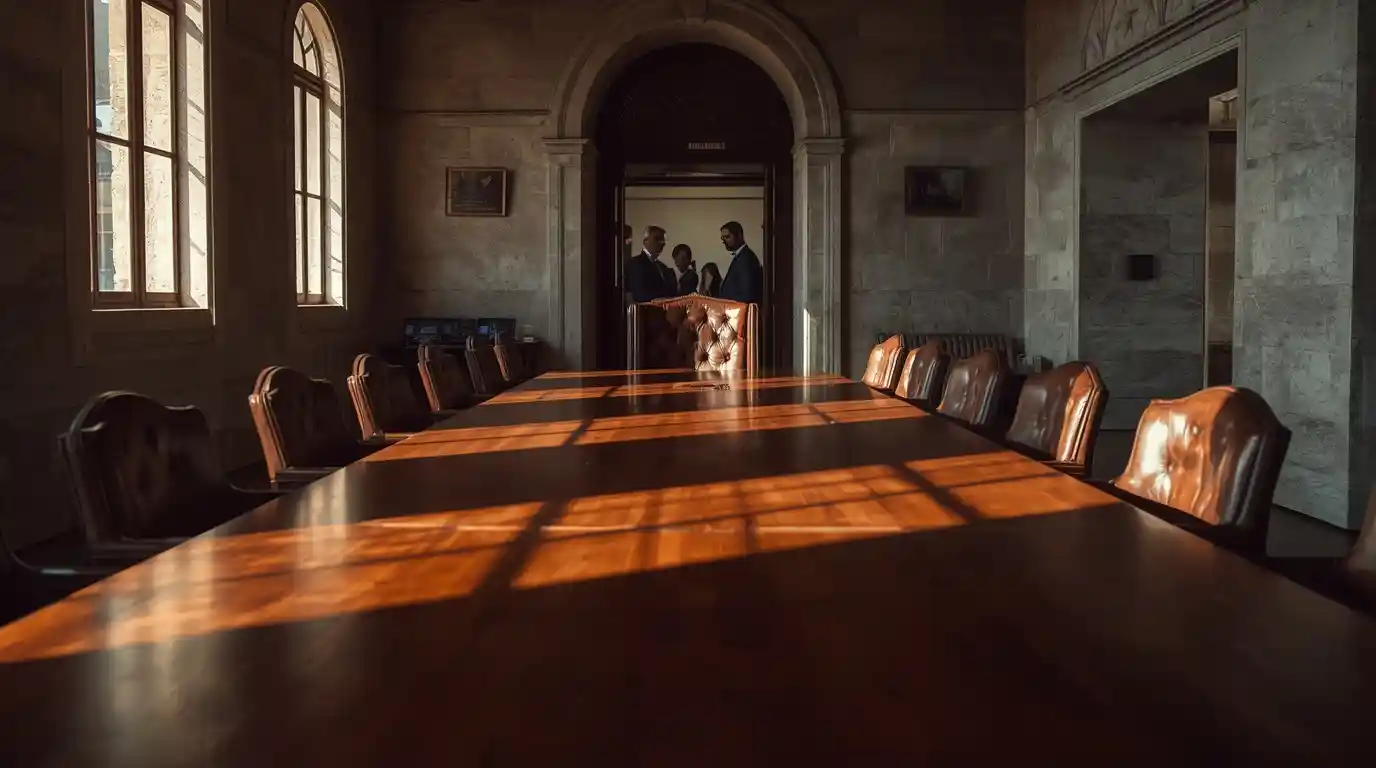
The control of Tata Sons, the unlisted holding company that sits above India's largest business house, is being contested more openly than at any time since Cyrus Mistry was pushed out as its chairman in 2016. The Financial Times puts the wider group at roughly $280bn. What is actually in dispute isn't a factory or a brand. It's who gets to sit in a room in Mumbai and choose the people who run all of it.
The arithmetic is simple enough. Tata Trusts, the philanthropic bodies now chaired by Noel Tata, hold 66 per cent of Tata Sons. The Shapoorji Pallonji group holds 18.4 per cent and has spent years asking for a listing. The remainder sits with Tata family members and group companies. Because the trusts effectively decide who chairs Tata Sons, whoever commands the trusts commands the group.
What makes this live rather than academic is a date. N Chandrasekaran's term as Tata Sons chairman runs to 20 February 2027, and he has already said he won't seek another. For the first time since 2017, the trustees must pick a chairman — and they are not speaking with one voice.
Why the control of Tata Sons is suddenly in play
Ratan Tata died in October 2024. Within weeks, Noel Tata — his half-brother, and the son of Naval and Simone Tata — took over as chairman of Tata Trusts. The old habit of trustees settling things unanimously behind closed doors didn't survive the handover. Trustees introduced annual performance reviews for nominee directors over 75, and the first real crack opened over whether former defence secretary Vijay Singh should stay on the Tata Sons board.
The trustee fight nobody expected to go public
A missed 90-day filing
Mehli Mistry, a confidant of the late Ratan Tata, was voted off the Sir Ratan Tata Trust and the Sir Dorabji Tata Trust in October 2025 — the two trusts that together hold the bulk of that 66 per cent. He has since challenged Noel Tata's own reappointment as a life trustee from January 2025, arguing the mandatory change report wasn't filed with the charity authorities within 90 days. Tax lawyer Homi Ranina told Business Today the objection rests on purely technical legal ground.
A Parsi-only rule and a vice-chairman's exit
In April 2026, Mistry filed an affidavit with the Maharashtra charity commissioner opposing Venu Srinivasan and Vijay Singh as vice-chairmen of the Bai Hirabai Jamshetji Tata Navsari Charitable Institution, arguing those seats are reserved for Zoroastrians permanently resident in Mumbai. Srinivasan stepped down. A 2025 Maharashtra ordinance capping how many lifetime trustees a public trust may appoint opens a second legal front.
The ball is clearly in the Charity Commissioner's court — lawyer Amit A. Tungare, quoted by Business Today, on the risk that an administrator could be appointed over the trusts.
Who actually picks the next chairman
Outlook Business has reported the split running roughly four to three: Mistry, Darius Khambata, Pramit Jhaveri and Jehangir Jehangir on one side, Noel Tata, Srinivasan and Singh on the other. In February 2026 the Tata Sons board deferred a third term for Chandrasekaran after Noel Tata raised questions about losses and capital deployment, Air India among them. Chandrasekaran, whose FY25 pay was ₹156 crore, then took himself out of the race.
The listing question the RBI hasn't closed
The regulator named Tata Sons an "upper layer" NBFC in 2022, which under scale-based rules required a listing by 30 September 2025. Tata Sons repaid its debt and applied to surrender its NBFC registration instead. On 6 August 2026 the RBI kept the company on its 2026-27 upper-layer list while that application stays under examination. Shapoorji Pallonji, which in July 2026 raised a ₹25,500 crore bond partly backed by its stake, keeps pushing.
What this means for your Tata shares
You can't buy Tata Sons. What Indian retail investors own is the listed layer — TCS, Tata Motors, Tata Steel, Titan, Trent, Tata Power — where operations continue normally regardless of who sits on which trust. The 2016 precedent is worth remembering: the boardroom war was ugly and public, and the operating companies kept trading on their own numbers. A holding-company IPO would be the first direct route in, and such vehicles typically list at a discount to the value of their parts.
Three things to watch, in order. First, whether the Maharashtra charity commissioner rules on the trustee objections or appoints an administrator. Second, whether the RBI accepts the deregistration and quietly ends the listing obligation — that decision alone moves Shapoorji Pallonji's plans. Third, the chairman announcement, which realistically has to come well before February 2027. Until then, judge your Tata holdings on quarterly results, not on who won the last board meeting.


Comments 0