The Amit Shah Parliament Debate That No One Will Start
The Home Minister offered a 24-hour discussion from 3 pm; the Opposition, led by Rahul Gandhi, refused to file the one letter that would start it.

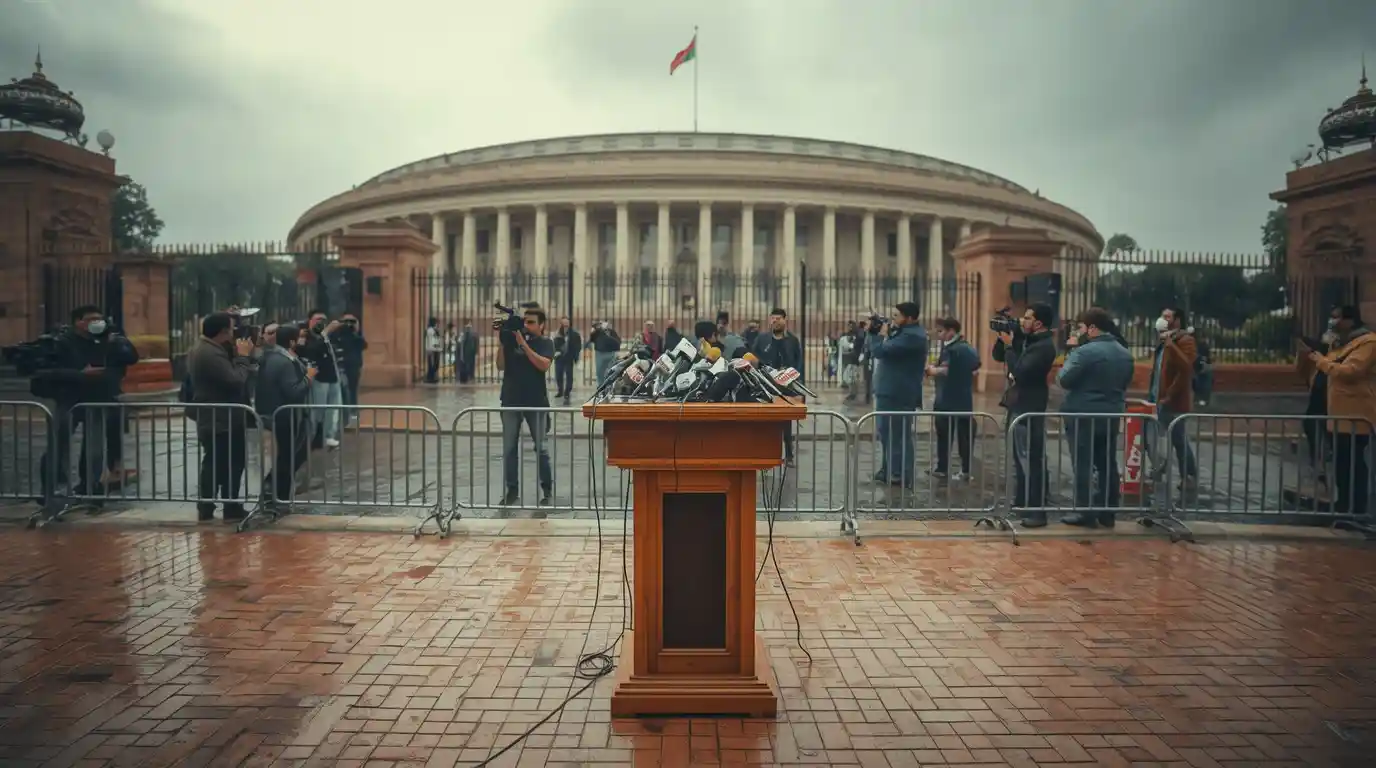
The Amit Shah Parliament debate that could have run for a full 24 hours never got going on August 12, because the two sides couldn't even agree to hold it. The Union Home Minister stood outside his Parliament residence and told reporters he was ready to answer any question the Opposition wanted to put to him. The answer, delivered by Rahul Gandhi, was blunt: not interested.
Shah's pitch came with a clock attached. If the Opposition wrote to Lok Sabha Speaker Om Birla by 2 pm, he said, the discussion could begin at 3 pm that Wednesday and run until 3 pm on Thursday — a rolling, day-long sitting in which he promised to stay for every speech and respond to everything raised. "The government has nothing to hide," he told the reporters.
For anyone tracking the monsoon session, which opened on July 20, the standoff explains why so little has actually moved. Both Houses have lurched from one adjournment to the next. Bills clear in minutes with barely a word of debate, and the questions many voters want answered — about police action, temple money and voter rolls — keep getting lost in the din.
The offer Shah put on the table
Shah framed his challenge as a test of who genuinely wants to talk. He said he had been coming to Parliament regularly since the session began, but had spent his time in his chamber because the Opposition wasn't letting either House function. "Now let the public decide who is running away," he said, flipping the charge of absence back onto his critics.
The terms he set out were specific:
- A written request to the Speaker by 2 pm
- A debate opening at 3 pm and running a full 24 hours
- Shah himself answering every point at the close
On paper it was a hard offer to wave away. Waving it away is exactly what the Opposition did, and the reasons it gave show how little trust is left between the two benches.
What the Amit Shah Parliament debate was about
Strip away the theatre and the fight comes down to three grievances the Opposition has pressed all session. Each is serious on its own; together they are why the Congress issued a whip asking its MPs to be present on August 10, 11 and 12.
The Jantar Mantar police action
On July 20, the day the session opened, students demonstrating near Jantar Mantar in Delhi were met with police force. The Opposition wants Shah, who holds the Home portfolio, to explain what happened and who gave the orders. Protest marches inside the Parliament complex, led by senior Congress figures, have kept the episode in the headlines.
The temple-donation allegation
Running alongside it is a claim about missing money from Ram temple donations. The Opposition has demanded a government statement on the alleged theft, and the charge has become a fixture of the daily disruptions, feeding the sense that nothing gets discussed on its merits.
The fight over Bihar's voter rolls
The third front is the one Rahul Gandhi cares about most. The revision of electoral rolls — the exercise the Opposition brands "vote chori", or vote theft — has pulled him out of Delhi and into Bihar, where he has been leading rallies against it. It is also why he skipped a customary tea hosted by the Speaker, choosing the road over the room.
Why Rahul Gandhi said no
Rahul Gandhi didn't dress up his refusal. He said the Opposition had no interest in what he called Shah's "imagination" or his "lecture", and that a debate held on the government's terms wasn't accountability at all. On the Jantar Mantar action, he laid down a demand with no way out.
If he gave that order, he should resign because he is culpable. If he did not give the order, he should resign because he is incompetent.
That is the heart of the disagreement. Shah wants a debate; Rahul wants a resignation, and reads the offer of a debate as a way to dodge one. Neither side gains by blinking first, so the deadlock holds.
Why a whole session can stall like this
None of this is new. Indian parliamentary sessions have a long habit of collapsing into shouting matches, with the treasury benches blaming the Opposition for disruption and the Opposition blaming the government for ducking debate. What makes it expensive is the arithmetic: every hour the House sits costs public money, and washed-out days mean laws pass with almost no scrutiny.
There is a strategic logic underneath, too. A live Amit Shah Parliament debate would hand the government a stage to frame each issue its own way, with one of its sharpest floor managers getting the last word. The Opposition would rather keep the pressure spread out than walk into a set-piece it can't control.
What to watch next
The immediate test is whether any Opposition MP actually writes to Om Birla. As long as no letter arrives, Shah's offer stays a talking point and the Amit Shah Parliament debate stays hypothetical. Watch, as well, how many working days are left before the session closes — the fewer that remain, the easier it is for both sides to run out the clock and accuse the other of fleeing. And keep an eye on Bihar, where the voter-roll fight is moving into election season and will outlast this session by months.