

The NALSAR Enrolment Ban That Lasted Less Than a Day
The Bar Council of India blocked an entire graduating batch from becoming advocates, then unwound the whole thing before sunrise.

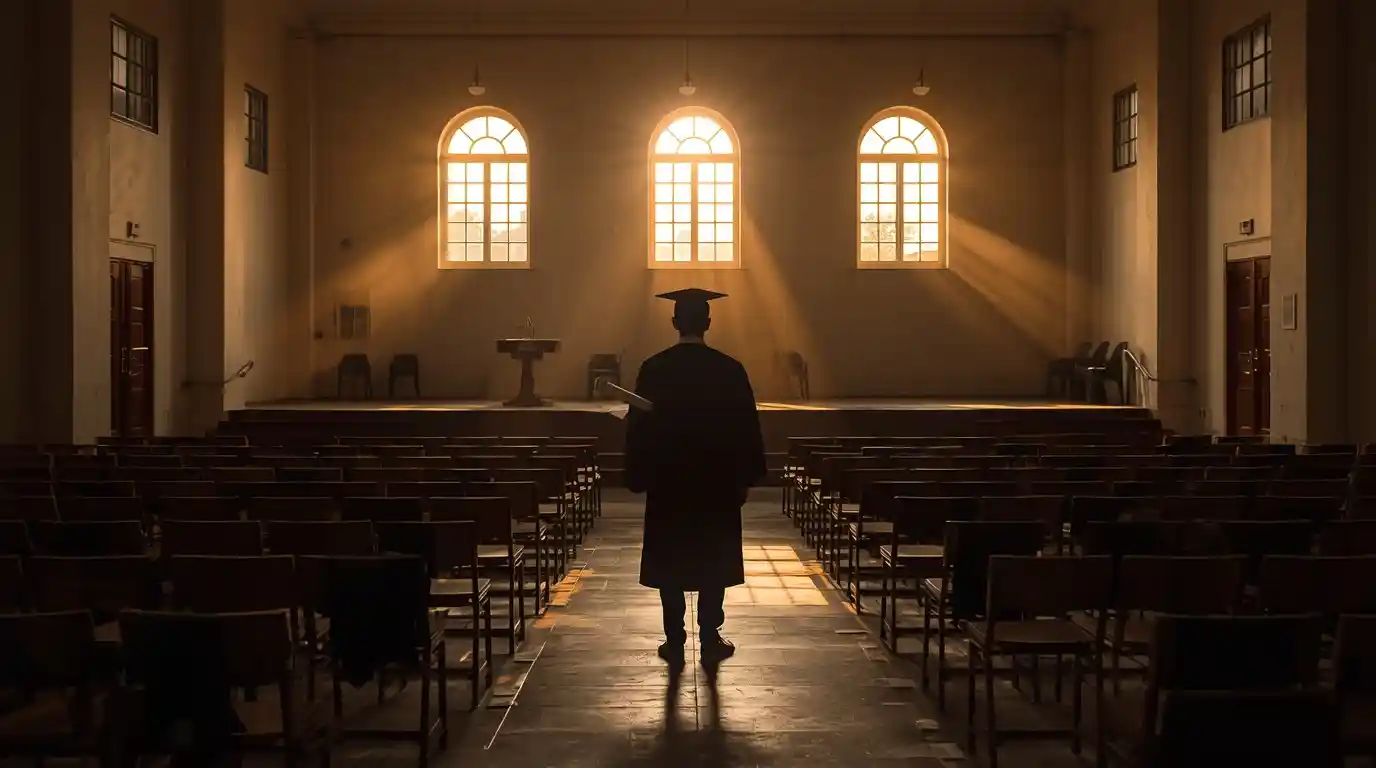
The NALSAR enrolment ban issued on the evening of August 13 told every State Bar Council in India not to register a single 2026 law graduate of NALSAR University of Law, Hyderabad, as an advocate. By the early hours of the next morning it was gone, and so was the inquiry meant to replace it. Bar Council of India Chairman Manan Kumar Mishra closed the file himself, in a late-night post.
The trigger was an email. Around 450 NALSAR students wrote to their administration asking it to reconsider inviting Chief Justice of India Surya Kant as chief guest at the convocation, according to reports in ThePrint and Business Standard. Their objection went back to July 20, when, hearing a matter on alleged police excesses against protesters in Delhi, the CJI indicated the court had no time to sit through video evidence.
For a final-year law student this is not an abstract argument. Enrolment with a State Bar Council is the gate to the profession — no enrolment, no appearance in court, no vakalatnama, and in most cases no joining date at a litigation chamber or firm. For roughly a day, that gate was shut on a whole batch because of a letter most of them may never have drafted.
How the NALSAR Enrolment Ban Fell Apart in 24 Hours
Two circulars went out together. The first said that until further orders, no student holding a 2026 NALSAR law degree was to be enrolled by any State Bar Council. The second landed on the desk of Vice-Chancellor Prof Srikrishna Deva Rao, demanding a factual report naming whoever initiated, organised or mobilised the campaign. He got three days. A final call was slated for August 19.
The Council pointed to Section 24A of the Advocates Act, 1961, while clarifying it was not yet recording anyone as disqualified. It also claimed that groupism and dirty politics among some academic staff had misled and instigated the students. Then the internet caught up. Within hours, after discussion among members, the enrolment freeze was withdrawn and graduates were told they could enrol with the council of their choice.
The inquiry outlived that first retreat, but not the night. Past midnight, Mishra posted again, this time to end the matter completely.
After considering the representations and reactions of Senior Advocates, learned members of the Bar, law students and public spirited citizens, and being satisfied that the 2026 batch of NALSAR, Hyderabad, had no role in any disturbance or movement, the Bar Council of India has decided to close the proceedings altogether. No further action is required from NALSAR.
What the Students Actually Asked For
Read the demand plainly and it is modest: reconsider one invitation. Students argued, as Outlook India reported, that collecting a degree from a judge whose remarks seemed to brush past allegations of police brutality clashed with the values the university had spent five years teaching them. There was no boycott of the ceremony on record, no protest march, no disruption — a point the BCI chairman himself ended up accepting.
Sitting judges headlining law school convocations is routine in India. CJI Surya Kant addressed HNLU Raipur's graduating class in February 2026. What was not routine was a regulator treating an objection letter as a disciplinary matter.
Why the Bar Turned on Its Own Council
Supreme Court Bar Association President and senior advocate Vikas Singh condemned the order publicly, calling it "illegal, disproportionate and fundamentally unsustainable" and an attempt to intimidate law students for exercising their right to free speech. When the apex body of Supreme Court lawyers says that about the BCI in writing, the order has already lost.
Section 24A Was Written for Convictions
Section 24A of the Advocates Act deals with disqualification from enrolment on conviction of certain offences, chiefly those involving moral turpitude. It is a provision about criminals, not about critics. Stretching it to cover students who signed an email is the part practitioners found hardest to defend, and it is why the climbdown came so fast.
Nobody Was Named, Everybody Was Punished
The order did not identify a single student. It applied to anyone graduating from NALSAR in 2026, whether or not they signed anything, with no notice and no hearing. Around 450 signatures were reported; the ban covered the whole batch. That gap between the alleged act and the people hit by it is the definition of collective punishment.
What This Means If You Are Graduating in Law
Enrolment is granted by your State Bar Council, not by the BCI directly, and the conditions are set out in the Advocates Act. The BCI still runs the All India Bar Examination and still approves law colleges, so its leverage is real. The practical lesson from this week: an instruction can arrive and evaporate within a day, so confirm your status with your own State Bar Council before rearranging your career.
What to Watch Over the Next Week
NALSAR has said it will examine whether the inquiry directive was a constitutionally valid exercise of authority under the governance rules that apply to it — a question that survives even though the NALSAR enrolment ban is dead. Watch for three things: a formal written withdrawal from the BCI rather than a social media post, the convocation date and who finally presides, and whether any student or faculty member is named after the fact.
If you are in the 2026 batch, keep copies of both circulars and the closure statement with your enrolment papers, and file your application on the normal timeline. If a State Bar Council counter still cites the old direction out of habit, the chairman's own words — no role in any disturbance, no further action required — are the answer to hand over.


Comments 0