

The Bladder Cancer Urine Test That Beats the Camera Check
A posted-back urine sample out-scored cystoscopy in an NHS evaluation of 964 patients — and six hospitals have already changed how they investigate blood in urine.

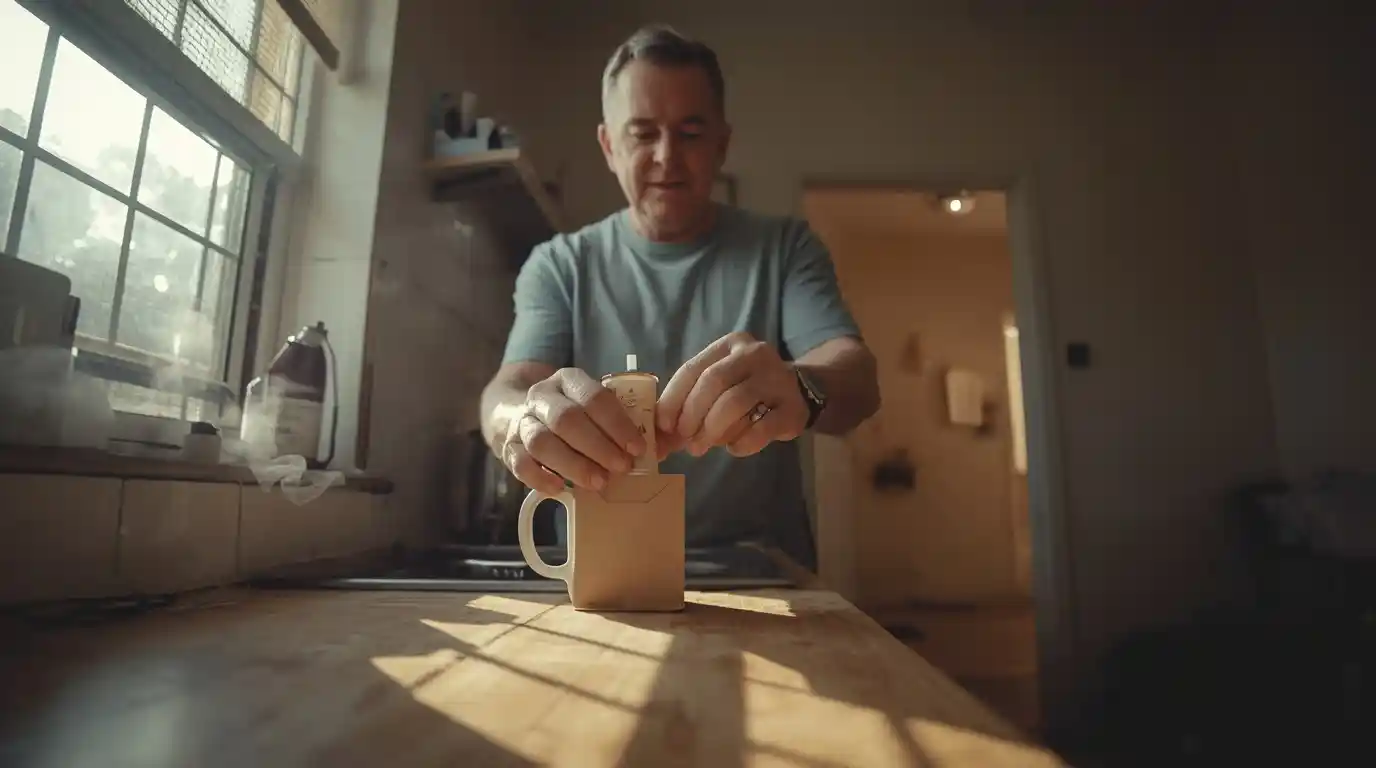
A bladder cancer urine test that patients seal up at their own kitchen table and post back has out-performed the camera examination the NHS has leaned on for decades. In an evaluation of 964 patients across seven hospitals in England and Scotland during 2024 and 2025, the test sorted people who had cancer from people who did not 92% of the time. Cystoscopy — the camera — managed 81%.
The story reached a lot of people this week through a patient in Essington, the Staffordshire village just north of Wolverhampton, who told the BBC they were firmly behind the gentler option. That reaction is not remotely unusual. A cystoscopy means threading a thin tube with a camera up the urethra and into the bladder, normally while you are wide awake and staring at the ceiling. Plenty of people delay it. Some simply say no.
The figure that actually changes clinical decisions, though, is a different one: a negative predictive value of 99.3%. Put plainly, when the test says there is nothing there, it is almost always right. That is what lets a consultant send someone home the same week rather than booking theatre time — and it is why the test is being deployed as a rule-out tool rather than a straight swap for diagnosis.
How the Bladder Cancer Urine Test Works
The product is called GALEAS Bladder, made by the Birmingham biotech firm Nonacus and built on research from the University of Birmingham's bladder cancer group with backing from Cancer Research UK. Professor Richard Bryan and Dr Doug Ward developed the underlying science. There is a neat symmetry here: the patient from Essington lives a short drive from the labs where the work was done.
What you do at home
You are sent a kit, you provide a urine sample in your own bathroom, and you post it back. No appointment, no waiting room, no stirrups, no recovery. For anyone who has taken a morning off work and paid for hospital parking only to be told the list is running late, that alone is a meaningful change.
What the lab is hunting for
The sample is screened for DNA changes across 23 genes known to be associated with bladder cancer. Tumours shed cells into urine, and those cells carry the mutations. It is genetics rather than eyesight, which is precisely why it can flag something a surgeon peering through a scope might reasonably miss.
What happens to your result
A clear result can mean discharge without ever having a scope. A concerning one pushes you up the queue for cystoscopy and imaging, so the invasive slot goes to the person most likely to need it. At University Hospitals of Leicester, patients on the new pathway have been getting answers 16 days after referral.
Why so many people turn the camera down
Blood in urine — haematuria — is the classic warning sign, and it triggers an urgent referral. The overwhelming majority of those referrals turn out to be something benign: an infection, a stone, an enlarged prostate. Yet nearly everyone in that queue currently gets the full invasive workup. Jayne Douglas-Moore, a consultant urological surgeon in Leicester, has pointed out that cystoscopy is commonly declined. A test people will actually agree to has an obvious advantage over a better test they avoid.

What 92% actually buys the NHS
Eleven percentage points sounds modest until you scale it. Haematuria clinics are one of the busiest fronts in British urology, and every unnecessary scope consumes a surgeon, a nurse, a room and a sterilisation cycle. Nonacus estimates the approach could save the health service around £140m a year. Even discounting a manufacturer's own arithmetic, freeing up theatre capacity is the currency the NHS is shortest of.
"This is a significant breakthrough in diagnosing bladder cancer, and within this new pathway to date patients have received their results in 16 days after referral, within the NHS 28-day faster diagnosis standard for cancer," said Jayne Douglas-Moore.
Which hospitals have it right now
Six hospitals are using the test, with Leicester the first NHS trust in England to adopt it. At least 16 more are expected to follow before the end of 2026. That is genuine rollout rather than a press release — but it is still a minority of trusts, so availability depends heavily on your postcode for the time being.
What to do if you spot blood in your urine
None of this changes the first step, and the first step is the one that saves lives. Book a GP appointment, even if it happened once and cleared up. Bladder cancer caught early is highly treatable; caught late it is a different disease entirely.
- Ask your GP or urology team whether your trust offers the test — it is worth the question, not an entitlement yet.
- If you are offered a cystoscopy and it frightens you, say so out loud rather than quietly missing the appointment.
- Treat a clear urine result as reassurance, not a permanent all-clear; report any fresh bleeding.
Watch for two things over the next few months: whether that list of 16 trusts materialises, and whether NICE assesses the technology for wider use. If both land, the posted sample stops being a regional pilot and becomes the ordinary way Britain checks for bladder cancer. Until then, the useful move is the unglamorous one — get the blood looked at.



Comments 0