

The DRC Ebola Outbreak Has Killed 2,128 People Since May
A single traveller's death in Buta has opened a sixth province, and the vaccine that ended the last epidemic does not work on this strain.

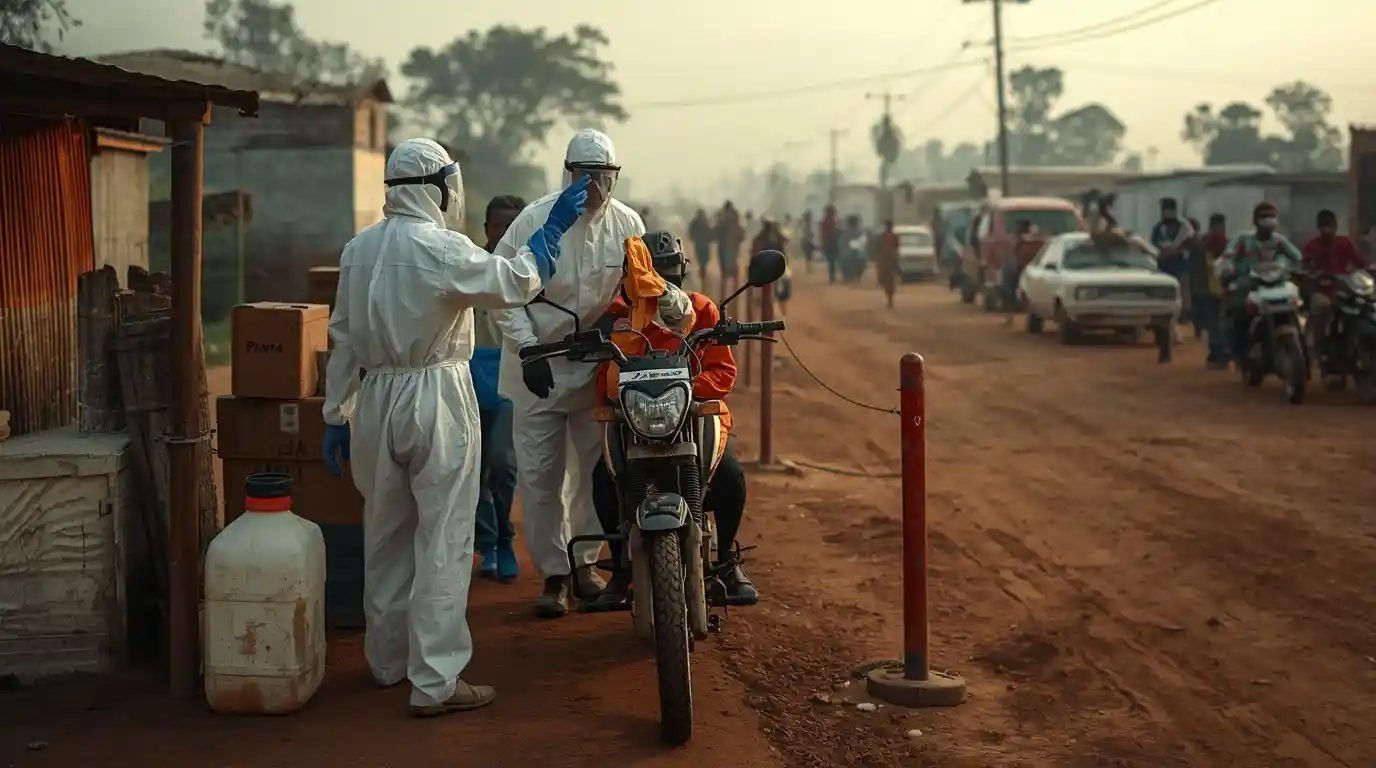
The DRC Ebola outbreak has killed 2,128 people out of 4,566 recorded cases, according to government figures, and it has now crossed into a sixth province. The newest death was in Buta, the capital of Bas-Uele in the north of the Democratic Republic of the Congo, where a man died after travelling from neighbouring Haut-Uele. One journey was all it took to open another front for a response that is already stretched thin.
Those figures land harder next to the last big one. The 2018-2020 epidemic in North Kivu and Ituri infected about 3,470 people and killed roughly 2,280, and it took the best part of two years to get there. This outbreak passed that case count in three months. The World Health Organization describes it as the fastest-growing Ebola outbreak on record, and by case numbers it now sits second only to the West African epidemic of 2013-16.
For anyone reading in Britain, the direct risk stays low. The UK Health Security Agency says the threat to the UK population is low and that Ebola in returning travellers is extremely rare. Still, this is a public health emergency of international concern — the highest alarm the WHO can raise, and only the eighth since 2005 — and the virus has already reached Europe once. France confirmed an imported case on 24 June; the patient recovered and left hospital on 4 July.
How Fast Is the DRC Ebola Outbreak Moving?
Ituri, where it began, carries almost all of it: roughly 3,912 cases. North Kivu has recorded 528, Haut-Uele 115, Tshopo nine and South Kivu three. The outbreak was confirmed on 15 May, but investigators believe the virus was circulating in February, with a pastor in Mongbwalu whose funeral was held on 4 February treated as the likely first case. That is a three-month head start before anyone was counting.
Health workers have paid heavily. By 19 June, 75 had been infected and 17 had died. Each loss removes someone who knows how to run an isolation ward, in a region where armed groups operate and treatment centres have been attacked before.
Why the Vaccine Everyone Remembers Isn't Being Used
Most people last paid attention to Ebola in 2019, when a vaccine arrived and the story felt closed. It isn't. This outbreak is caused by Bundibugyo virus, a rarer species, and the tools built over the past decade were built for a different one.
Bundibugyo Is Not the Zaire Strain
Ervebo, the licensed vaccine, and the antibody drugs that cut Ebola deaths sharply in 2019 were all designed against Zaire ebolavirus. There is no approved vaccine or treatment for Bundibugyo, whose historic fatality rate runs between 25 and 50 per cent. This outbreak is killing about 46 per cent of confirmed cases — the top of that range.
The Trials Now Running in Ituri
Clinical trials of two candidate treatments began in Ituri in July, including remdesivir and monoclonal antibody therapies. Two vaccines aimed specifically at Bundibugyo are in human testing. None of that produces a licensed product in time for this emergency; the payoff comes at the next one.
The 500,000 Doses Sitting in a Stockpile
On 28 May the WHO advised against using Ervebo on Bundibugyo outside research settings, judging the cross-protection evidence too thin. That position has shifted. At the end of July the WHO cleared Phase 3 trials in DRC, and on 7 August its vaccine advisory group backed testing Ervebo against this strain, drawing on Gavi's stockpile of 500,000 doses. Britain has long been one of Gavi's biggest funders.
What Buta Tells Us About Where This Goes Next
Bas-Uele matters less for its single death than for its geography, sitting on routes running north and west, away from the crowded Kivu corridor and towards the Central African Republic and South Sudan. Each new province the DRC Ebola outbreak reaches means fresh tracing teams, fresh supply lines, and usually weeks of undetected spread before the first case is confirmed.
If we do not stop this outbreak, it will last more than a year and will be the largest in the world.
That warning came from Jean Kaseya, head of the Africa Centres for Disease Control and Prevention. There is evidence on the other side too. Uganda recorded 20 cases and two deaths, then declared its outbreak over on 28 July. Twenty cases stopped cold shows what early surveillance can still do.
What This Means If You're Travelling From the UK
The DRC Ebola outbreak has not changed UK entry rules and no flight bans are in place. The approach across Europe has been targeted screening, travel-history questions and airline procedures for unwell passengers. If you have travel to the region booked, a few things are worth doing.
- Check FCDO advice and TravelHealthPro before booking anything non-refundable, then again before you fly.
- Monitor your health for 21 days after returning — the outer edge of the incubation period.
- Fever, severe headache, muscle pain, vomiting or unexplained bleeding after travel means phoning 111 or your GP first, not walking into A&E.
- Say where you have been. UKHSA has asked GPs to stay alert, and travel history is what triggers the right pathway.
What to Watch Over the Next Month
Two things will show which way this turns: whether Ituri's weekly case count finally falls, and whether Bas-Uele produces a second case. One imported death that starts no local chain is a scare. A cluster in Buta means a seventh province is coming. Watch UKHSA and FCDO updates before any travel to central Africa, and treat a post-travel fever as urgent rather than something to sleep off.




Comments 0