

The Culture Clause at the Heart of the Canada US Trade War
Trade talks between Ottawa and Washington collapsed over last-minute demands on cars, culture and Canada's right to deal with other countries — and India has already been down this road.

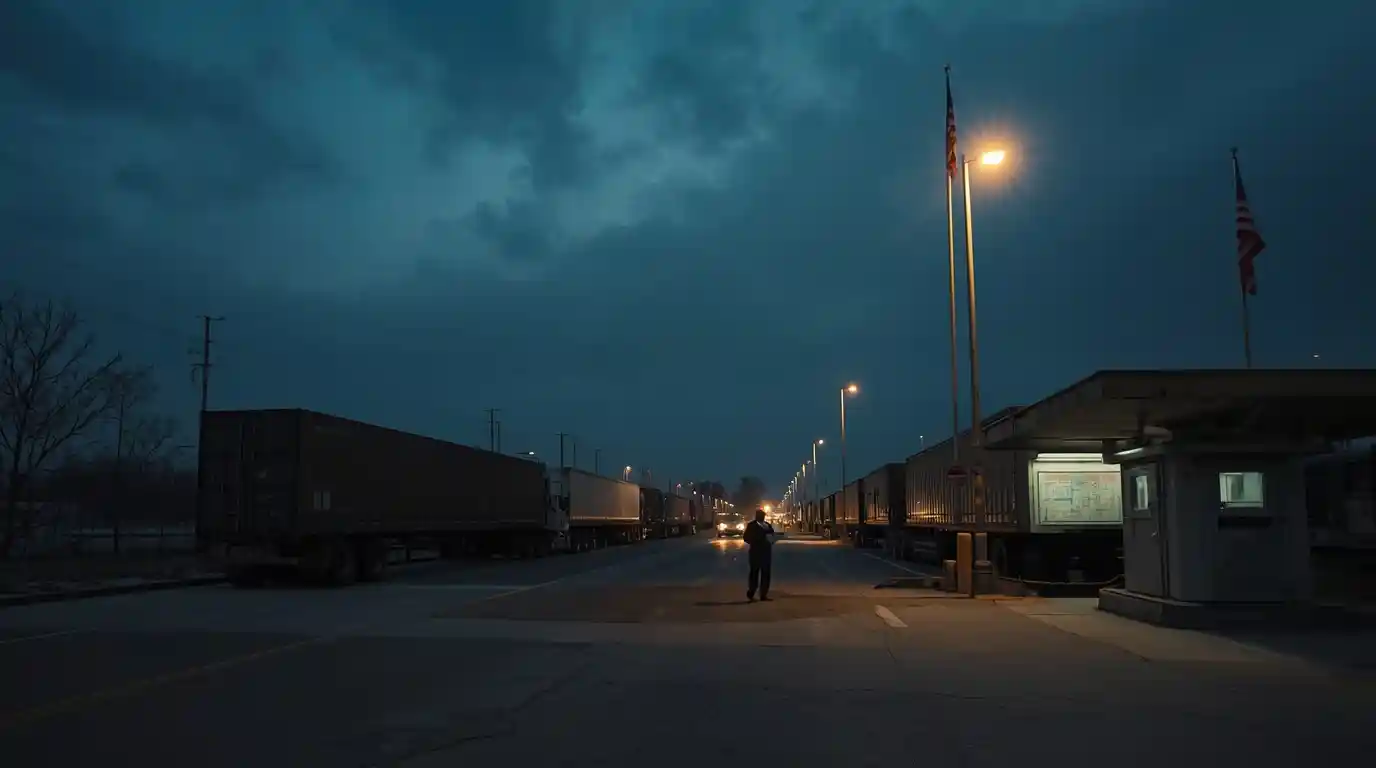
The Canada US trade war stopped being a bargaining posture on Saturday, when Washington imposed 50% tariffs on close to $20 billion of Canadian goods and Prime Minister Mark Carney told his country it had been attacked. Negotiators had worked late into Friday night in Washington. They came out with nothing. Within hours the duties were live, and Ottawa had picked a date to hit back.
What actually broke the talks is the strange part. Carney said the American side arrived late with a fresh set of conditions: less tariff relief for vehicles built in Canada, limits on Canada's freedom to sign trade agreements with other countries, and weaker protections for Canadian language, culture and sovereignty. That last item is not a normal line in a tariff schedule. His verdict, as reported by Fortune, was that they asked too much and offered too little.
Canada's counter-tariffs start on 8 September and Carney has promised they will be dollar-for-dollar. For a reader in India this is not distant noise. It is the same pressure India sat under through late 2025, and how Ottawa fares over the next fortnight is a live experiment in whether retaliation actually buys you anything.
How the Canada US Trade War Reached This Point
The deadline was originally Wednesday, one minute past midnight. President Donald Trump pushed it back three days to let the talks run, which is usually a sign a deal is close. Instead the extension bought a collapse. US Trade Representative Jamieson Greer led the American side; Ontario Premier Doug Ford, whose province builds most of Canada's cars, had been among the loudest voices warning about what an auto carve-out failure would do.
Carney's language on Saturday was unusually stark for a former central banker who spent his career choosing careful words at the Bank of Canada and the Bank of England.
You're at war when you get attacked. We got attacked.
What Canada Is Hitting Back With
Ottawa says the response will be focused rather than sweeping, and details are still coming. But the shape is already public, and it is built to be felt in specific American states rather than spread thinly across everything.
The list that takes effect on 8 September
Canadian duties will land on US steel, dairy, household appliances, agricultural equipment, pulp and paper, and electronics. They will also mirror the goods the US already targeted under its Section 232 and Section 338 actions — motor vehicles, aluminium, lumber and alcohol. Dairy and farm equipment are the tell: those are midwestern products, and midwestern producers have short lines to Washington.
Why dollar-for-dollar is harder for Canada than it sounds
Roughly $880 billion in goods and services crossed the border last year, with about $2 billion of goods moving every single day. But the flow is lopsided in exposure, not volume. The US market absorbs the bulk of Canadian exports, while Canada is one customer among many for America. Matching tariffs rupee for rupee, or dollar for dollar, means Canada absorbs proportionally more pain per dollar retaliated.

Why 50% on $20 Billion Isn't the Whole Story
The headline number sounds catastrophic and mostly isn't — yet. Twenty billion dollars is roughly ₹1.7 lakh crore at current rates, and it covers only about 5% of what Canada ships south in a year. The other 95% still moves. The real risk is escalation: each side now has a live tariff list, a domestic audience watching, and no scheduled talks. That is how a 5% problem becomes a 40% one.
India Has Already Run This Experiment
Indian exporters know the arithmetic. Washington put 25% on Indian goods on 1 August 2025, then doubled it to 50% from 27 August — a 25% reciprocal duty plus a 25% penalty tied to Russian oil purchases. Textiles, gems, shrimp and auto components took the hit. India did not retaliate with matching tariffs. It negotiated, and it traded a policy concession for relief.
On 2 February 2026, Prime Minister Narendra Modi and Trump announced a deal. The White House fact sheet confirms the extra 25% penalty was removed by executive order in recognition of India ending Russian oil purchases, and the reciprocal rate came down from 25% to 18%. Six months of pain, one concession, and a rate that is still not zero. That is the realistic benchmark Carney is working against.
What Indian Businesses Should Watch Next
Three things matter over the next three weeks. First, whether the 8 September list actually goes live or becomes a bargaining chip — Ottawa has blinked before. Second, whether Canada starts courting alternative markets seriously, because the US reportedly tried to restrict exactly that, and India is on any sensible Canadian shortlist for pulses, potash, energy and services. Third, the copper-fastened lesson from the Indian episode: the exit was a negotiated concession, not a tariff duel.
- Exporters with US contracts should re-check who carries tariff risk in the fine print, not assume it sits with the buyer.
- Anyone sourcing Canadian potash or pulses should expect price noise, not shortage.
- Watch the rupee and the Canadian dollar together — currency moves usually front-run tariff news.
If you run a business with any North American exposure, the practical move this week is unglamorous: pull your contracts, find the tariff clause, and know before 8 September who eats the cost if rates move again. Carney's own line was that nobody controls the storm blowing in from Washington. You can still decide how much of your cargo is standing out in it.




Comments 0