

The Milk Habit Driving Iron Deficiency in Toddlers
Three Queensland children died in cases linked to severely low iron, and the common thread was more than a litre of cow's milk a day.

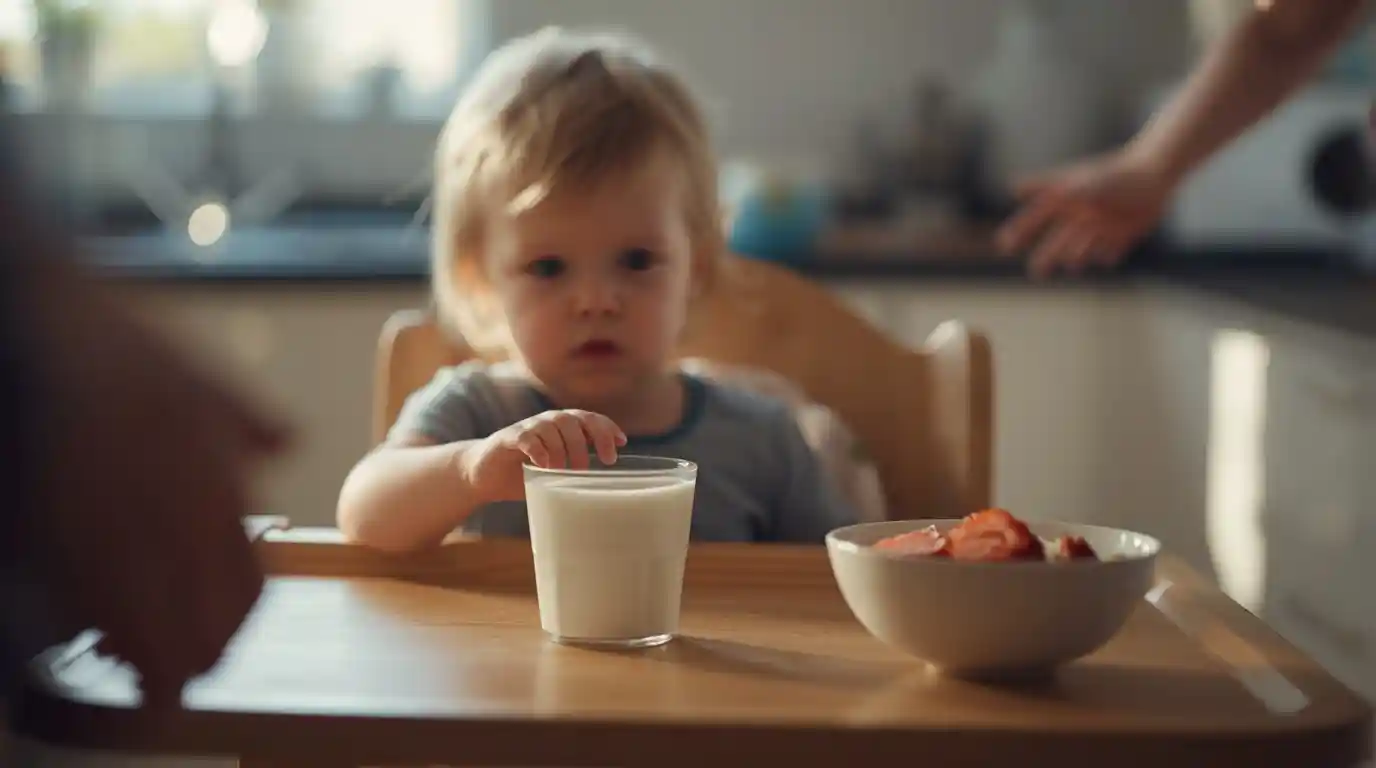
Iron deficiency in toddlers has gone from a routine question at the child health check to national news, after three young children in Queensland died over roughly the past two years in cases doctors linked to severely low iron. What connected them wasn't neglect, and it wasn't a rare disease. It was cow's milk — a lot of it.
Each of the children had been drinking more than a litre of cow's milk a day, according to Children's Health Queensland. Australian guidance puts the ceiling at around 500 millilitres, about two cups, once a child turns one. These toddlers were on roughly double that, and what followed was severe iron deficiency anaemia.
Before anyone panics at the fridge: deaths like these are extremely rare. Running short on iron is not. Findings from the Australian Feeding Infants and Toddlers Study suggest about a quarter of children aged 12 to 24 months fall below the intake they need, making iron one of the very few nutrients Australian toddlers genuinely struggle to reach.
How milk quietly pushes iron out
Milk isn't the villain — volume is. Cow's milk contains almost no iron, so every extra bottle crowds out something that does. A toddler who drinks a litre across the day turns up at dinner already full, pushes the mince around the plate and gets down. Repeat that for a few months and iron stores drain slowly enough that nobody clocks it until the child looks pale and flat.
It also feels like the safe option. Milk is calcium, it's white, and it's the one thing a tired two-year-old will accept at 5pm without a fight. That's how iron deficiency in toddlers usually develops — not from one bad decision, but from a hundred reasonable ones.
How much iron does a one-year-old need?
The NHMRC's nutrient reference values put the recommended daily intake for children aged one to three at 9 milligrams of iron. That's a steep target for a stomach the size of a fist — notably higher than the 8 milligrams recommended for adult men. Small child, big requirement, which is why a run of low-iron meals catches up faster than parents expect.
Signs of iron deficiency in toddlers to watch for
Low iron rarely announces itself. The early signals look like ordinary toddler behaviour, which is exactly why families and GPs can both miss it for months.
- Tiredness that doesn't lift after a solid night's sleep
- Pallor, most visible in the face, gums and inner eyelids
- Irritability, or less interest in running around than usual
- Poor appetite and slow weight gain
- Pica — chewing or eating non-food items such as dirt, paper or ice
Pica deserves attention on its own. A child who repeatedly eats dirt or paper isn't just being a toddler; it's a recognised marker of low iron and worth a GP appointment rather than a wait-and-see.
What to feed a toddler who's running low
Fixing intake is usually a rebalance, not an overhaul. Three changes do most of the work, and none of them require a toddler to suddenly enjoy broccoli.
Animal sources do the heavy lifting
Lean red meat, chicken and fish deliver iron in the form the body absorbs most readily. A small serve of finely minced beef two or three times a week shifts the needle more than any other single change. Eggs help too, and they survive the fussy-eater negotiation better than steak.
Plant iron needs a vitamin C partner
Baked beans, chickpeas, lentils, tofu and iron-fortified cereals like Weet-Bix are decent sources, but that iron is harder to take up. Pair them with vitamin C — strawberries, kiwi fruit, orange segments, chopped capsicum — and absorption improves. Beans on toast with berries on the side is a genuinely effective toddler meal.
Where milk should sit
Cap cow's milk at roughly 500 millilitres a day after 12 months, and serve it in a cup rather than a bottle. Bottles invite all-day grazing on milk; a cup ties it to mealtimes. Water in between is the easiest swap most families can make this week.
When to ask your GP for a blood test
If several of those signs line up, or the daily milk has crept past a litre, ask your GP about pathology. Two numbers count: haemoglobin, which shows whether anaemia has taken hold, and ferritin, which measures stored iron. Ferritin falls first, so a child can have empty stores well before their haemoglobin looks wrong — that gap is the window you want.
Don't start supplements on your own. Excess iron is harmful, and iron tablets remain a serious poisoning risk for small children. Dosing should follow a test result.
Why this keeps happening
Australia isn't an outlier. Canadian researchers recently reported on 128 otherwise healthy children treated for severe iron deficiency anaemia tied to prolonged bottle use and heavy cow's milk intake, framing it in their paper as a preventable problem demanding action. The pattern repeats across wealthy countries: well-fed kids, one good drink taken too far.
The 500ml figure has sat in Australian guidance for years without much public traction, and the Queensland cases will likely sharpen how loudly it gets said. Until then, do the small version yourself this week: add up how much milk your toddler actually drinks in a full day, move it out of the bottle and into a cup, and put an iron-rich food on the plate at two meals instead of one. If the tiredness or paleness is still there in a fortnight, book the blood test.



Comments 0