

What Bird Flu in Australia Could Do to Your Egg Prices
The federal government says it can't stop H5 spreading through wild birds — but keeping it out of poultry sheds is the difference between a wildlife crisis and another egg shortage.

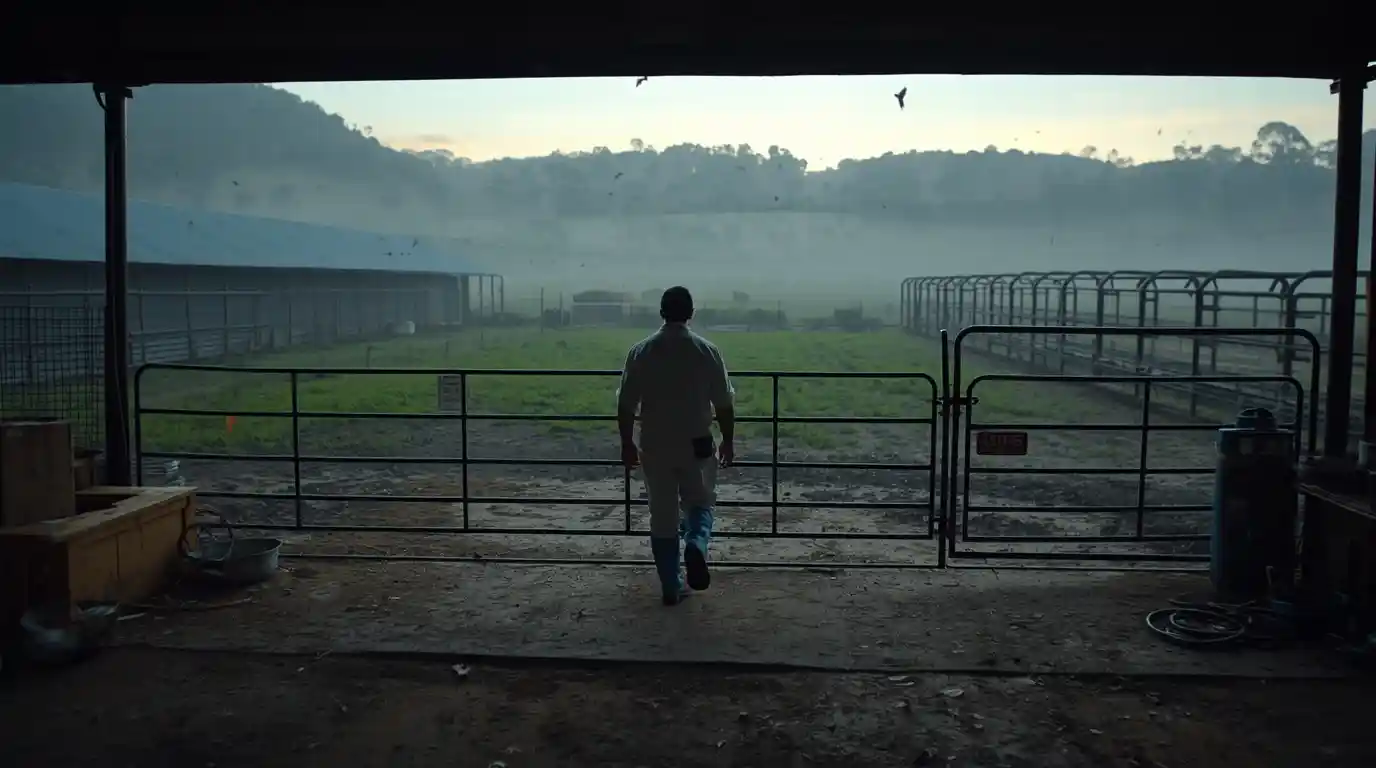
Confirmed detections of bird flu in Australia have now passed 250 in wild birds, and the federal government has openly conceded it cannot stop the virus moving through the country. Agriculture Minister Julie Collins said authorities are doing everything they can, while admitting the spread itself is beyond anyone's control. Yet not one commercial poultry farm has been infected. That gap — wildlife hit hard, sheds still clean — is the whole story right now.
It matters at the checkout because we've already seen the alternative. When a different strain, H7, moved through eight commercial properties in south-west Victoria between late May and late June 2024, more than 1.8 million birds were destroyed, roughly a tenth of the national egg-laying flock. Supermarkets slapped purchase limits on cartons, McDonald's cut back its breakfast hours, and average egg prices climbed close to 9 per cent across that year.
This time the virus is H5, which arrived in June with migratory birds and behaves nothing like the 2024 strain. It is killing wildlife at scale rather than jumping farm to farm. South Australia is carrying the heaviest load with 166 confirmed events, followed by Victoria on 74, Western Australia on 10, Tasmania on six, New South Wales on five and Queensland on one.
Why the Government Says It Can't Stop This
You can quarantine a farm. You cannot quarantine a flyway. H5 came in on the wings of birds that cross oceans, and it has since started passing between species that live here permanently — gulls, terns, and now a little penguin in Victoria. That shift, from imported cases to local transmission, is what changed the risk picture in a matter of weeks.
We're doing everything we can do as a government, but we cannot stop the spread of this virus.
Collins has pointed to biosecurity as the strongest defence available, which in practice means keeping wild birds and farmed birds apart. Free-range producers in affected regions have been issued housing orders, bringing hens indoors — the same measure used across Europe every winter.
How Bird Flu in Australia Reached 250 Detections
The speed is the part worth sitting with. Writing in The Conversation on 1 August, University of Tasmania seabird ecologist Jane Younger counted 53 confirmed detections in wild seabirds across five states, with South Australia holding 39 of them. Barely a fortnight later the national tally of confirmed H5 events in wild birds sat above 250.
Clusters have turned up around Robe, Cape Jaffa, Kangaroo Island and Seal Bay, including a mass die-off of greater crested terns on an offshore site south of Cape Jaffa reported by Australian Geographic. Gannets and albatrosses are considered high risk. Seals and sea lions are being watched too, since H5 has jumped to marine mammals overseas.

What Happened to Eggs the Last Time
The 2024 experience is the closest thing we have to a reference point, and it's worth understanding why it hurt so much — and why an H5 outbreak on farms would be a different problem again.
Eight Farms, 1.8 Million Birds
Australia's largest avian influenza outbreak wiped out around 10 per cent of the country's laying hens from a handful of properties. Modern egg production is concentrated: a small number of very large sheds supply an enormous share of the market, so losing eight sites removed a chunk of national supply almost overnight.
Two Cartons Per Customer
Shortages showed up within weeks. Purchase limits appeared in major supermarkets, cafés reworked menus, and McDonald's Australia shortened breakfast service in July 2024. Some retail egg prices rose as much as 30 per cent over a six-month stretch. Recovery took months, because a laying hen needs roughly 18 to 20 weeks to reach production.
Why H5 Would Be Harder to Contain
H7 outbreaks here have historically been one-off spillovers that authorities could stamp out and declare eradicated, as Victoria did. H5 is different: it is now sitting permanently in the wild bird population, which means the pressure on farm fences doesn't end when a single incident is cleaned up. Containment becomes an ongoing cost, not a campaign.
The Penguin Vaccine Nobody Has Tried at This Scale
Victoria has taken an unusual step. More than 5,000 little penguins at Phillip Island are being vaccinated against H5, with the St Kilda colony also in scope — believed to be the largest vaccination program ever attempted in wild birds. It's only feasible because little penguins return to the same burrows, which lets handlers catch each bird twice for its two doses and then track how it fares.
What to Watch For in the Weeks Ahead
Two signals will tell you where this is heading. The first is any confirmed detection on a commercial poultry property — that's the moment supply and price pressure become real. The second is whether housing orders widen beyond current regions, which would signal authorities think the risk is climbing.
For now, the practical advice is simple. Don't handle sick or dead wild birds, and report clusters of them to your state agriculture department or the national emergency animal disease hotline. If you keep backyard chooks, cover their feed and water so wild birds can't get at it, and keep the flock away from open water. Human infections remain very rare, and properly cooked eggs and chicken are safe. Watch the farm-detection count, not the wildlife count — that's the number that reaches your trolley.




Comments 0