

The New Churchill Falls Deal Pays 30 Times the Old Rate
Ottawa, Quebec City and St. John's are days away from unveiling a replacement for the 1969 contract — and the price change is only the third-biggest story in it.

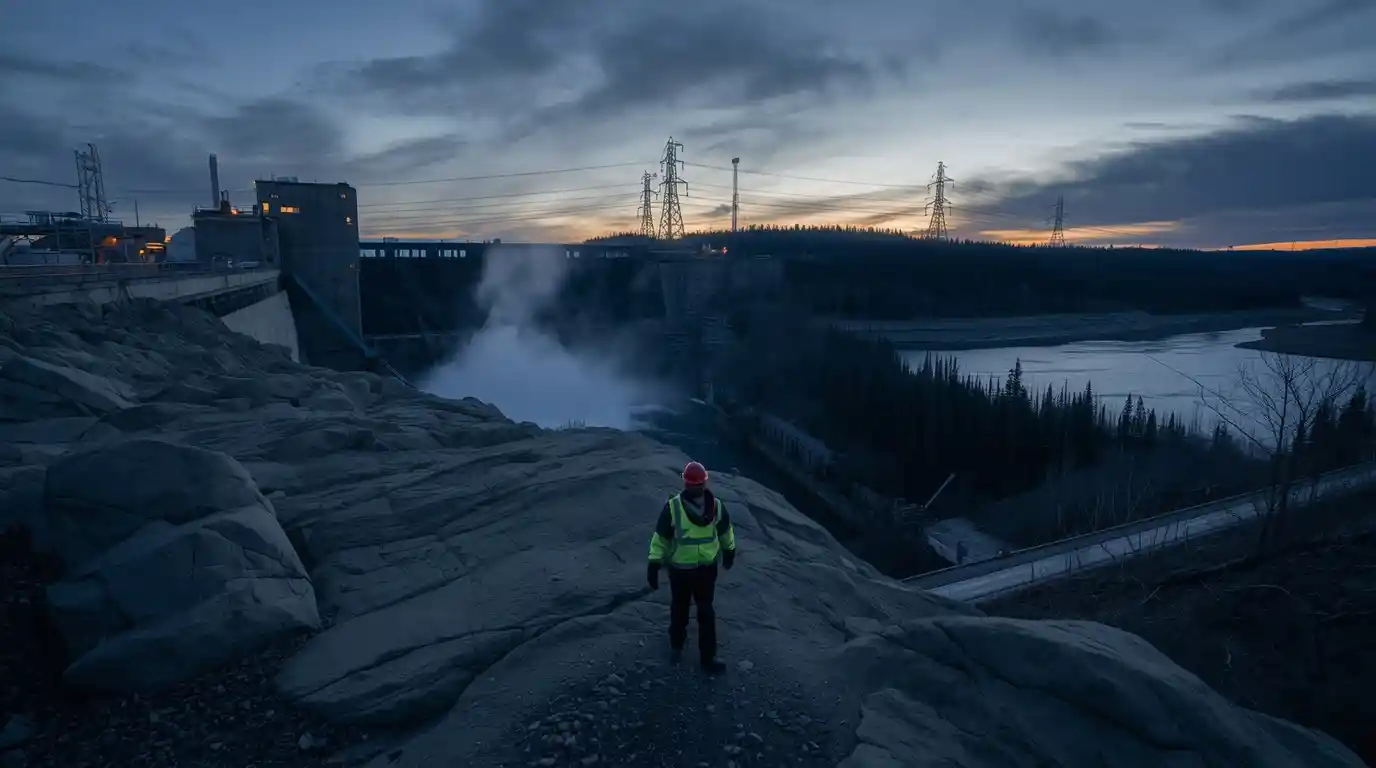
A new Churchill Falls deal between Newfoundland and Labrador, Quebec and the federal government is expected to be made public within days, replacing a contract signed in 1969 that has shaped provincial politics ever since. The number that jumps out is the price. Under the old arrangement, Newfoundland and Labrador received roughly 0.2 cents per kilowatt-hour for Labrador power. Newfoundland and Labrador Hydro says the replacement framework averages 5.9 cents in 2024 dollars — about thirty times more.
BNN Bloomberg reported on August 12, citing sources, that the three governments were preparing an announcement for the following week, with two or three items still unresolved. Quebec Premier Christine Fréchette has said publicly that an agreement is coming. Premier Tony Wakeham's office in St. John's has been more careful, acknowledging significant progress in the talks while insisting nothing has actually been signed.
For a province of roughly half a million people, the stakes are hard to overstate. NL Hydro pegs the total benefit to Newfoundland and Labrador at more than $225 billion over the life of the arrangement, with about $180 billion of that coming from the existing Churchill Falls station alone. That money would land in a treasury carrying one of the heaviest per-person debt loads in the country.
How a 1969 contract became a 57-year grievance
The original agreement runs to 2041 at a fixed price with no inflation adjustment. That looked defensible in 1969, when Quebec absorbed the financing risk for a plant in the middle of nowhere. It stopped looking defensible once power prices climbed and Hydro-Québec resold Labrador electricity at a wide margin. Newfoundland challenged the contract in court more than once and lost, including at the Supreme Court of Canada.
What the new Churchill Falls deal actually changes
The framework that emerged from the December 2024 memorandum of understanding covers four things at once, and the version being finalized this month reportedly keeps most of that structure while pushing the numbers up:
- Renewed access to the existing Churchill Falls generating station
- Added capacity at that same site
- A new generating station on the Churchill Falls property
- A new plant at Gull Island, downstream on the Churchill River
The price stops being frozen
The 5.9-cent average is not another fixed number waiting to go stale. NL Hydro describes dynamic pricing tied to market indicators, which is the real lesson learned from 1969. There are also strategic off-ramps built in at 2051 and 2061, so neither side is locked in for the full 50 years without a review point.
Labrador gets nearly four times the power
Newfoundland and Labrador Hydro would gain access to 1,990 megawatts, against the roughly 500 megawatts it has drawn in Labrador historically. Reporting on the earlier MOU put total output across the projects at about 9,190 megawatts, with Hydro-Québec buying 7,200. Wakeham has pushed for more power kept in Labrador, where mining and industrial customers have been waiting on supply.
A 985-megawatt door through Quebec
This is the part that changes the map. CBC has reported the revamped agreement guarantees Newfoundland and Labrador transmission access for 985 megawatts across Hydro-Québec's network, letting the province move Churchill River power to markets beyond Quebec. For nearly six decades, Quebec's grid was a wall. Under the new terms it becomes a road, and that reshapes what Labrador power is worth.

Why Ottawa is writing part of the cheque
The federal government is not just witnessing this. According to BNN Bloomberg, Ottawa's contribution involves substantial loan guarantees and investment tax credits aimed at the transmission build. Prime Minister Mark Carney and Energy Minister Tim Hodgson have framed large hydro assets as nationally significant infrastructure, a framing that has gained force as trade friction with the United States pushed energy security up the agenda.
What could still go wrong before anyone signs
Plenty. The provinces originally aimed to have binding agreements done by the end of April 2026, and that date passed without one. Opposition members in Newfoundland and Labrador have called for a legislative vote before any commitment, and complained that detail has been scarce. Gull Island itself remains conditional: Hydro-Québec is spending $10 million to $15 million on site studies, which is early-stage money, not a construction decision.
Watch three things when the announcement lands. First, whether the document being signed is binding or another agreement in principle. Second, the actual transmission guarantee — 985 megawatts of firm access is worth far more than a promise of best efforts. Third, whether the House of Assembly gets a vote. Ratepayers on the island should not expect a bill change soon; the new rates start in 2027, and the construction that justifies them runs well into the 2030s.



Comments 0