

The New St. Thomas Train Sculpture Is a Giant Toy
St. Thomas, Ontario, already had a 69-foot steel locomotive on a roundabout — so its newest railway landmark went the other way entirely.

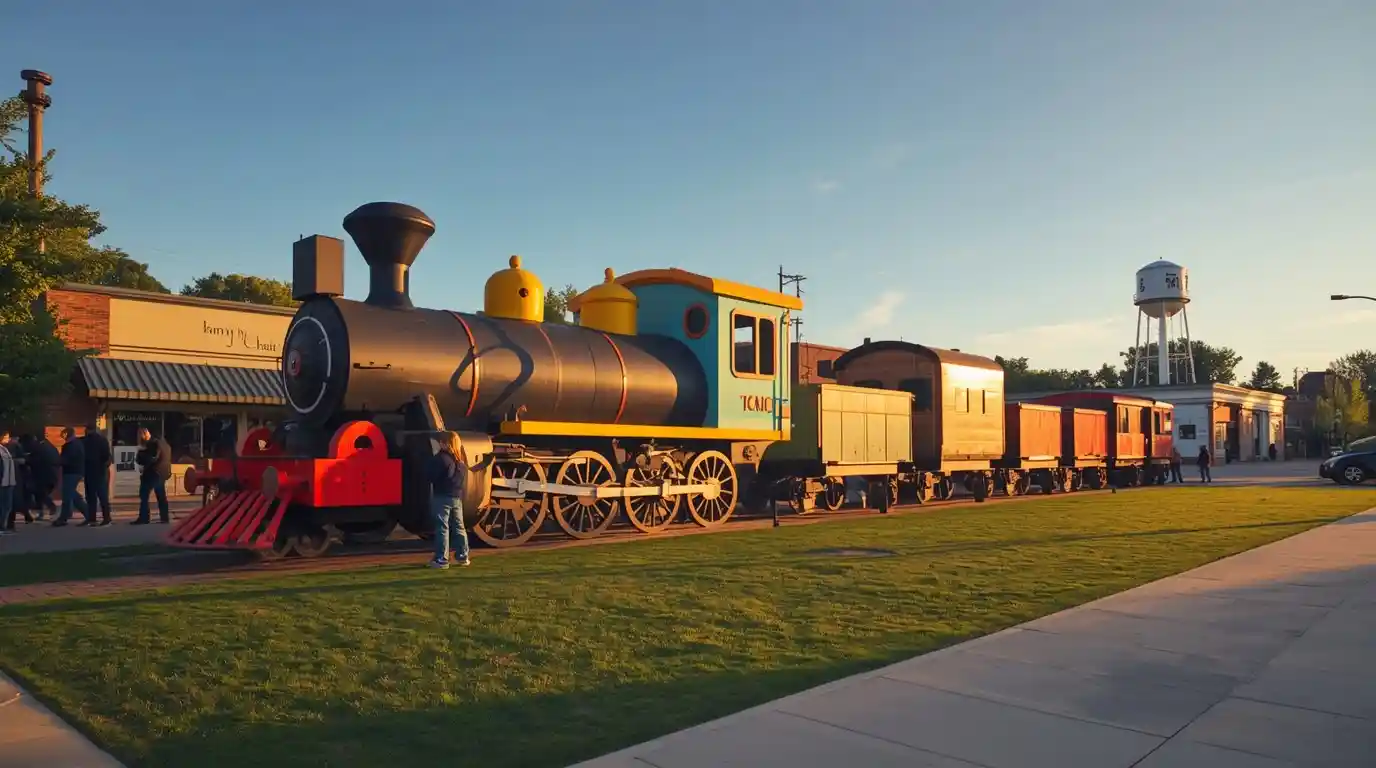
The newest St. Thomas train sculpture is 25 feet of toy. Not a scale model of a steam engine, not a retired locomotive parked on a plinth — the blocky, rounded, push-it-across-the-carpet kind of train, scaled up to roughly the length of a transport truck. CTV News London reported the unveiling on August 13, 2026.
The piece is the work of Briony Douglas, a Toronto-based artist better known for large-scale installations commissioned by brands like Canada Goose, Adidas and Cadillac. According to CTV, this is her first public art commission. On social media she has described it as her first permanent public sculpture, the result of about a year and a half of planning and building.
That combination — a career brand sculptor, a small southwestern Ontario city, and a landmark shaped like a nursery toy — is a bigger swing than it looks. St. Thomas has built its whole identity on railways for more than a century, and it already owns one of the most literal train monuments in the country. This one deliberately refuses to be literal.
Why This St. Thomas Train Sculpture Is Different
Most railway monuments try to convince you they're the real thing. Rivets, boiler plate, a headlamp, maybe an actual decommissioned engine donated by a rail company. They read as history: solemn, brown, respectfully roped off. Kids look at them for about eleven seconds.
A giant toy does the opposite job. It doesn't ask you to remember 1885; it asks you to walk up and touch it. At 25 feet — a shade over seven and a half metres — it's big enough to dominate a photo but small enough to stand beside, which is exactly the scale that ends up in a phone camera and then on Instagram. That's the calculation a lot of civic art now runs on.
The Artist Who Usually Builds for Brands
Douglas's back catalogue explains a lot about how this piece looks. Her work tends to be oversized, glossy and instantly legible from across a room.
From Brand Installations to a Permanent Landmark
She has built enormous teddy bears, life-sized vehicles, giant sneakers and cowboy boots, and a hockey-stick tribute, largely for commercial clients — including an upcycled installation at Toronto's Harbourfront Centre with Canada Goose. Retail activations live for a few weeks and then get dismantled. A city commission has to survive Ontario winters, road salt and two decades of kids climbing on it, which is a very different brief.
Eighteen Months From Idea to Unveiling
Roughly a year and a half from concept to ribbon is fast for permanent public art in Canada, where committee review, engineering sign-off, insurance and site prep routinely stretch projects past three years. It suggests St. Thomas kept the approval chain short. None of the coverage of the unveiling attached a dollar figure to the commission, so the real cost to taxpayers isn't public yet.
The Railway City Already Had a Giant Train
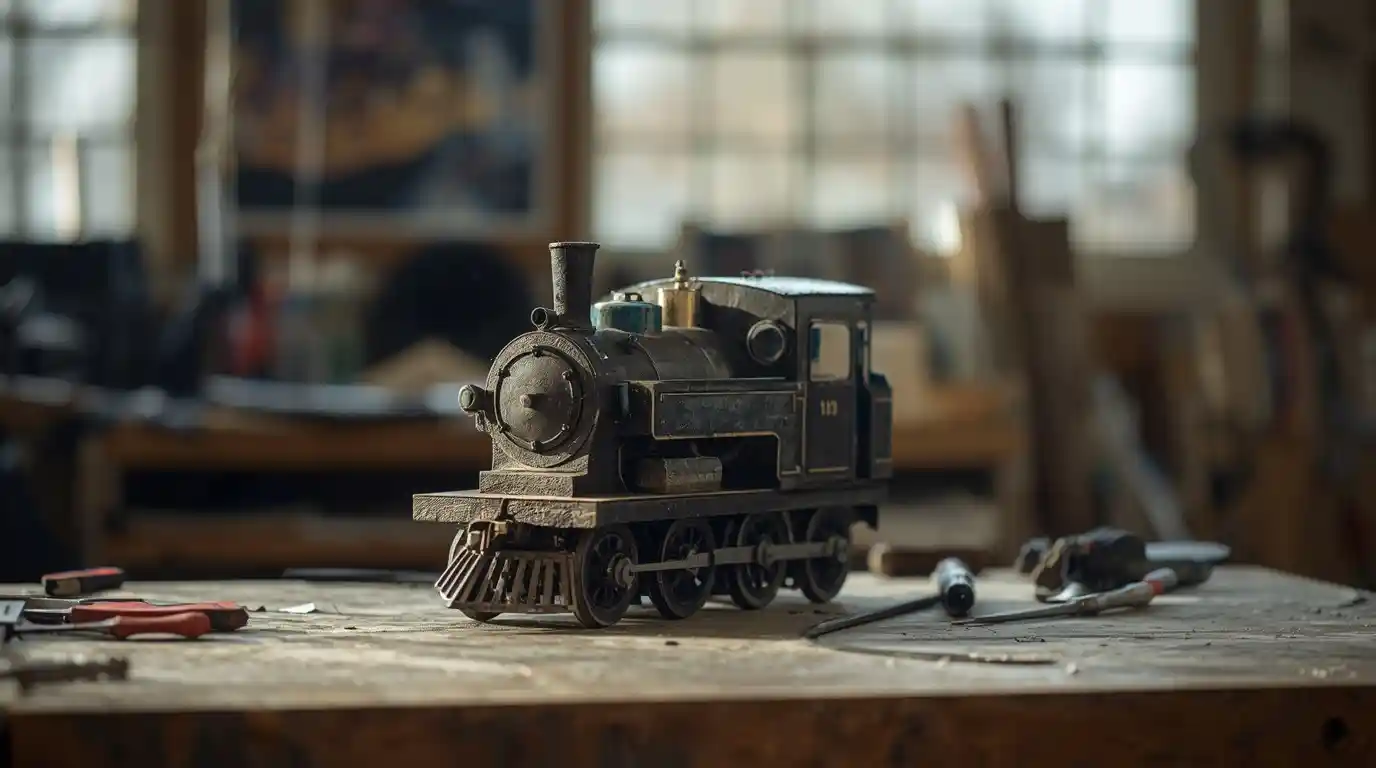
In December 2017, blacksmith and artist Scott McKay installed Perseverance, a steel locomotive that swallowed a roundabout on the city's north end where Wellington Road meets Sunset Boulevard. It was reported at the time as:
- About 69 feet long and 20 feet tall — roughly 21 by 6 metres
- Around 25 tonnes of steel
- Roughly 900 hours of fabrication
- Modelled on a 19th-century locomotive, spanning nearly the full width of the traffic circle
Set against that, the new piece is tiny — about a third the length, and built to be approached rather than driven around. The city now has both extremes: one monument you see at 50 km/h through a windshield, and one you can stand next to.
Why a City of 43,000 Keeps Building Landmarks
St. Thomas earned the Railway City name honestly. At its peak, multiple trunk lines converged here, and the town's most famous story is a grim one: the circus elephant Jumbo was struck and killed by a train in St. Thomas in 1885, and a life-sized statue went up in 1985 to mark the centenary. The Elgin County Railway Museum and the North America Railway Hall of Fame both sit in town.
But the railway era ended a long time ago, and the city is now in the middle of its biggest economic shift in generations, with Volkswagen's PowerCo battery plant rising on the edge of town. Tens of thousands of new workers and visitors will need reasons to stop downtown rather than drive through. Landmarks are cheap tourism infrastructure compared with almost anything else a council can fund.
What to Watch for Next
Two things are worth tracking. First, the price and the funding split — whether this came out of the municipal capital budget, a provincial or federal cultural grant, or private sponsorship. That number usually surfaces in council agenda packages within a few months, and it's the fairest way to judge the project. Second, whether it holds up.
Painted outdoor sculpture fades and chips faster than raw steel, and maintenance budgets are where public art quietly dies. If you're planning a summer drive down Highway 4 or through Elgin County, it's worth pairing the new train with Perseverance and the Jumbo statue — three monuments, three completely different ideas about what a small city should say about itself. Go see all three before you decide which one works.



Comments 0