

Weight-Loss Jabs Are Pushing Couples Onto Separate Meals
A first-person confession about a husband who cooks too well has landed in the middle of a bigger British shift — the quiet spread of the "food divorce".

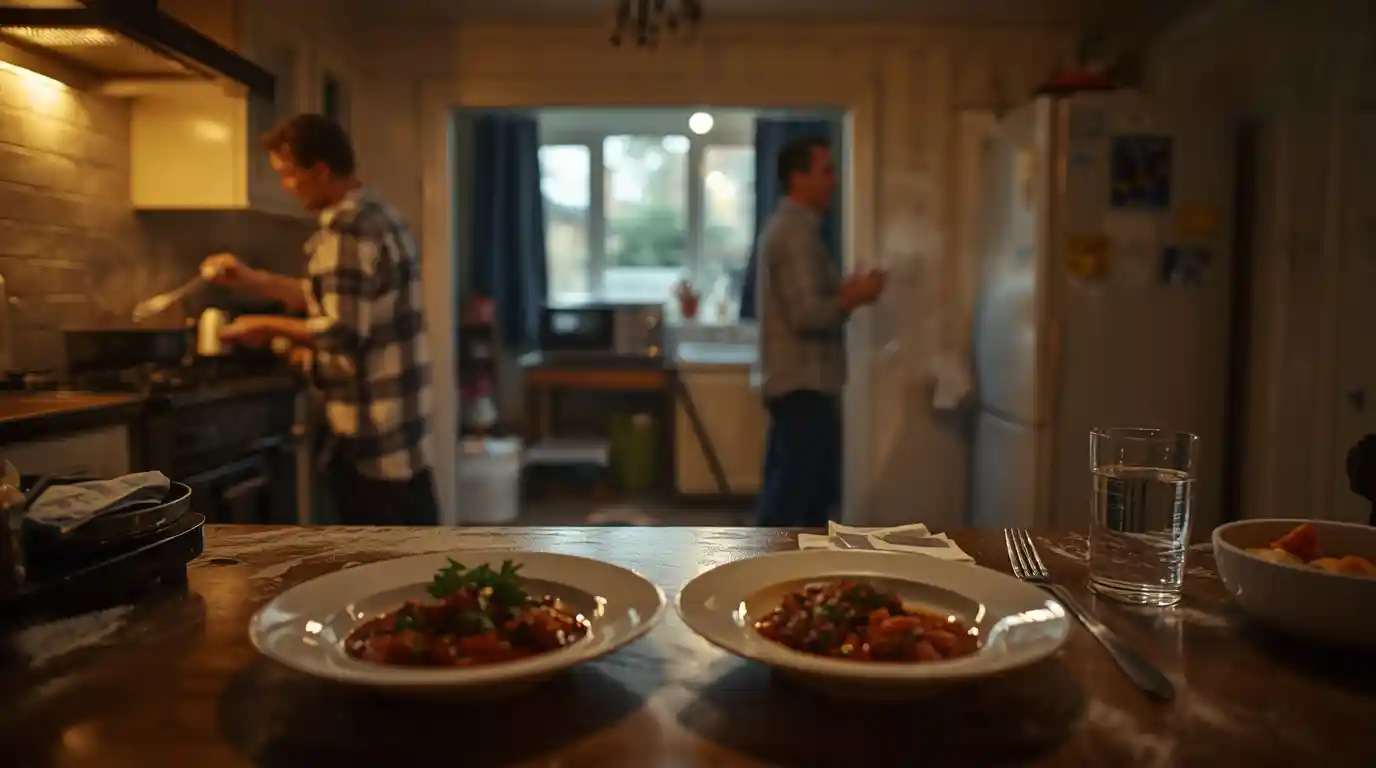
Nearly 7 per cent of UK adults now take a GLP-1 weight-loss drug such as Mounjaro or Ozempic, and one side effect nobody printed on the leaflet is this: couples are quietly moving to separate meals. Not separate houses. Separate plates, separate shopping baskets, sometimes separate sittings at the same kitchen table. It already has a nickname doing the rounds — the "food divorce".
The subject resurfaced on 15 August, when The Telegraph ran a first-person piece under the headline "My husband cooks like a Michelin-star chef. It's making me miserable." The premise sounds like a humblebrag, and the comment sections treated it that way. But strip out the tasting menus and you get a problem plenty of British households recognise: two people who no longer want to eat the same thing at the same time.
It matters more than it sounds. A study published this year in the journal Appetite, drawing on 12,686 people in the German FReDA panel surveyed in autumn 2023 along with 5,276 of their partners, found couples ate together roughly 10.23 times a week. The more meals they shared, the higher their relationship satisfaction, the higher their life satisfaction, the fewer their depressive symptoms and the better their self-rated health. Dinner is doing work.
What a food divorce actually looks like
It is rarely a row. According to Brit Brief, which reported on the trend earlier this month, Ellie Sturdy, 29, from Dorset, ate the same food as her partner Mike when he first moved in. After she started Mounjaro in September 2024, shared meals became a source of friction rather than pleasure. Her verdict on splitting them up was blunt: it's a good thing, and they don't argue.
For others it creeps in through the diary rather than the medicine cabinet. Amy Carter, 42, from London, married a decade to Matt, told the same outlet that it began because he works shifts and she has a busy social life. She also flagged the risk that comes with it, joking that she has to remind him they aren't housemates. That line is the whole debate in eight words.
Why separate meals are spreading in Britain
Three forces are pulling in the same direction at once, and they have nothing to do with anyone being difficult. Each on its own would be manageable. Stacked together, in the same household, in the same week, they make one shared pot genuinely hard to justify.
The weight-loss jab effect
Dr Leila Fathi, a research fellow at the Centre for Food Policy at City St George's, University of London, has pointed to GLP-1 drugs creating negative associations with food, which nudges couples into preparing and eating apart. Anyone who has felt queasy at the smell of frying garlic understands instantly. When one partner's appetite collapses, an elaborate three-course effort stops being a gift and starts being pressure.
Allergies and intolerances that didn't used to be there
The medical picture has shifted too. A 2024 Imperial College London study found food allergy cases in the UK had almost doubled over a decade. Add coeliac disease, lactose intolerance and the growing number of people cooking around IBS, and a single family recipe stops working. Cooking two versions of dinner becomes routine rather than a special accommodation.
Diaries that never line up
Shift patterns, commutes and evening plans finish the job. ONS research from 2023 put UK adults at around three hours and 44 minutes a day on entertainment and socialising. If one person eats at six and the other at nine-thirty, the meal was never going to be shared. Nobody chose to split it; the calendar did.

Is eating apart actually bad for you?
The evidence leans towards yes, though gently. Separate research published in Scientific Reports found that sharing meals is associated with greater wellbeing — a link strong enough that coverage compared its predictive power to income. The Appetite work found the same pattern inside couples specifically, with one wrinkle worth noting: couples who ate together also ate more meat, so the health effect isn't uniformly positive.
What the research does not say is that every household eating in shifts is in trouble. Correlation runs both ways. Happy couples may simply find it easier to sit down together. The signal to watch is not the number of shared dinners but whether the split was chosen or just drifted into.
When it's practical, and when it's a warning sign
Christina Fraser, a BACP accredited counsellor in London, put the risk plainly when speaking to Brit Brief.
Separate plates, separate lives. When couples stop eating together regularly...it can signal emotional distance, unresolved conflict, or parallel lives.
The distinction is intent. A couple who agree that one is on a jab, one works nights, and Sunday lunch is sacred, is managing a constraint. A couple who stopped eating together eighteen months ago and have never discussed it are doing something else. Only one of those needs fixing, and the fix is a conversation, not a recipe.
How to eat apart without drifting apart
If your household has already split the cooking, the practical move is to protect the ritual rather than the menu. There is also a cost angle nobody mentions: two dinners means two sets of ingredients, more waste and a longer hob time, which lands on an energy bill that hasn't got any cheaper.
- Ring-fence one shared meal a week and treat it as non-negotiable — Sunday lunch is the obvious candidate.
- Sit down together even when the plates differ, so the table stays a habit.
- Cook one base — rice, potatoes, a tomato sauce — then split it into two finishes to cut waste.
- Say out loud why you're eating apart, so nobody quietly assumes rejection.
Watch for the drift rather than the difference. If you can't remember the last time you sat down with your partner and ate at the same moment, that's the number to fix — not what was on the plate.




Comments 0