

What the Birth Tourism Crackdown Means for Your US Visa
Washington has cancelled more than 600 already-issued US visas in a month, and the category being reviewed is the same B1/B2 that Indian families use for weddings and holidays.

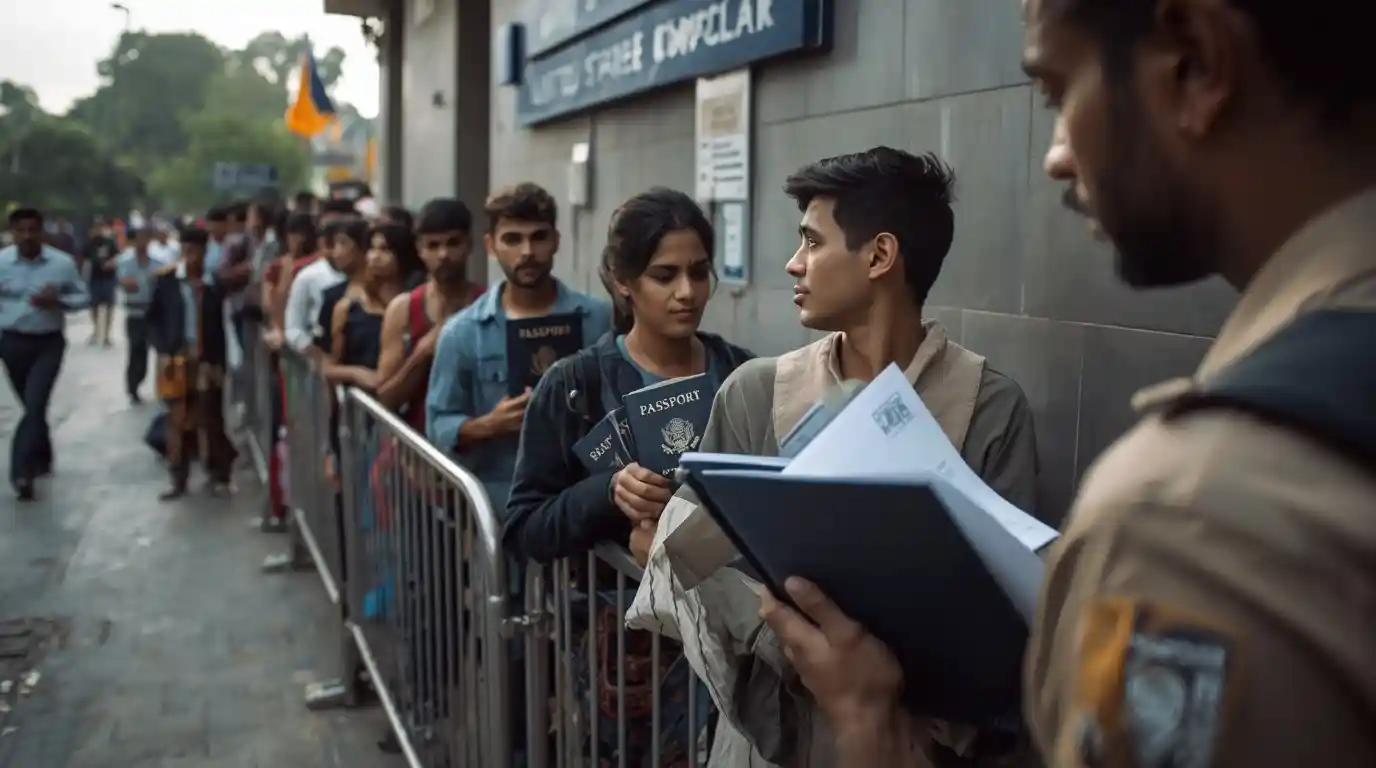
The US birth tourism crackdown now has a hard number attached to it: more than 600 visas cancelled in a single month. The State Department released the figure on 12 August along with a new unit it calls the Birth Tourism Prevention Task Force. These were not fresh applications rejected at an interview window. They were visas already approved, already stamped, already sitting inside somebody's passport.
The legal trigger was Executive Order 14419, titled "Ending Birth Tourism," signed by President Donald Trump on 6 August and published in the Federal Register five days later. It gives the Secretary of State and the Secretary of Homeland Security authority to refuse visas, revoke ones already issued, block entry at the airport, remove people already inside the country, and pursue the agents and clinics that sell these trips.
For readers in India, this isn't a distant American argument. The document being targeted is the B1/B2 visitor visa — the same one families use to attend a wedding in New Jersey or meet a new grandchild in Texas. The task force isn't building a new queue. It is re-opening the files of people who already cleared the interview.
What Actually Changed on 6 August
Until now, enforcement mostly happened in one place: the consular window. An officer read your case and either approved or refused. The new set-up moves the decision point much later. The task force pools travel and status data held by the State Department, Homeland Security and other agencies, then flags visa holders whose movements inside America don't match what they wrote on the form.
The second change is who gets chased. The order names facilitators — consultants, hospitals and "maternity hotel" operators who package these trips for a fee. Targeting the supply side, not just the traveller, is the part that could genuinely shrink the business.
The Three Trips Washington Chose to Describe
The department published three cases to show what a flagged file looks like:
- A couple who listed a conference on one application and a holiday on the next, gave birth in the US both times, and left the first child off the second form.
- A foreign government official who declared a one-week official visit, stayed three months, and gave birth during the trip.
- A traveller who said they were going to Orlando, flew to Los Angeles instead, and delivered five days after landing.
None of these was caught by a medical test or an intrusive question at the counter. Each was caught by the gap between the stated reason for travel and where the person actually went, how long they stayed, and what happened while they were there. That gap is now searchable.
The department will "use all available tools to dismantle birth tourism networks and defend the integrity of U.S. citizenship," Secretary of State Marco Rubio said.
Why the Birth Tourism Crackdown Matters in India
Indians are among the heaviest users of the B1/B2 category, and revocation is quiet. There's no phone call. A notice goes to the email address on the DS-160, and plenty of people never open that inbox again after the interview. The first hint often comes at airline check-in, when the system refuses to board you — and return fares for a family of four, already lakhs of rupees, are gone.
The harder risk is what a revocation records about you. A refusal is a setback. A finding that you misrepresented your purpose is a different animal: it's one of the few immigration findings that follows an applicant permanently, and undoing it needs a waiver, not a better-prepared second attempt.
Who Should Worry, and Who Really Shouldn't
The announcement has already produced anxiety among people whose plans have nothing to do with any of this. It's worth separating the three groups the policy actually touches.
If You're Pregnant and Already Hold a B1/B2
Being pregnant has never barred you from entering the US, and it still doesn't. Purpose is what matters. A wedding invitation, a conference registration, a paid-up itinerary, valid insurance and a clear plan to return put you in a very different position from someone whose whole trip resolves into a delivery date.
If Your Child Was Born in the US Earlier
The department's statement draws a line here: this is about visas and admission, not citizenship. Children already born on American soil keep their status, and officials pointed to the Supreme Court's 30 June decision in Trump v. Barbara as leaving that settled. Your child's passport isn't under review. Your parents' travel history might be.
If You're Booking an Ordinary Family Trip
Nothing about a normal visit changes, except that the paperwork you'd usually bin is now worth keeping. Boarding passes, hotel bookings, the address you actually stayed at — anything showing the trip matched the plan you described at the interview.
Washington Has Tried This Before, Differently
This is a sequel. On 24 January 2020, the State Department finalised a rule telling consular officers to refuse B visas where childbirth for citizenship looked like the main purpose, and requiring medical travellers to prove they could pay their bills. That rule only ever worked at the front door.
The birth tourism crackdown of 2026 works from both ends. The interview screen stays, but the file remains live after approval, and removal plus facilitator enforcement is new. Six hundred revocations is small against the stock of US visas in circulation — but that's a monthly rate, not a total.
What to Watch Over the Next Few Months
Track two things. Updated consular guidance is the big one: the order instructs both departments to rewrite operational rules, and how officers are told to raise the pregnancy question will decide whether this stays narrow or becomes a routine screen for every woman of childbearing age applying from India. The second is whether revocation notices come with any right of reply.
In the meantime, log into the email address you used on your DS-160 and confirm it still works. Keep proof of your last US trip's purpose for a few years. If you're pregnant and travelling, carry documentation of your reason for the visit and your ability to pay for any care. And check your visa's status before you book non-refundable tickets, not after.



Comments 0