

What the Egg Salmonella Outbreak Means for Your Fry-Up
Britain has declared its first national salmonella outbreak in years — but the trail leads away from British hens and towards the 1.6 billion eggs we now import each year.

Britain's egg salmonella outbreak has reached 207 confirmed cases and one death, after the UK Health Security Agency formally declared it a national outbreak on 18 August 2026. Of the people whose records were complete, 38 per cent ended up in hospital. Two developed bloodstream infections. The youngest patient was a baby, the oldest was 90, and the median age was just 30.
If you are now eyeing the box in your fridge, here is the part that matters for breakfast: UKHSA has said there is no indication that any UK-produced eggs or poultry are behind this. Every case has been traced to a single strain of Salmonella Enteritidis, and the food-chain work keeps pointing at eggs that came into the country from abroad. Your British Lion-stamped six-pack is not the suspect.
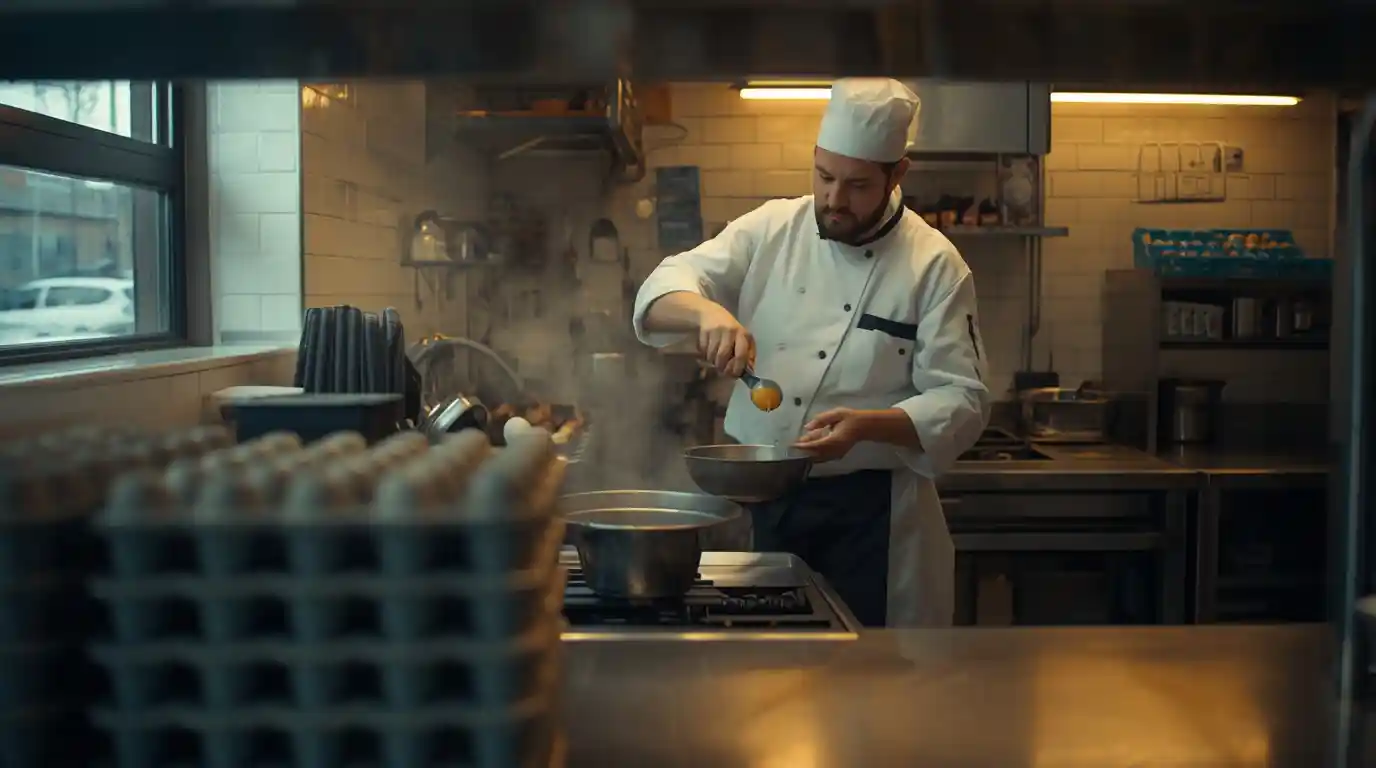
There is a second detail buried in the official report that changes how you should read this story. Of the 114 people investigators managed to interview, 95 — around 83 per cent — had eaten food prepared outside the home in the days before they fell ill. Five food businesses alone accounted for 24 cases. This is far more a catering and supply-chain problem than a home-kitchen one.
Where the Egg Salmonella Outbreak Has Hit Hardest
The cases stretch from 11 August 2025 to 1 August 2026, but 206 of the 207 landed in 2026 — this is a fast-moving cluster, not a slow drip. England has taken almost all of it with 199 cases, against six in Scotland, one in Wales and one in Northern Ireland. London leads with 47 confirmed infections and Yorkshire and the Humber follows with 38.
That geography is a clue rather than a coincidence. Big-city case clusters usually track where people eat out most and where wholesale catering supply is densest. Investigators have named egg importers among the businesses in the supply chains they examined, and the strain is genetically linked to a 2025 outbreak that was also traced to imported eggs. The same problem, in other words, has come round again.
Why British Eggs Aren't the Prime Suspect
To understand why officials moved so quickly to clear domestic producers, you have to go back nearly four decades — to a scandal that cost a minister her job and very nearly broke the British egg industry.
The Vaccine That Cleaned Up British Hens
In 1988, the junior health minister Edwina Currie told the country that most British egg production was affected by salmonella. Sales collapsed, she resigned, and the industry spent the next decade rebuilding. From the 1990s producers rolled out mandatory salmonella vaccination of laying flocks, backed by traceability and independent audits, under what became the British Lion mark. By 2017 the Food Standards Agency was confident enough to say runny Lion-marked eggs were safe even for pregnant women and older people.
The 1.6 Billion Eggs We Now Buy From Abroad
The gap is at the border. The UK now imports roughly 1.6 billion eggs a year, according to The Grocer — an increase of more than 600 million since 2021, with much of that rise coming from Poland and Ukraine. Those eggs are not required to meet the Lion scheme's vaccination and auditing rules. Nick Allen, chief executive of the British Egg Industry Council, called the situation deeply concerning.
It is deeply concerning that imported eggs are once again under scrutiny in connection with a serious salmonella outbreak.
What the Farming Lobby Wants Changed
Will Raw, the National Farmers' Union poultry chair, said imports produced to a lower standard simply cannot be allowed to continue, and has pressed ministers for proper checks at the border and a set of core production standards applied equally to British and imported food. Expect that argument to get louder while this investigation runs.

How Worried Should You Actually Be?
Put 207 cases over roughly a year against a population of 68 million and the individual risk is small. But salmonella cases are chronically under-reported — most people ride it out at home and never get a stool sample taken — so the true figure will be higher. The 38 per cent hospitalisation rate is what makes this cluster stand out, and it suggests a strain causing genuinely nasty illness rather than a mild upset.
Hannah Charles, lead epidemiologist at UKHSA, said salmonellosis usually comes from eating or handling contaminated food and can, rarely, pass from person to person. Symptoms are diarrhoea, stomach cramps, and sometimes vomiting and fever, typically starting within a day or two. Babies, older adults and anyone with a weakened immune system are the groups most likely to become seriously unwell.
What to Do This Week
- Buy Lion-marked eggs if you want the vaccinated supply chain — check the stamp on the shell, not just the box.
- Cook eggs until white and yolk are firm if you are pregnant, elderly, very young or immunosuppressed.
- Wash your hands after handling shells, and keep raw egg away from ready-to-eat food.
- Store eggs in the fridge at a steady temperature rather than in a warm kitchen.
If you do get ill, the FSA's advice is blunt and worth following: stay away from work, school or nursery until you have been free of symptoms for a full 48 hours. That single rule does more to stop an outbreak spreading than anything else on this list. Watch for further FSA updates naming specific suppliers — in an investigation this size, product-level announcements usually come next.



Comments 0