

Why Does the Congo Ebola Outbreak Have No Vaccine Yet?
The world has a working Ebola jab — it just doesn't cover the strain now on course to cause the deadliest outbreak on record.

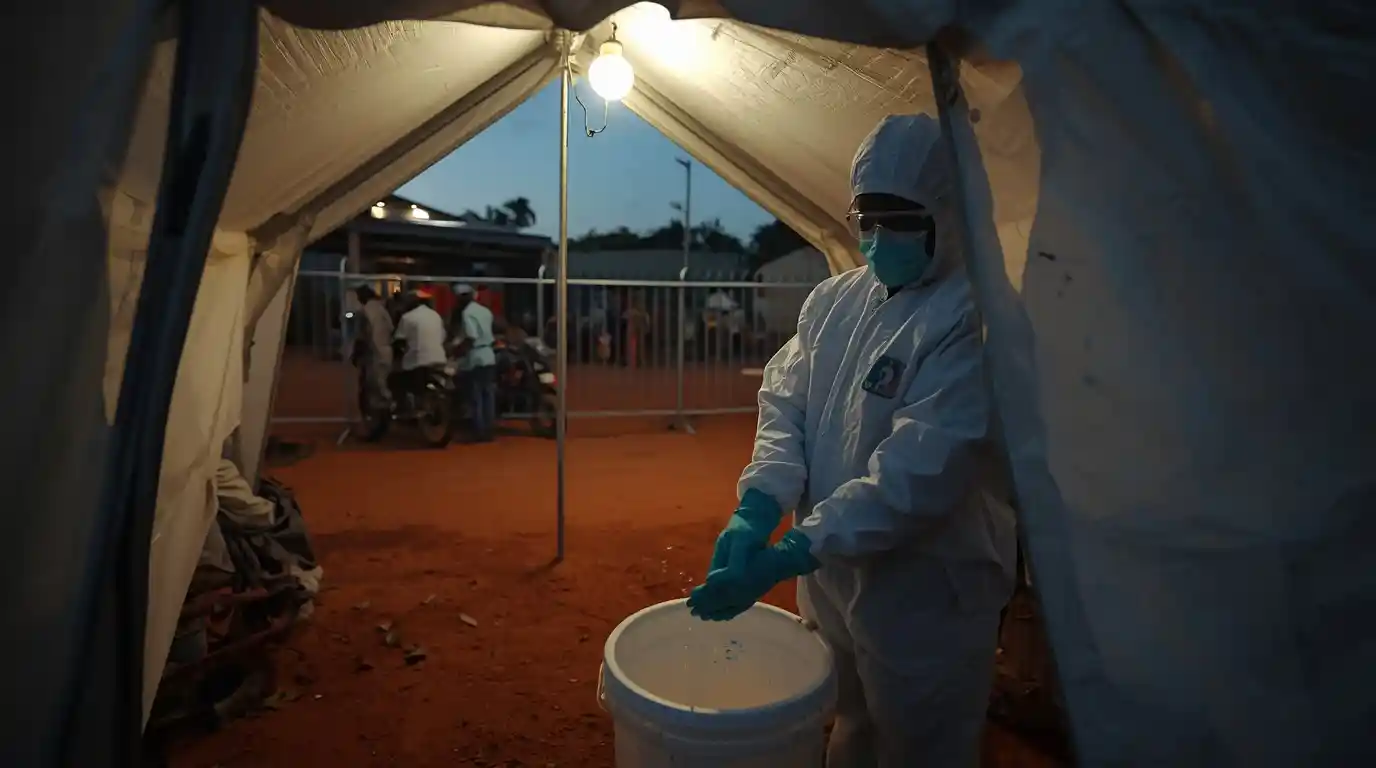
The Congo Ebola outbreak now expected to become the deadliest on record is caused by a form of the virus that no approved vaccine can stop. That is the awkward detail sitting behind this week's warning from the World Health Organization. The world does have an Ebola jab, it works well, and it does not cover the strain tearing through the east of the Democratic Republic of Congo.
WHO director-general Tedros Adhanom Ghebreyesus told reporters the epidemic is on course to overtake the 2014-16 West African outbreak, which killed more than 11,000 people in Guinea, Liberia and Sierra Leone. Since Congo and Uganda declared the emergency on 15 May, more than 4,300 people have fallen ill and over 2,000 have died — a fatality rate of roughly 47%, on WHO's own figures.
For readers in Britain the direct threat is small. The UK Health Security Agency rates the risk to the public as low and notes that imported cases here are extremely rare. Even so, one case has been recorded in France and two patients diagnosed in Congo were treated in Germany, so the idea that this stays neatly inside central Africa has already been tested once.
A Strain the World Has Seen Only Twice Before
This is Bundibugyo virus, named after the Ugandan district where it first surfaced in 2007. It has caused only two known outbreaks since — 2007 and 2012 — and both were smaller and shorter than what is happening now. Genetic sequencing shows the current virus is distinct from both, so this is not an old chain of transmission flaring back up.
That rarity explains the gap in the medicine cabinet. Nearly all of the money, trial capacity and stockpiling of the past decade went into the Zaire species, which drove West Africa in 2014 and Congo's Kivu epidemic. Bundibugyo was, in funding terms, a footnote. The outbreak has now walked straight through that hole.
How Fast Is the Congo Ebola Outbreak Growing?
The pace is the part that alarms epidemiologists. West Africa took around eight months to reach 1,000 deaths. This epidemic has passed 2,000 in considerably less time. Sequencing suggests the virus had been circulating since February, roughly three months before anyone declared an outbreak — which means contact tracers began the job already several transmission chains behind.
At its current pace, it's on track to eclipse the West African Ebola outbreak.
Five provinces in eastern Congo are affected, with Ituri worst hit. Africa CDC has flagged transmission in the city of Bunia rather than remote villages, gold-mining traffic around Mongbwalu, patchy contact listing, insecurity, and the closeness of the affected zone to Uganda and South Sudan. Urban spread is what turned West Africa from a regional emergency into a global one.

Why the Vaccine We Already Have Doesn't Fit
Ebola is not one virus but a family, and immunity to one member does not reliably carry across to another. That is the whole problem in a sentence, and it is why the response looks less advanced than it did in Congo's last big epidemic.
The jab that covers only one species
The licensed Ebola vaccine deployed in previous Congo outbreaks was built against the Zaire species. WHO says it is now being tested against Bundibugyo after animal studies showed some promise, but "promising in animals" is a long way from a tool you can ring-fence a mining town with.
Two new vaccines, now in human trials
Tedros said two vaccines developed specifically for Bundibugyo are being given to people for the first time. Getting a candidate into first-in-human trials this quickly is genuinely fast work. It still means months of data before anyone can talk about mass supply, and manufacturing has not been ordered at scale.
Treatment trials under way in Ituri
Two clinical trials of treatments started last month in Ituri. Until they report, clinicians are working without any recognised drug for this species — the monoclonal antibody therapies stockpiled after the Kivu epidemic were designed for a different target, so care is largely supportive.
What UK Travellers and Doctors Should Know
UKHSA guidance published on 3 June sets out the practical points. The incubation period runs from two to 21 days, with symptoms usually appearing between four and 10 days. Early signs are unhelpfully ordinary: fever, aching muscles, headache, general malaise. Some patients have no fever at first, which is precisely why the 21-day travel window matters more than a thermometer reading.
- Check FCDO and TravelHealthPro advice before booking travel to Congo or Uganda
- Tell any GP, NHS 111 call handler or A&E clinician about recent travel within 21 days
- Expect malaria to be tested for first — it is far more common and it presents similarly
- Confirmed-case tallies published by European agencies lag WHO's total, which includes probable cases
When Might This Peak?
Dr Abdirahman Mahamud, WHO's director for health emergency alert and response, put a peak at around six months away and called that the moderate scenario; the worse case runs nine to 12 months. Funding is thin against that timeline — the EU added €5m in June, about £4m, when the West African response eventually cost billions.
Watch three things over the next few weeks: whether Uganda records transmission that did not arrive over the border, whether the chains in Bunia can be broken before the rainy season complicates access, and whether those vaccine trials produce enough data to justify emergency use. If you have travel booked to the region, check the FCDO page now rather than at the airport — advice on this one has been moving fast.




Comments 0