What Tiger Tourism Stress Means for Your Safari
India's first multi-reserve hormone study finds safaris spike stress in core-zone tigers and push tigresses to breed in the few quiet corners left.

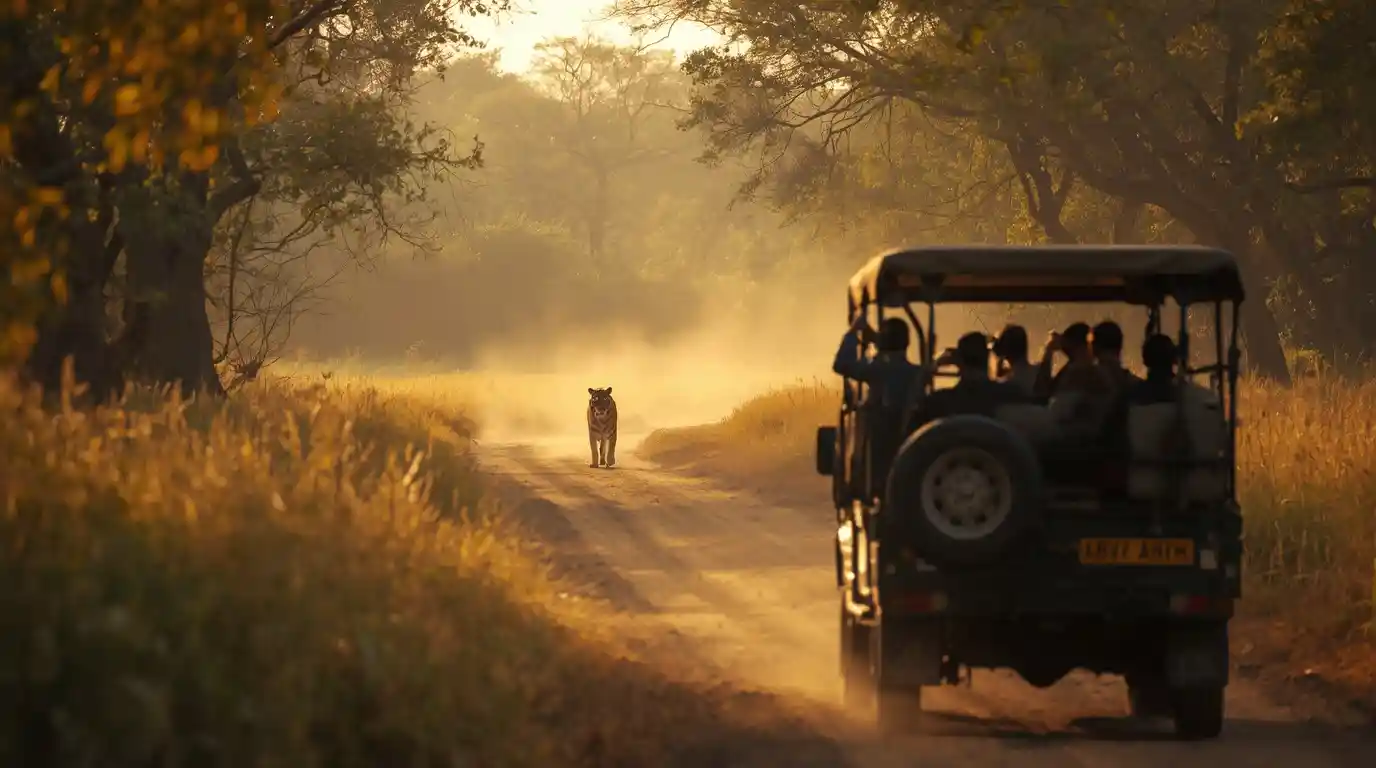
New research on tiger tourism stress has finally put hard numbers to something rangers long suspected — when the safari jeeps roll in, India's tigers feel it. A team from the Hyderabad-based CSIR-Centre for Cellular and Molecular Biology tracked stress hormones across five reserves and found they climbed during the tourist season and in animals ranging near busy tourism tracks.
The scale is what makes it hard to wave away. Between November 2020 and February 2023 the scientists gathered 728 scat samples, confirmed 610 as tiger, and genetically sexed 291 females and 185 males. Published in the Zoological Society of London journal Animal Conservation, it is the first study to read stress and breeding hormones together across so many Indian reserves at once.
If you've booked a morning drive at Tadoba, Corbett or Bandhavgarh, this matters to you. The authors want tighter rules — fewer vehicles, no scrums at a sighting, shorter drives — and forest departments tend to act on this kind of evidence. Your next trip into the jungle could look a little different, and so could the tigers you go there to see.
What 610 tiger droppings revealed
The team didn't dart or collar a single animal. They walked the forest, picked up droppings, and measured faecal glucocorticoid metabolites — a chemical fingerprint of stress that lingers in dung long after the moment passes. Higher readings during tourism months, and in tigers moving near tourist roads, all pointed the same way: more people, more stress. The non-invasive method also avoids adding fresh stress just to measure it.
Where tiger tourism stress hits hardest
The surprise wasn't that tourism raised stress. It was who paid the price. Tiger tourism stress didn't land evenly across the population — a lot depended on whether an animal lived in the guarded core or the mixed-use buffer, and, crucially, on how sudden the crowds were when they came.
Buffer tigers shrug it off
Tigers in buffer zones share their range with villages, cattle and daily traffic all year round. The study found they carry a higher baseline stress but ride out the tourist rush better, simply because nothing about it is new to them. Constant, low-grade human presence seems to blunt the shock rather than sharpen it.
Core tigers get caught off guard
Deep in the protected core, it's the reverse. These tigers see few humans for long stretches, so a sudden burst of safari traffic hits them hard. That spike is exactly what unsettles the researchers, because the core is supposed to be the undisturbed place where tigers rest, hunt and breed without a crowd watching.
Corbett is the odd one out
Corbett in Uttarakhand broke the pattern. There, core-zone stress tracked with how many tigers were packed into the same forest rather than with tourism. High density means more territorial run-ins — a useful reminder that tiger tourism stress is one pressure among several, not the entire explanation for a jittery cat.
Why tigresses breed away from the jeeps
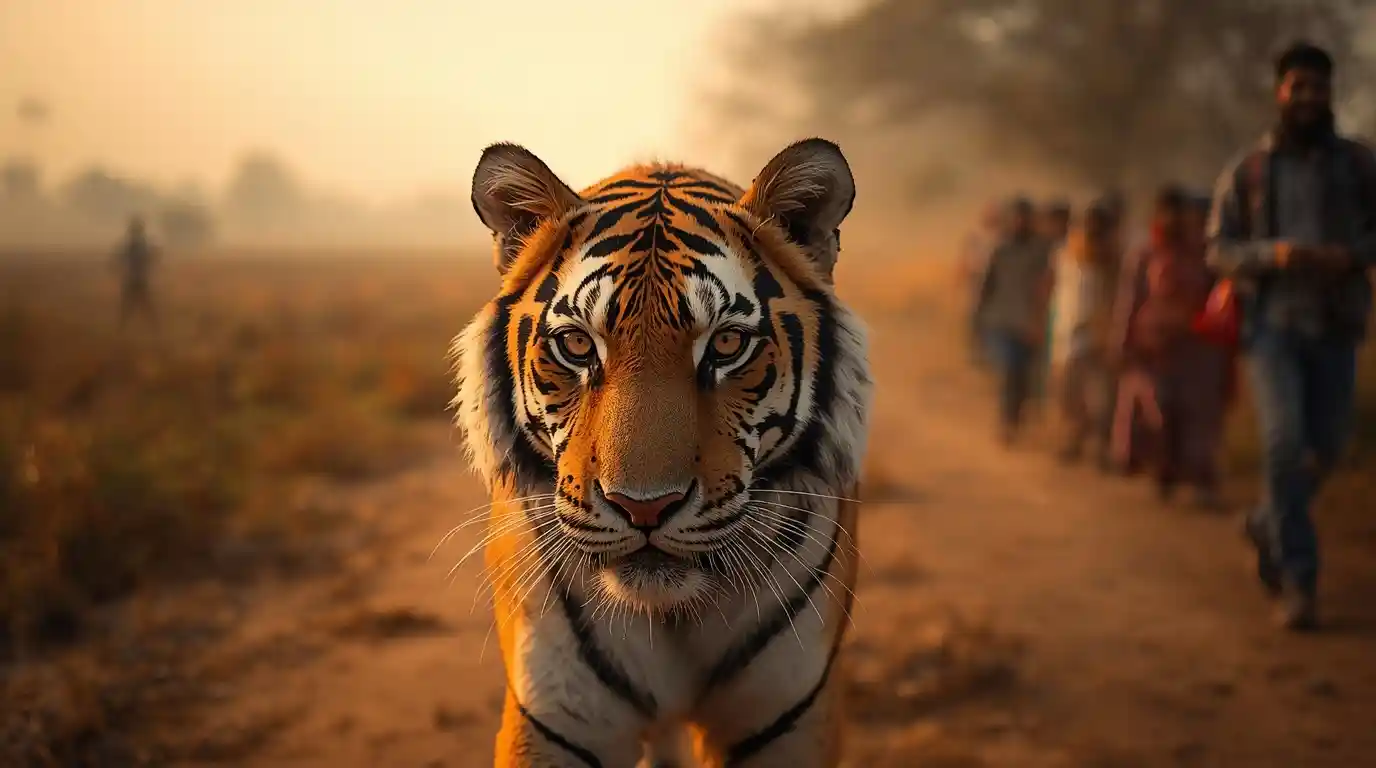
The most striking result was about females. The team also measured faecal progesterone, a marker of breeding activity, and the map lit up in the quiet zones. Tigresses carried their highest reproductive hormone levels precisely where stress ran lowest, and those breeding hotspots sat well clear of the busiest tourism areas.
Tigresses showed higher reproductive hormone levels exactly where their stress levels were lowest.
That's a quiet alarm. If the calm corners keep shrinking as tourism grows, tigresses lose the very pockets they choose to raise cubs in — and cub survival is ultimately how a tiger population holds its ground instead of slipping backwards over the years.
What could change on your next safari
The study's recommendations read like a to-do list for forest departments, and several of them would be visible from the passenger seat of your jeep. Most aim at the same thing — cutting the sudden crush of vehicles and people that spikes a core tiger's stress — without shutting tourism down altogether.
- Caps on how many jeeps enter a zone, and no crowding once a tiger is spotted
- Trimming morning and evening safaris by roughly an hour each
- Ending payments to drivers for guaranteed sightings, which fuel reckless chasing
- Tougher buffer-zone patrols and checks on grazing and tree-lopping
- Yearly stress-hormone monitoring to catch trouble before it shows up in numbers
For a traveller, a shorter or quieter drive isn't a downgrade. A tiger that isn't being chased or boxed in behaves more naturally, and a relaxed animal usually gives you a longer, better sighting than a spooked one bolting for the nearest cover.
How this fits India's bigger tiger picture
India counted 3,682 tigers in its 2022 estimate — about three-quarters of the world's wild tigers, and a big jump from just 1,411 in 2006. That success pulls crowds. The Supreme Court once banned tourism in core zones, then allowed it back into up to 20% of critical habitat, and this study effectively tests where that line sits.
Not everyone reads the findings as anti-tourism. Anish Andheria of the Wildlife Conservation Trust points out that wildlife tourism, for all its faults, is one of the few industries that can genuinely coexist with nature — and the money it brings often bankrolls the very protection tigers depend on to keep recovering.
So next time you book, check whether the operator crowds sightings or dangles a guaranteed tiger, and pick one that does neither. Watch, too, for states quietly tightening jeep caps and safari timings this coming season. If they do, a pile of tiger droppings and a hormone lab are a big part of the reason.